Ahmed Ehtasham, Usman Muhammad, Anwar Sibghatallah, Ahmad Hafiz Muhammad, Nasir Muhammad Waqar, Malik Muhammad Ali Ijaz
Department of Mechanical Engineering, University of Engineering and Technology, Lahore, Punjab, Pakistan.
Sci Prog. 2021 Jan-Mar;104(1):368504211002345. doi: 10.1177/00368504211002345.
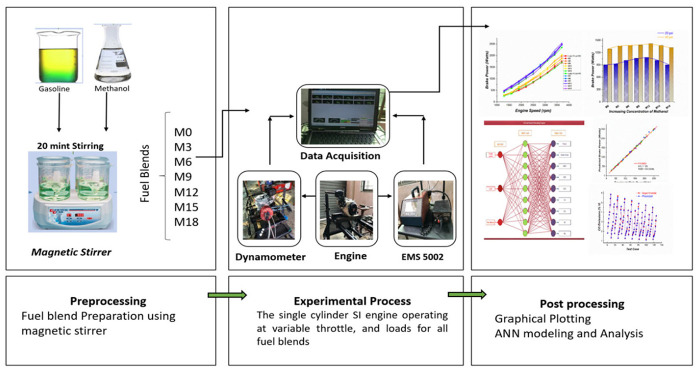
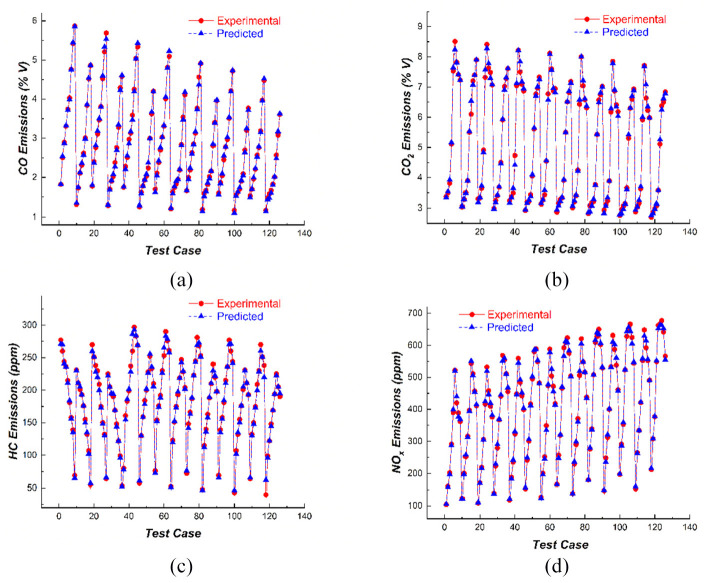
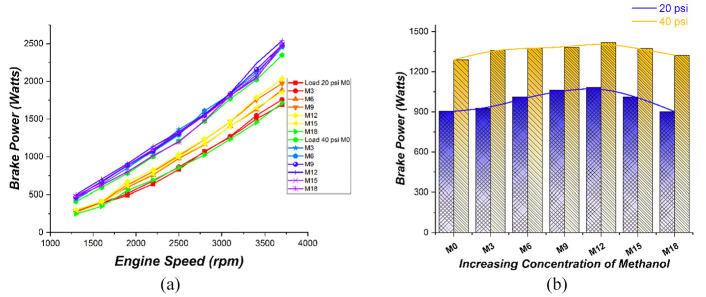
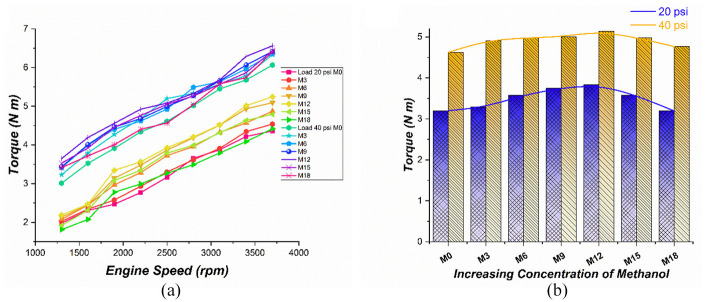
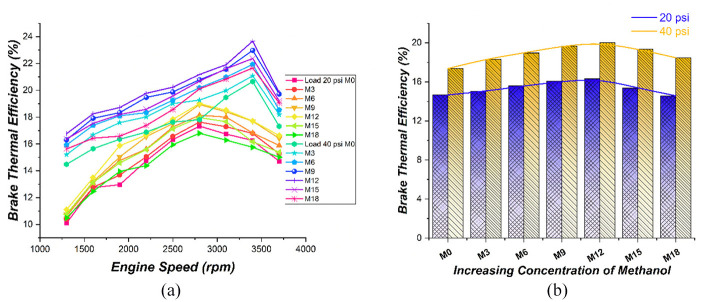
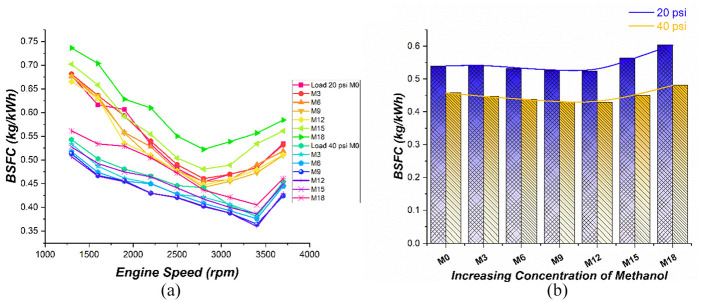
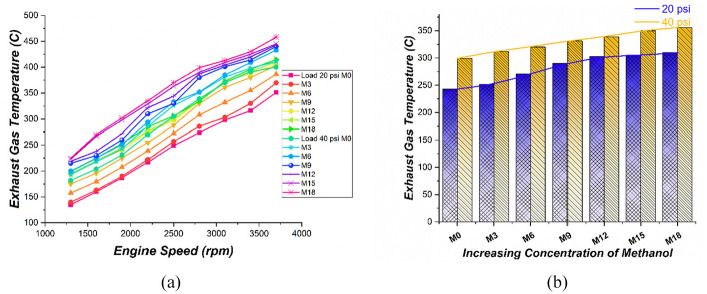
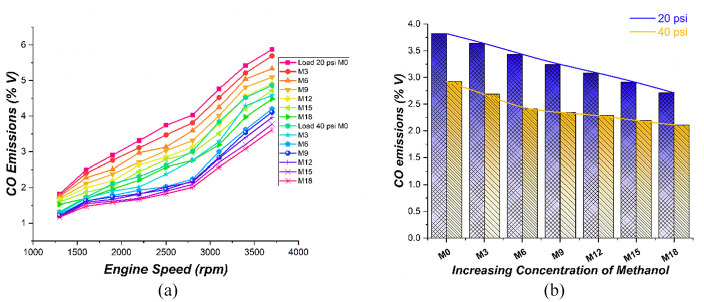
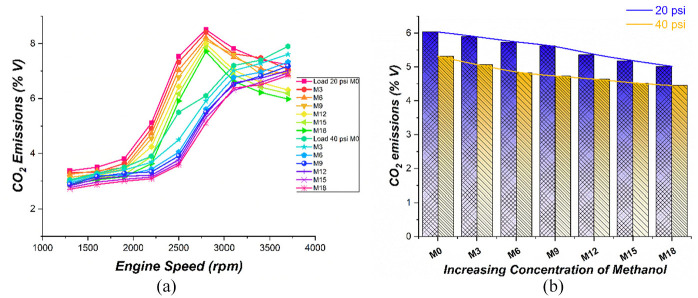
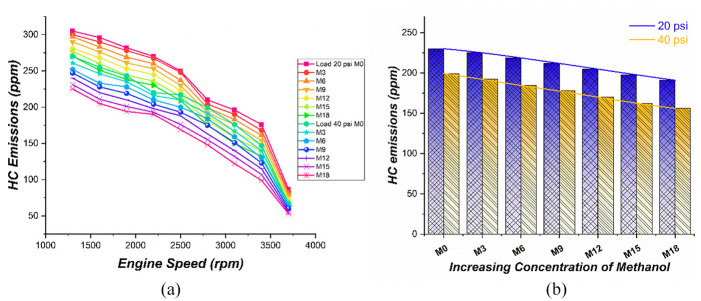
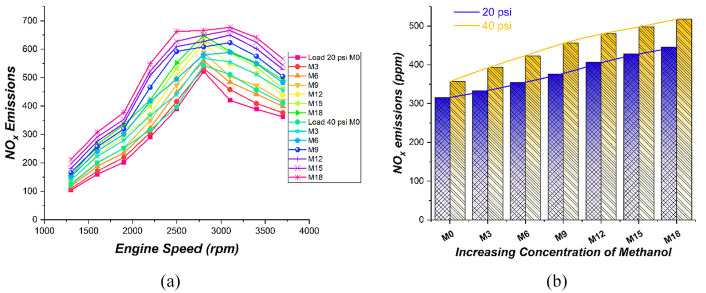
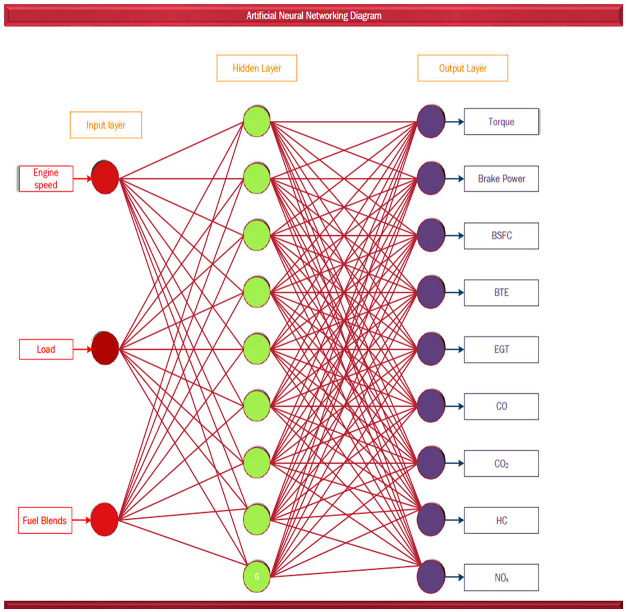
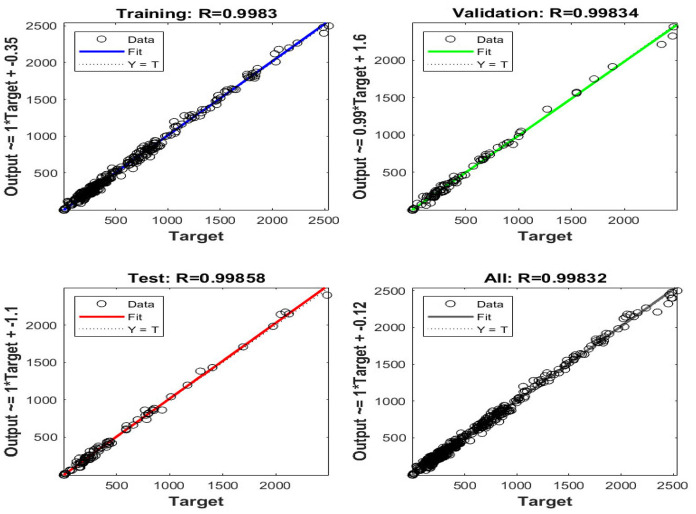
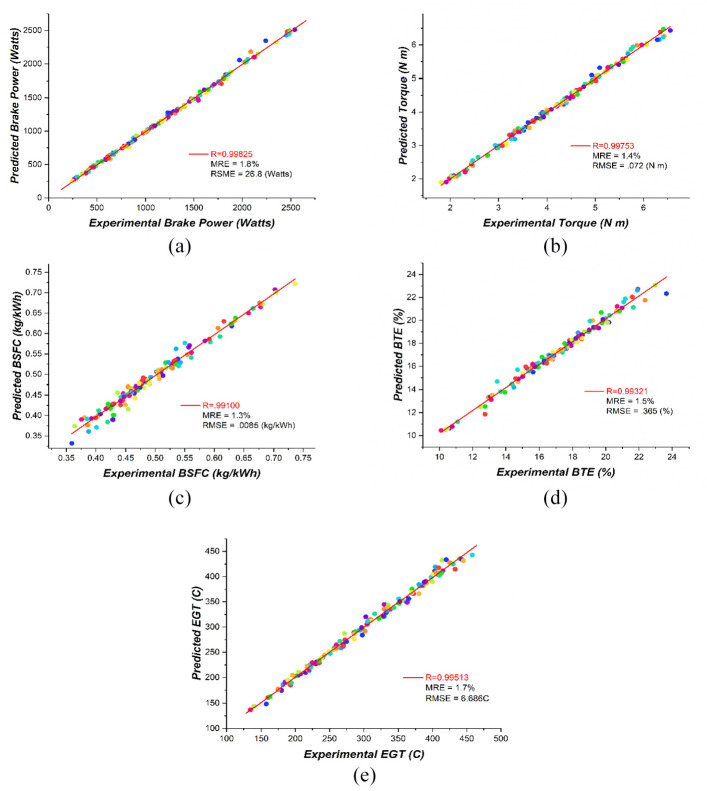
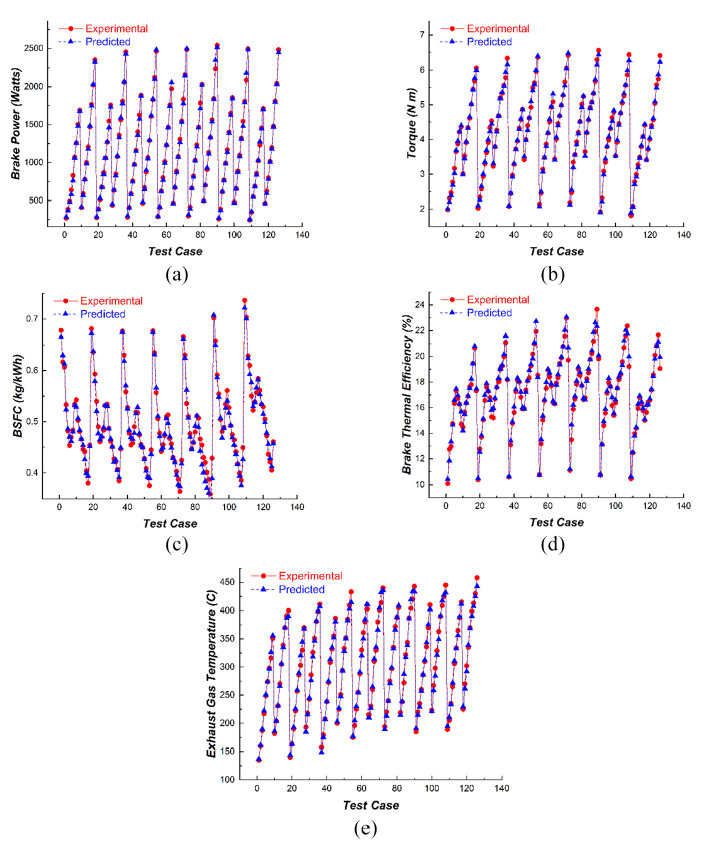
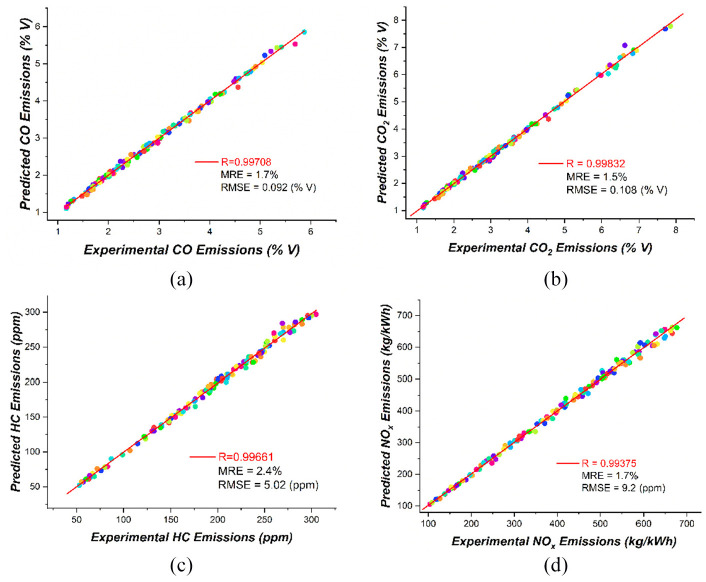
The deployment of methanol like alternative fuels in engines is a necessity of the present time to comprehend power requirements and environmental pollution. Furthermore, a comprehensive prediction of the impact of the methanol-gasoline blend on engine characteristics is also required in the era of artificial intelligence. The current study analyzes and compares the experimental and Artificial Neural Network (ANN) aided performance and emissions of four-stroke, single-cylinder SI engine using methanol-gasoline blends of 0%, 3%, 6%, 9%, 12%, 15%, and 18%. The experiments were performed at engine speeds of 1300-3700 rpm with constant loads of 20 and 40 psi for seven different fractions of fuels. Further, an ANN model has developed setting fuel blends, speed and load as inputs, and exhaust emissions and performance parameters as the target. The dataset was randomly divided into three groups of training (70%), validation (15%), and testing (15%) using MATLAB. The feedforward algorithm was used with tangent sigmoid transfer active function (tansig) and gradient descent with an adaptive learning method. It was observed that the continuous addition of methanol up to 12% (M12) increased the performance of the engine. However, a reduction in emissions was observed except for NO emissions. The regression correlation coefficient (R) and the mean relative error (MRE) were in the range of 0.99100-0.99832 and 1.2%-2.4% respectively, while the values of root mean square error were extremely small. The findings depicted that M12 performed better than other fractions. ANN approach was found suitable for accurately predicting the performance and exhaust emissions of small-scaled SI engines.
在发动机中部署甲醇等替代燃料是当前理解动力需求和环境污染的必要举措。此外,在人工智能时代,还需要对甲醇 - 汽油混合燃料对发动机特性的影响进行全面预测。当前研究分析并比较了使用0%、3%、6%、9%、12%、15%和18%甲醇 - 汽油混合燃料的四冲程单缸火花点火(SI)发动机的实验性能及排放,以及人工神经网络(ANN)辅助性能和排放情况。实验在1300 - 3700转/分钟的发动机转速下进行,针对七种不同燃料比例,在20和40磅力/平方英寸的恒定负荷下进行。此外,开发了一个ANN模型,将燃料混合比、转速和负荷作为输入,将废气排放和性能参数作为目标。使用MATLAB将数据集随机分为训练组(70%)、验证组(15%)和测试组(15%)。采用前馈算法,使用正切Sigmoid传递激活函数(tansig)和带有自适应学习方法的梯度下降法。观察到持续添加甲醇直至12%(M12)可提高发动机性能。然而,除了氮氧化物(NO)排放外,其他排放有所减少。回归相关系数(R)和平均相对误差(MRE)分别在0.99100 - 0.99832和1.2% - 2.4%的范围内,而均方根误差值极小。研究结果表明,M12的性能优于其他比例。发现ANN方法适用于准确预测小型SI发动机的性能和废气排放。