Institute of Cellular Biology and Pathology "Nicolae Simionescu" of the Romanian Academy, Bucharest, Romania.
Oxid Med Cell Longev. 2021 Mar 9;2021:6685612. doi: 10.1155/2021/6685612. eCollection 2021.
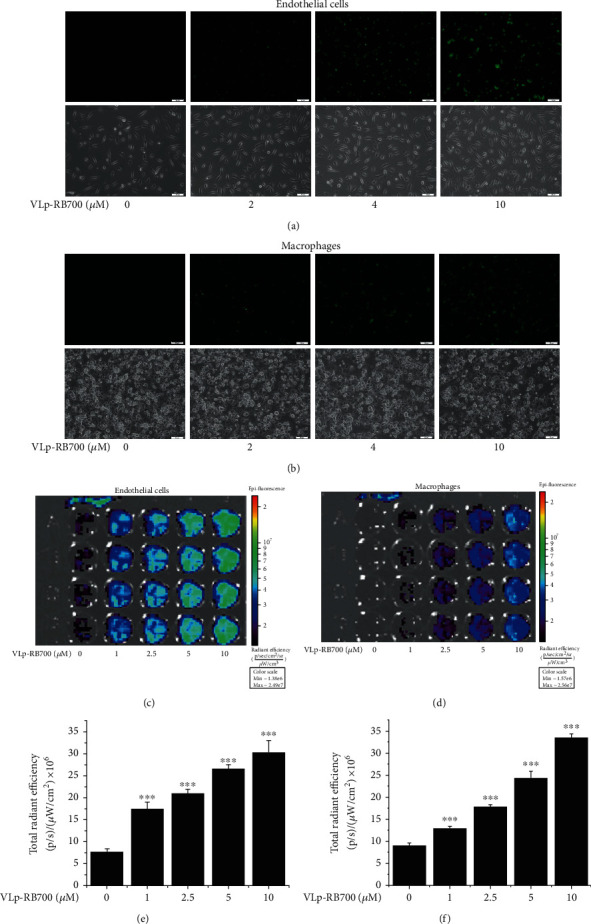
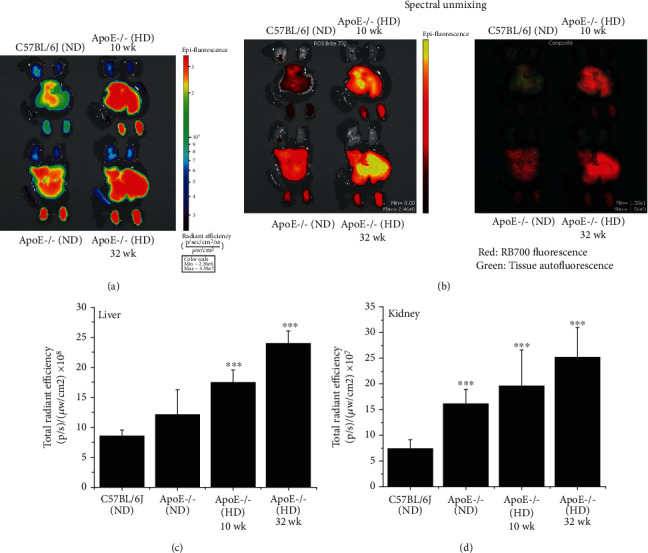
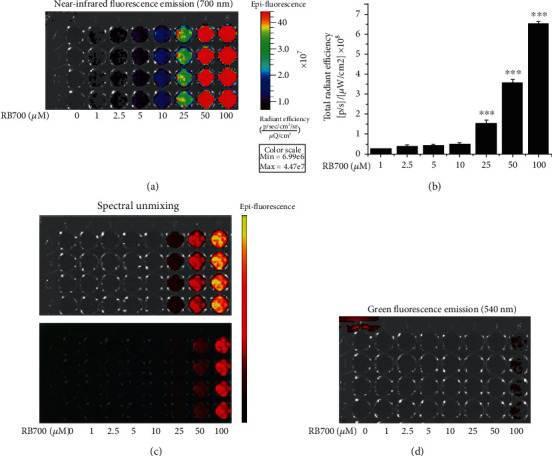
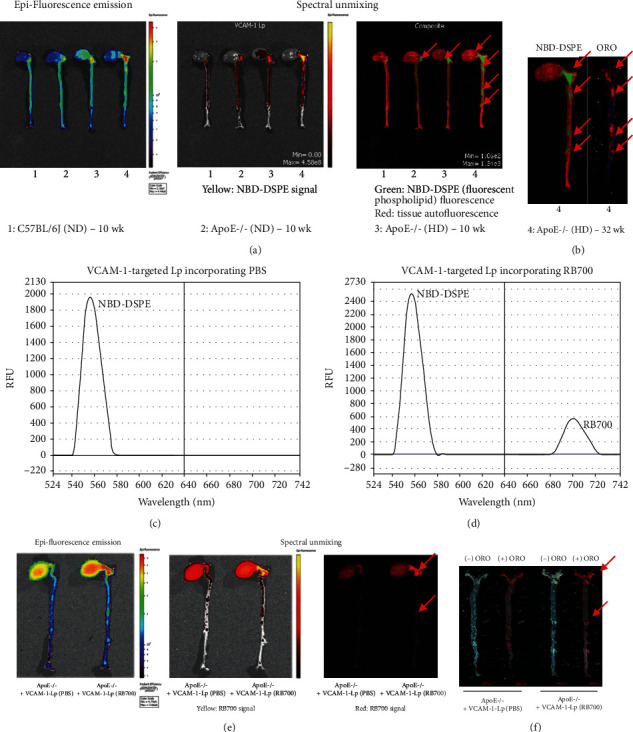
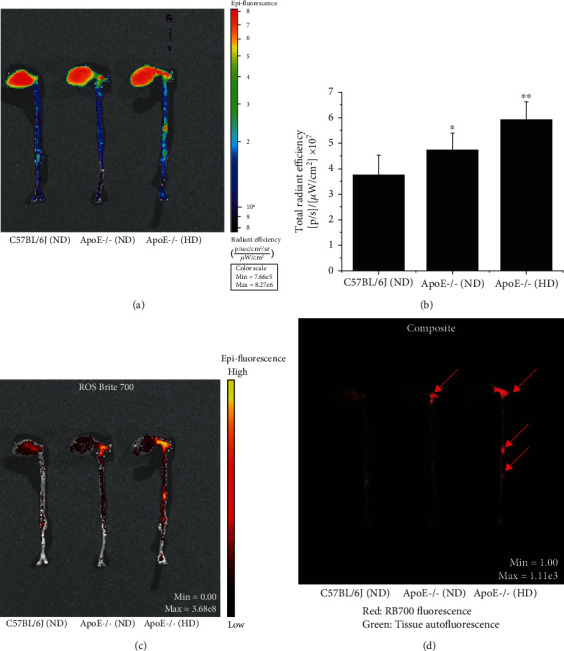
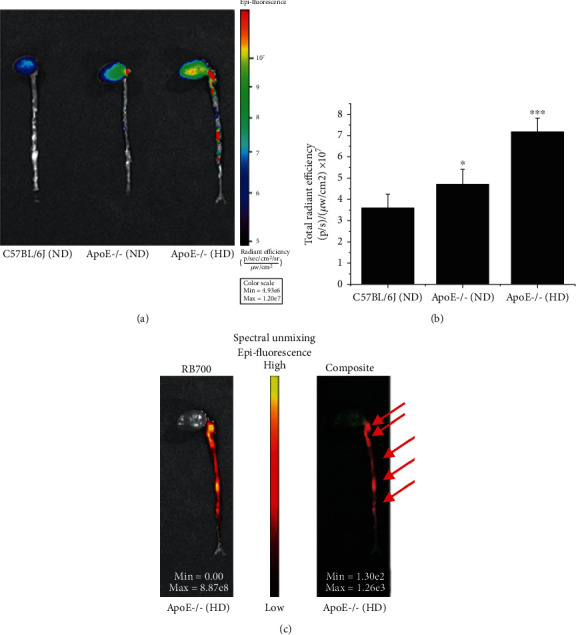
Excessive production of reactive oxygen species (ROS) and the ensuing oxidative stress are instrumental in all phases of atherosclerosis. Despite the major achievements in understanding the regulatory pathways and molecular sources of ROS in the vasculature, the specific detection and quantification of ROS in experimental models of disease remain a challenge. We aimed to develop a reliable and straightforward imaging procedure to interrogate the ROS overproduction in the vasculature and in various organs/tissues in atherosclerosis. To this purpose, the cell-impermeant ROS Brite™ 700 (RB700) probe that produces bright near-infrared fluorescence upon ROS oxidation was encapsulated into VCAM-1-targeted, sterically stabilized liposomes (VLp). Cultured human endothelial cells (EC) and macrophages (Mac) were used for experiments. C57BL6/J and ApoE-/- mice were randomized to receive normal or high-fat, cholesterol-rich diet for 10 or 32 weeks. The mice received a retroorbital injection with fluorescent tagged VLp incorporating RB700 (VLp-RB700). After two hours, the specific signals of the oxidized RB700 and 1,2-distearoyl-sn-glycero-3-phosphoethanolamine-N-(7-nitro-2-1,3-benzoxadiazol-4-yl) (NBD-DSPE), inserted into liposome bilayers, were measured in the mouse aorta and various organs by high-resolution fluorescent imaging. VLp-RB700 was efficiently taken up by cultured human EC and Mac, as confirmed by fluorescence microscopy and spectrofluorimetry. After systemic administration in atherosclerotic ApoE-/- mice, VLp-RB700 were efficiently concentrated at the sites of aortic lesions, as indicated by the augmented NBD fluorescence. Significant increases in oxidized RB700 signal were detected in the aorta and in the liver and kidney of atherosclerotic ApoE-/- mice. RB700 encapsulation into sterically stabilized VCAM-1-sensitive Lp could be a novel strategy for the qualitative and quantitative detection of ROS in the vasculature and various organs and tissues in animal models of disease. The accurate and precise detection of ROS in experimental models of disease could ease the translation of the results to human pathologies.
活性氧(ROS)的过度产生以及随之而来的氧化应激在动脉粥样硬化的所有阶段都起着重要作用。尽管在理解血管中 ROS 的调节途径和分子来源方面取得了重大进展,但在疾病的实验模型中,ROS 的特异性检测和定量仍然是一个挑战。我们旨在开发一种可靠且直接的成像程序来检测血管和动脉粥样硬化中各种器官/组织中 ROS 的过度产生。为此,将细胞不可渗透的 ROS Brite™ 700(RB700)探针封装到 VCAM-1 靶向的、空间稳定的脂质体(VLp)中,该探针在 ROS 氧化时产生明亮的近红外荧光。使用培养的人内皮细胞(EC)和巨噬细胞(Mac)进行实验。C57BL6/J 和 ApoE-/- 小鼠被随机分为接受正常或高脂肪、富含胆固醇饮食 10 或 32 周。小鼠接受荧光标记的 VLp-RB700(VLp-RB700)逆行眶内注射。两小时后,通过高分辨率荧光成像测量小鼠主动脉和各种器官中氧化 RB700 和插入脂质体双层的 1,2-二硬脂酰-sn-甘油-3-磷酸乙醇胺-N-(7-硝基-2-1,3-苯并恶二唑-4-基)(NBD-DSPE)的特异性信号。VLp-RB700 被培养的人 EC 和 Mac 有效摄取,这通过荧光显微镜和荧光分光光度法得到证实。在动脉粥样硬化 ApoE-/- 小鼠体内给予系统给药后,VLp-RB700 有效地集中在主动脉病变部位,这表明 NBD 荧光增强。在动脉粥样硬化 ApoE-/- 小鼠的主动脉以及肝脏和肾脏中检测到氧化 RB700 信号显著增加。ROS 检测的新型策略,用于定性和定量检测血管和疾病动物模型中各种器官和组织中的 ROS。在疾病的实验模型中对 ROS 的准确和精确检测可以简化将结果转化为人类病理学的过程。