Gupta Sunayna, Longmore Avery, Drake Madeline, Han Ra, Sgro Michael, Hollamby Kathleen, Campbell Douglas M
Pediatrics, St. Michael's Hospital, Unity Health Toronto, Toronto, CAN.
Pediatrics, University of Toronto, Toronto, CAN.
Cureus. 2021 Feb 18;13(2):e13418. doi: 10.7759/cureus.13418.
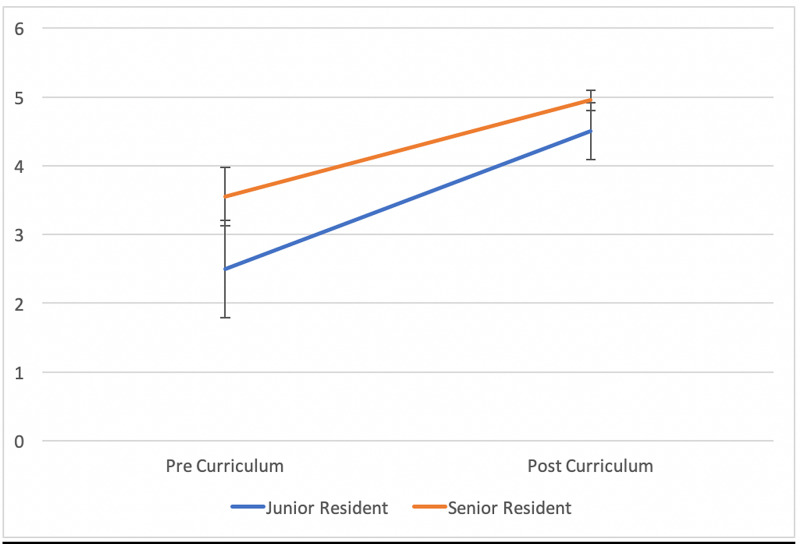
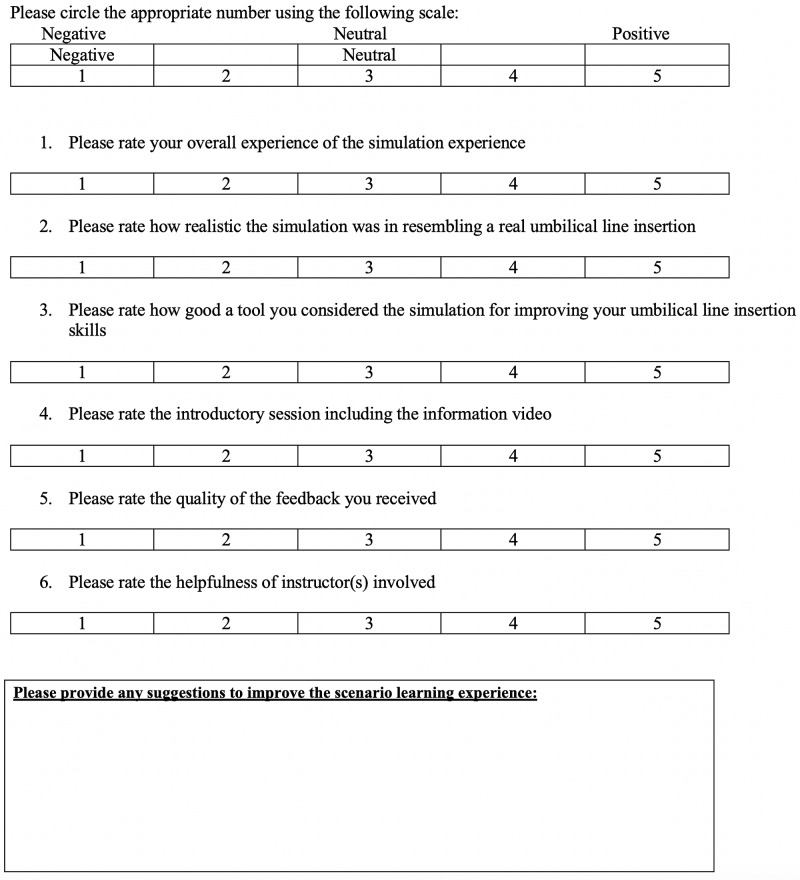
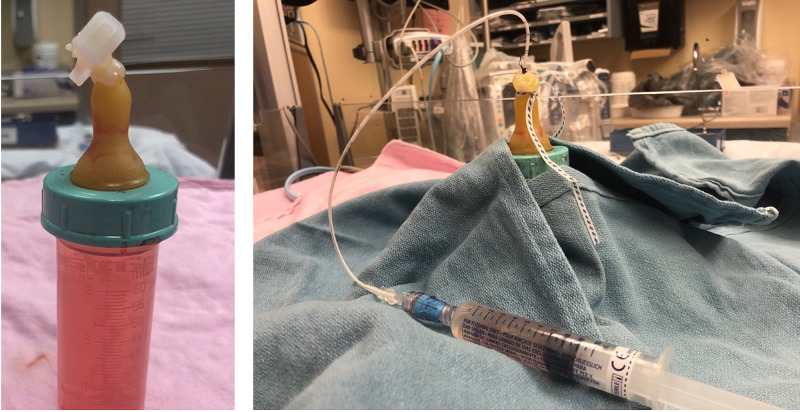
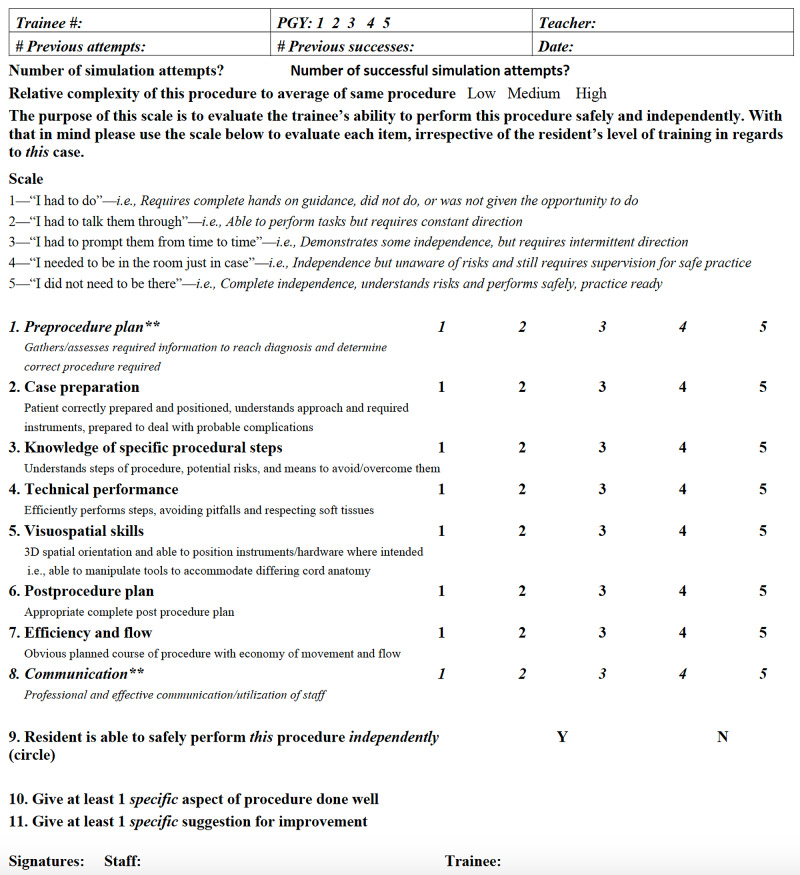
Background Insertion of an umbilical venous catheter (UVC) is a required skill for pediatric residents to learn and perform effectively. However, there is known variability in the ability of residents to perform this essential neonatal skill. Objective The objective of our study was to create a competency-based curriculum for umbilical vein catheter insertion using a human umbilical tissue simulated model, and to assess the feasibility of the curriculum on resident learners during their neonatology rotations. Methods We evaluated the curriculum by assessment of resident learning, reactions, and behaviours. Performance was assessed using the Ottawa Surgical Competency Operating Room Evaluation (O-SCORE). Results A total of 14 residents were included for analysis. The majority were 'senior' residents (postgraduate year (PGY)-3 and PGY-4 n = 10; PGY-1 n =4), and they reported a wide range of previous experience with UVC insertion prior to this curriculum implementation. The residents' reaction to the curriculum was overwhelmingly positive. All residents maintained or improved in their knowledge assessment. O-SCORE results showed improvement in UVC insertion before and after curriculum completion for both junior (2.5 +/- 0.71 to 4.5 +/- 0.41) and senior (3.55 +/- 0.42 to 4.95 +/- 0.15, p < 0.001) residents. The mean improvement in O-SCORE was greater for junior residents than senior residents. Conclusion The results of this study demonstrate the feasibility and emerging impact of a competency-based curriculum using simulation for procedural skills.
背景 插入脐静脉导管(UVC)是儿科住院医师必须有效学习和掌握的一项技能。然而,住院医师执行这项重要的新生儿技能的能力存在差异。目的 我们研究的目的是使用人脐组织模拟模型创建一个基于能力的脐静脉导管插入课程,并评估该课程在住院医师新生儿科轮转期间对学员的可行性。方法 我们通过评估住院医师的学习情况、反应和行为来评价该课程。使用渥太华外科手术能力手术室评估(O-SCORE)来评估表现。结果 共有14名住院医师纳入分析。大多数是“高级”住院医师(三年级和四年级研究生(PGY)n = 10;一年级PGY n = 4),他们报告在本课程实施之前有广泛的UVC插入经验。住院医师对该课程的反应绝大多数是积极的。所有住院医师在知识评估中保持或有所提高。O-SCORE结果显示,初级住院医师(2.5±0.71至4.5±0.41)和高级住院医师(3.55±0.42至4.95±0.15,p < 0.001)在课程完成前后UVC插入均有改善。初级住院医师O-SCORE的平均改善幅度大于高级住院医师。结论 本研究结果证明了基于能力的模拟程序技能课程的可行性和新出现的影响。