Department of Neurobiology, Physiology and Behavior, University of California Davis, Davis, CA, United States of America.
Aging and Metabolism Research Program, Oklahoma Medical Research Foundation, Oklahoma City, OK, United States of America.
PLoS One. 2021 Mar 25;16(3):e0240278. doi: 10.1371/journal.pone.0240278. eCollection 2021.
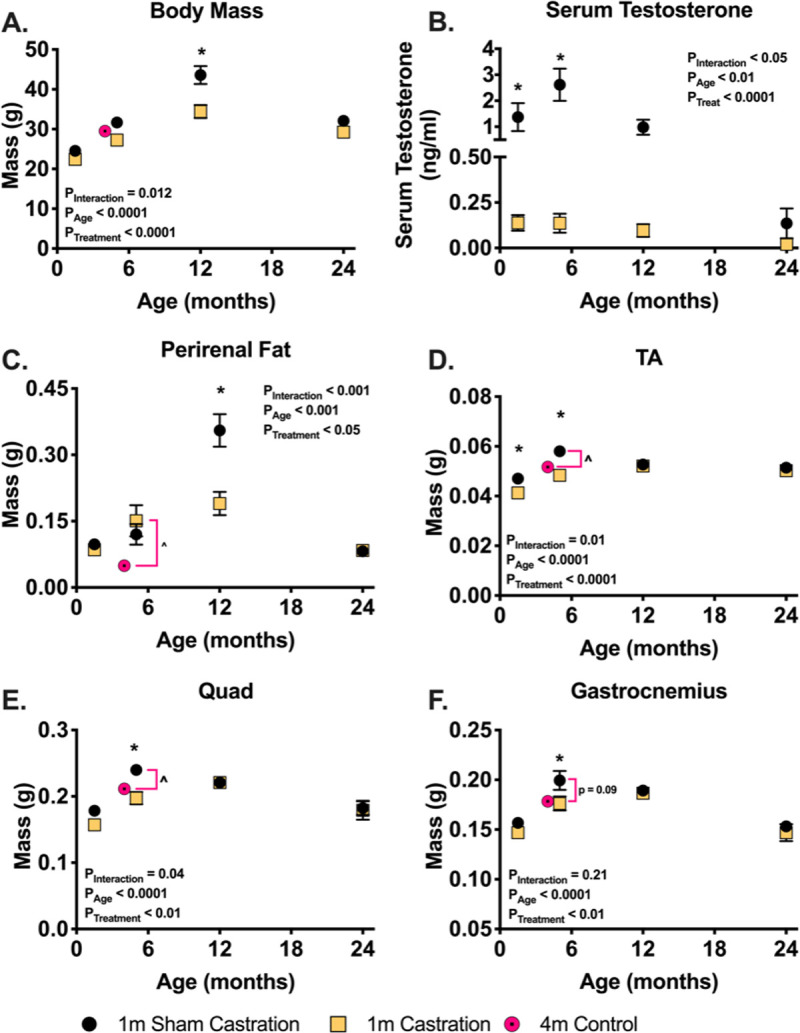
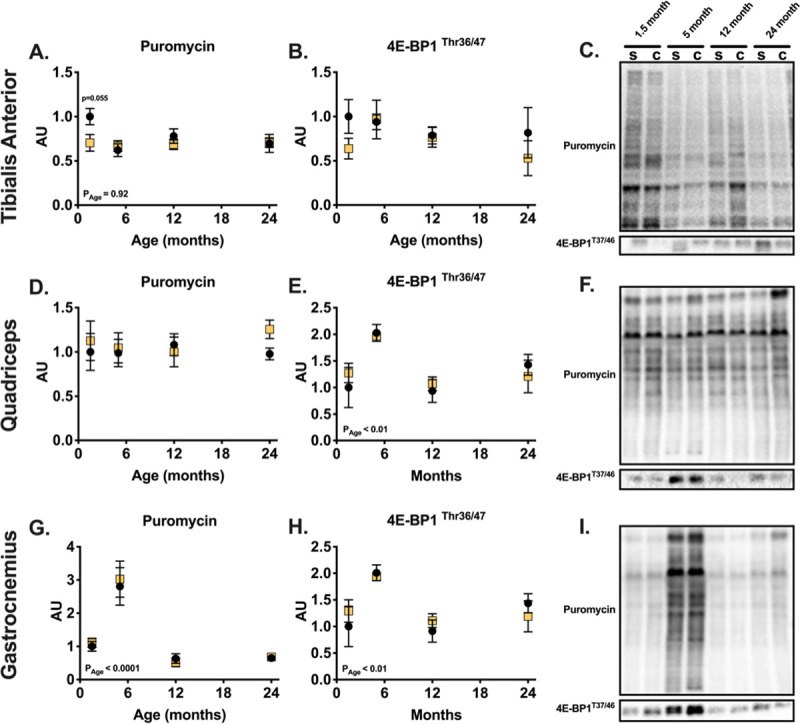
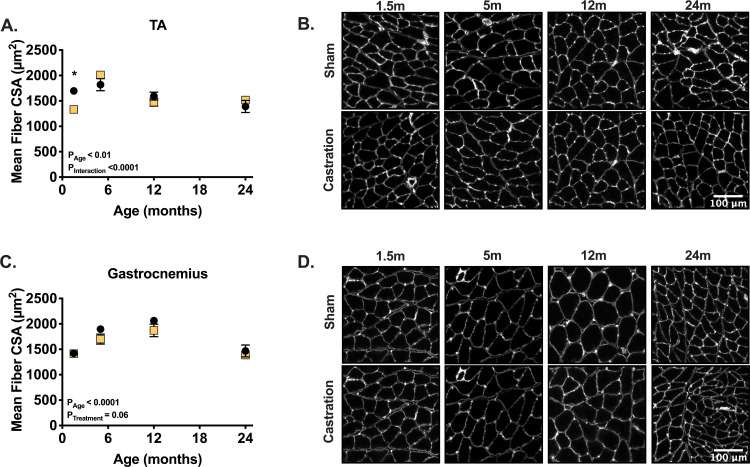
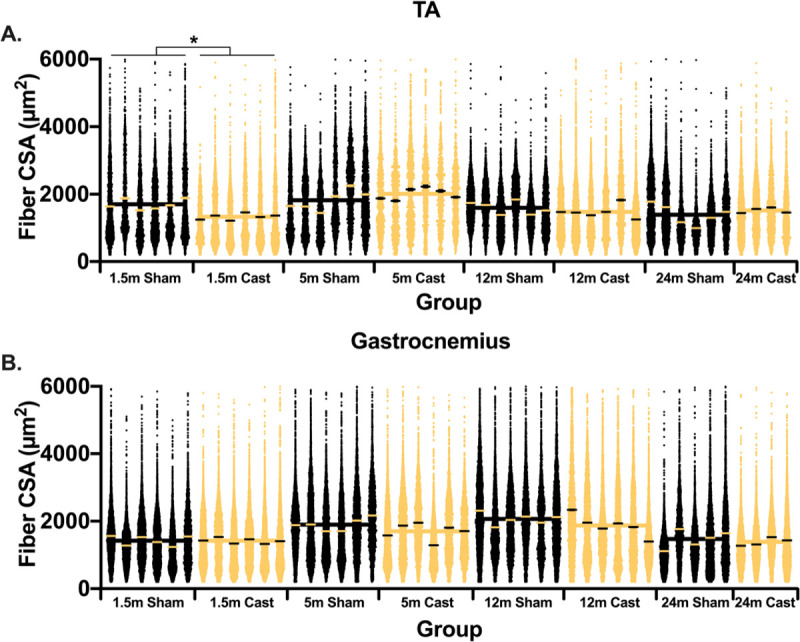
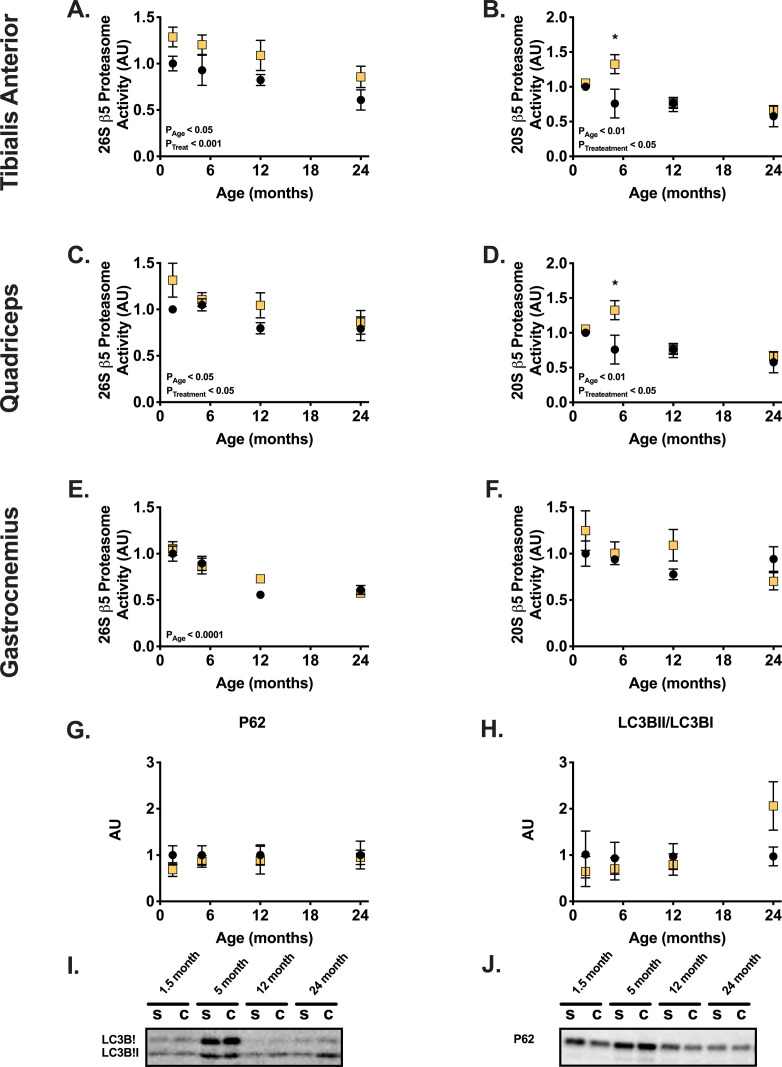
Testosterone is considered a potent anabolic agent in skeletal muscle with a well-established role in adolescent growth and development in males. However, the role of testosterone in the regulation of skeletal muscle mass and function throughout the lifespan has yet to be fully established. While some studies suggest that testosterone is important for the maintenance of skeletal muscle mass, an understanding of the role this hormone plays in young, adult, and old males with normal and low serum testosterone levels is lacking. We investigated the role testosterone plays in the maintenance of muscle mass by examining the effect of orchiectomy-induced testosterone depletion in C57Bl6 male mice at ages ranging from early postnatal through old age (1.5-, 5-, 12-, and 24-month old mice). Following 28 days of testosterone depletion, we assessed mass and fiber cross-sectional-area (CSA) of the tibialis anterior, gastrocnemius, and quadriceps muscles. In addition, we measured global rates of protein synthesis and degradation using the SuNSET method, western blots, and enzyme activity assays. Twenty-eight days of testosterone depletion resulted in reduced muscle mass in the two youngest cohorts, but had no effect in the two oldest cohorts. Mean CSA decreased only in the youngest cohort and only in the tibialis anterior muscle. Testosterone depletion resulted in a general increase in proteasome activity at all ages. No change in protein synthesis was detected at the terminal time point. These data suggest that within physiological serum concentrations, testosterone may not be critical for the maintenance of muscle mass in mature male mice; however, in young mice testosterone is crucial for normal growth.
睾酮被认为是骨骼肌中的一种强效合成代谢剂,在男性青春期生长和发育中具有明确的作用。然而,睾酮在调节整个生命周期中骨骼肌质量和功能中的作用尚未完全确定。虽然一些研究表明睾酮对维持骨骼肌质量很重要,但对于血清睾酮水平正常和较低的年轻、成年和老年男性中该激素所起的作用的理解还很缺乏。我们通过检查去势诱导的睾酮耗竭对从早期新生儿到老年(1.5、5、12 和 24 月龄的小鼠)的 C57Bl6 雄性小鼠的骨骼肌质量的维持作用,研究了睾酮的作用。在 28 天的睾酮耗竭后,我们评估了前胫骨肌、比目鱼肌和四头肌的质量和纤维横截面积(CSA)。此外,我们使用 SuNSET 方法、western blot 和酶活性测定法测量了全身蛋白质合成和降解的速率。28 天的睾酮耗竭导致两个最年轻的队列的肌肉质量减少,但对两个最年长的队列没有影响。平均 CSA 仅在最年轻的队列中且仅在前胫骨肌中减少。睾酮耗竭导致所有年龄的蛋白酶体活性普遍增加。在终末时间点未检测到蛋白质合成的变化。这些数据表明,在生理血清浓度范围内,睾酮可能不是维持成熟雄性小鼠肌肉质量所必需的;然而,在年轻小鼠中,睾酮对于正常生长至关重要。