Department of Obstetrics and Gynecology, Nagoya University Graduate School of Medicine, Tsuruma-cho 65, Showa-ku, Nagoya, 466-8550, Japan.
Institute for Advanced Research, Nagoya University, Nagoya, Japan.
J Exp Clin Cancer Res. 2021 Mar 25;40(1):112. doi: 10.1186/s13046-021-01910-0.
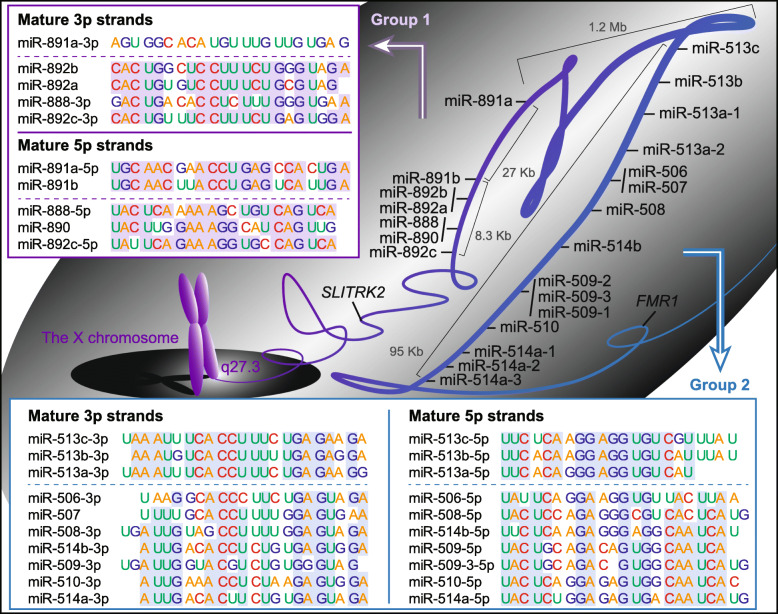
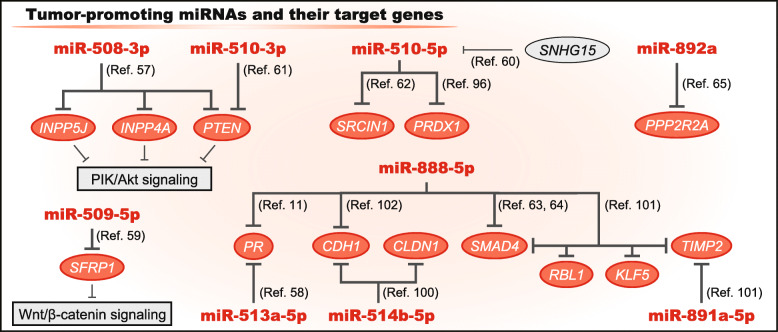
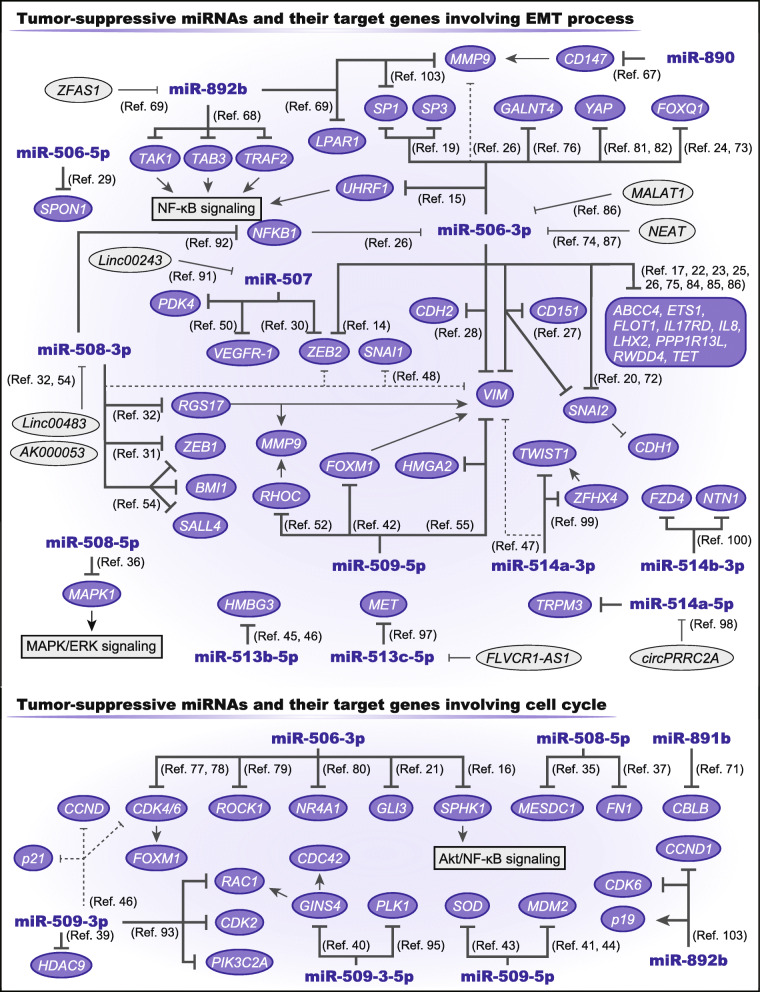
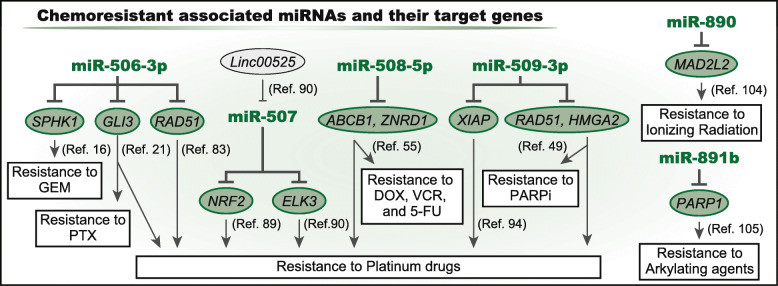
MicroRNAs (miRNAs) regulate the expression of their target genes post-transcriptionally; thus, they are deeply involved in fundamental biological processes. miRNA clusters contain two or more miRNA-encoding genes, and these miRNAs are usually coexpressed due to common expression mechanisms. Therefore, miRNA clusters are effective modulators of biological pathways by the members coordinately regulating their multiple target genes, and an miRNA cluster located on the X chromosome q27.3 region has received much attention in cancer research recently. In this review, we discuss the novel findings of the chrXq27.3 miRNA cluster in various types of cancer.The chrXq27.3 miRNA cluster contains 30 mature miRNAs synthesized from 22 miRNA-encoding genes in an ~ 1.3-Mb region. The expressions of these miRNAs are usually negligible in many normal tissues, with the male reproductive system being an exception. In cancer tissues, each miRNA is dysregulated, compared with in adjacent normal tissues. The miRNA-encoding genes are not uniformly distributed in the region, and they are further divided into two groups (the miR-506-514 and miR-888-892 groups) according to their location on the genome. Most of the miRNAs in the former group are tumor-suppressive miRNAs that are further downregulated in various cancers compared with normal tissues. miR-506-3p in particular is the most well-known miRNA in this cluster, and it has various tumor-suppressive functions associated with the epithelial-mesenchymal transition, proliferation, and drug resistance. Moreover, other miRNAs, such as miR-508-3p and miR-509-3p, have similar tumor-suppressive effects. Hence, the expression of these miRNAs is clinically favorable as prognostic factors in various cancers. However, the functions of the latter group are less understood. In the latter group, miR-888-5p displays oncogenic functions, whereas miR-892b is tumor suppressive. Therefore, the functions of the miR-888-892 group are considered to be cell type- or tissue-specific.In conclusion, the chrXq27.3 miRNA cluster is a critical regulator of cancer progression, and the miRNAs themselves, their regulatory mechanisms, and their target genes might be promising therapeutic targets.
微小 RNA(miRNA)在后转录水平上调节靶基因的表达;因此,它们深深参与基本的生物过程。miRNA 簇包含两个或更多 miRNA 编码基因,由于共同的表达机制,这些 miRNA 通常共同表达。因此,miRNA 簇通过成员协调调节其多个靶基因,成为生物途径的有效调节剂,最近位于 X 染色体 q27.3 区域的 miRNA 簇在癌症研究中受到了广泛关注。在这篇综述中,我们讨论了 chrXq27.3 miRNA 簇在各种类型癌症中的新发现。chrXq27.3 miRNA 簇包含 30 个成熟 miRNA,由位于约 1.3 Mb 区域内的 22 个 miRNA 编码基因合成。在许多正常组织中,这些 miRNA 的表达通常可以忽略不计,男性生殖系统是一个例外。在癌症组织中,与相邻正常组织相比,每个 miRNA 都失调。miRNA 编码基因在该区域内不是均匀分布的,根据其在基因组上的位置进一步分为两组(miR-506-514 和 miR-888-892 组)。前一组中的大多数 miRNA 是肿瘤抑制性 miRNA,与正常组织相比,在各种癌症中进一步下调。特别是 miR-506-3p 是该簇中最著名的 miRNA,它具有与上皮-间充质转化、增殖和耐药性相关的各种肿瘤抑制功能。此外,其他 miRNA,如 miR-508-3p 和 miR-509-3p,也具有类似的肿瘤抑制作用。因此,这些 miRNA 的表达作为各种癌症的预后因素具有临床意义。然而,对后一组的功能了解较少。在后一组中,miR-888-5p 显示致癌功能,而 miR-892b 则具有肿瘤抑制作用。因此,miR-888-892 组的功能被认为是细胞类型或组织特异性的。总之,chrXq27.3 miRNA 簇是癌症进展的关键调节剂,miRNA 本身、其调节机制及其靶基因可能是有前途的治疗靶点。