Department of Health Management and Economics, School of Public Health, Tehran University of Medical Sciences, Tehran, Iran.
Department of Public Health, Esfarayen Faculty of Medical Sciences, Esfarayen, Iran.
J Health Popul Nutr. 2021 Mar 25;40(1):11. doi: 10.1186/s41043-021-00239-w.
The total fertility rate (TFR) in the Middle East and North Africa has experienced a declining trend in recent years. Accordingly, the present study was conducted to provide a clear picture of the most critical factors affecting the TFR decline in this region.
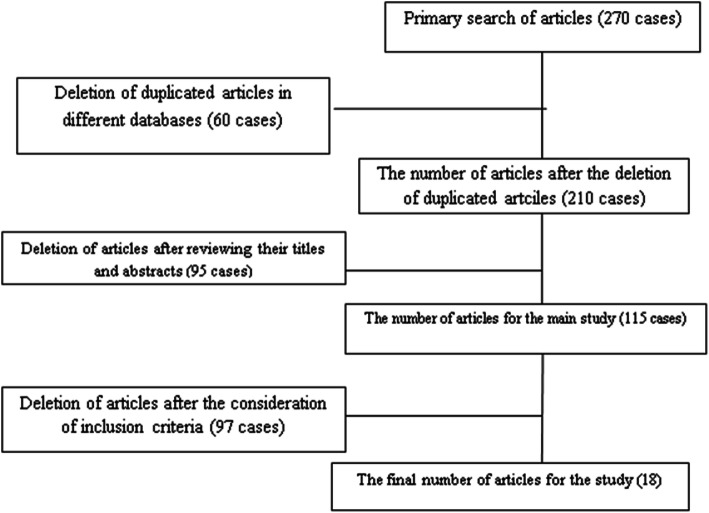
This study was a systematic review between the years 2000 and 2016. The different databases like Cochrane, PubMed, Scopus, and Science Direct and the Google Scholar search engine were used. At first, 270 articles and then 18 articles were selected and meticulously read for the final analysis.
The results indicated a declining trend in the TFR in the Middle East and North Africa, as in other parts of the world. Regarding the causes of this declining trend, several factors were identified and categorized into five main factors of health care-related, cultural, economic, social, and political.
While taking advantage of the experiences, it is necessary to identify the five main factors and their related issues and hence consider them in the population policy-making.
近年来,中东和北非的总生育率(TFR)呈下降趋势。因此,本研究旨在清楚地了解影响该地区 TFR 下降的最关键因素。
本研究是 2000 年至 2016 年期间的系统回顾。使用了不同的数据库,如 Cochrane、PubMed、Scopus 和 Science Direct 以及 Google Scholar 搜索引擎。首先,筛选出 270 篇文章,然后仔细阅读了 18 篇文章,以进行最终分析。
结果表明,中东和北非的 TFR 呈下降趋势,与世界其他地区一样。关于这种下降趋势的原因,已经确定了几个因素,并将其分为与医疗保健、文化、经济、社会和政治有关的五个主要因素。
在利用经验的同时,有必要确定这五个主要因素及其相关问题,并在人口政策制定中考虑这些因素。