Department of Immunology, St Jude Children's Research Hospital, Memphis, Tennessee, USA.
Animal Resources Center and the Veterinary Pathology Core, St Jude Children's Research Hospital, Memphis, Tennessee, USA.
J Biol Chem. 2021 Jan-Jun;296:100579. doi: 10.1016/j.jbc.2021.100579. Epub 2021 Mar 23.
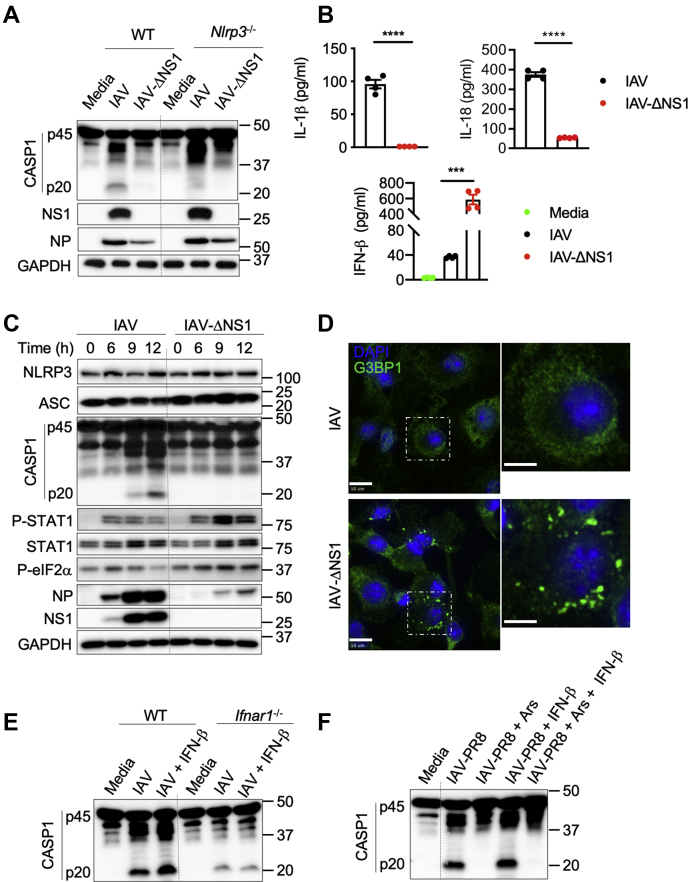
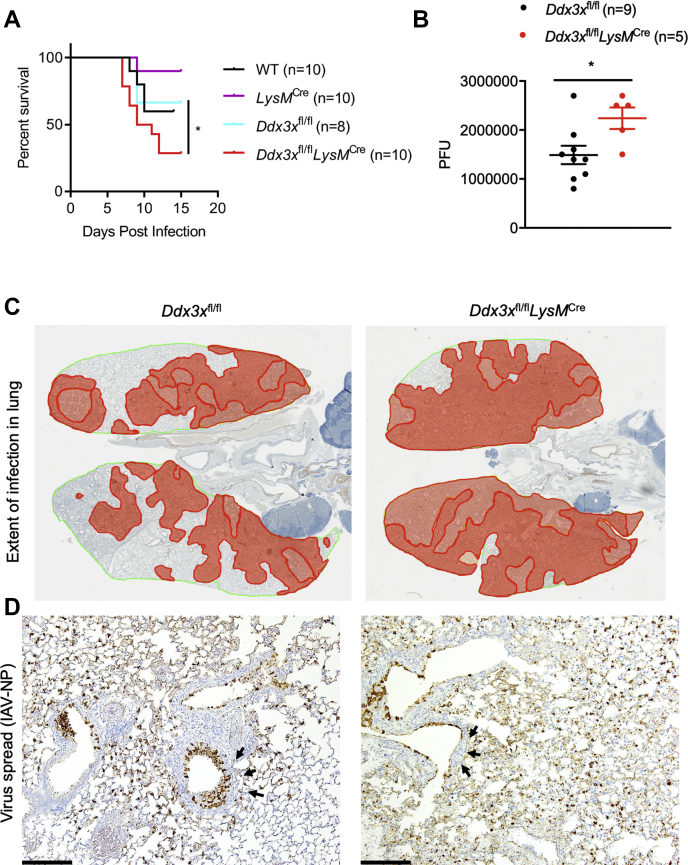
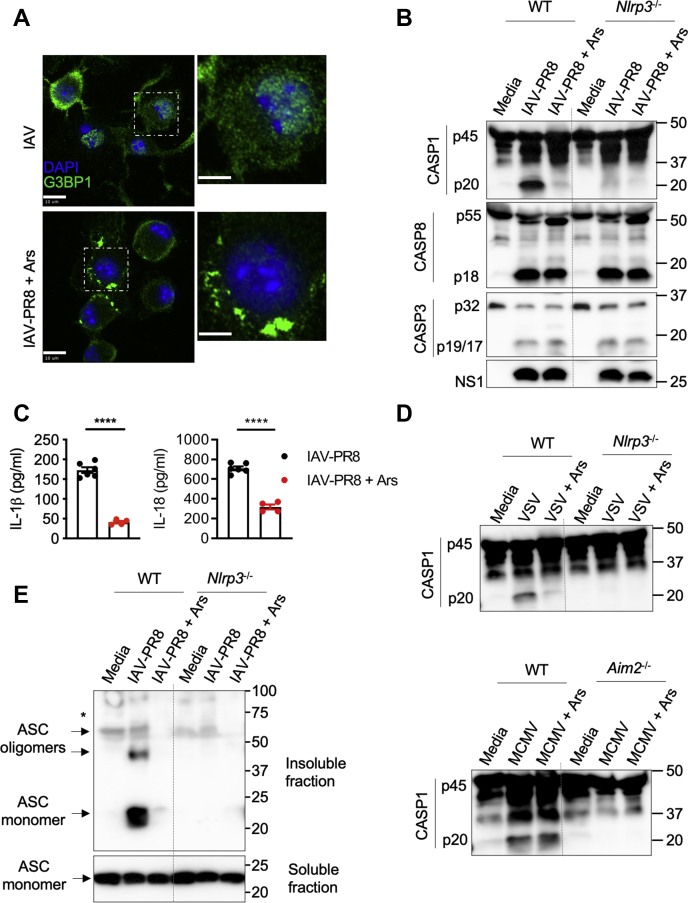
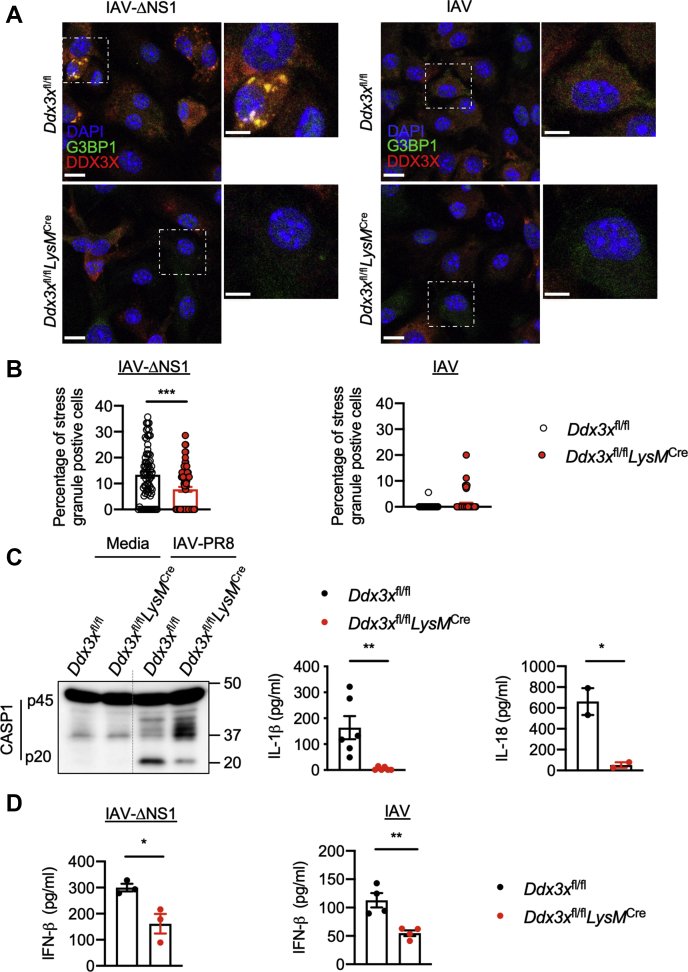
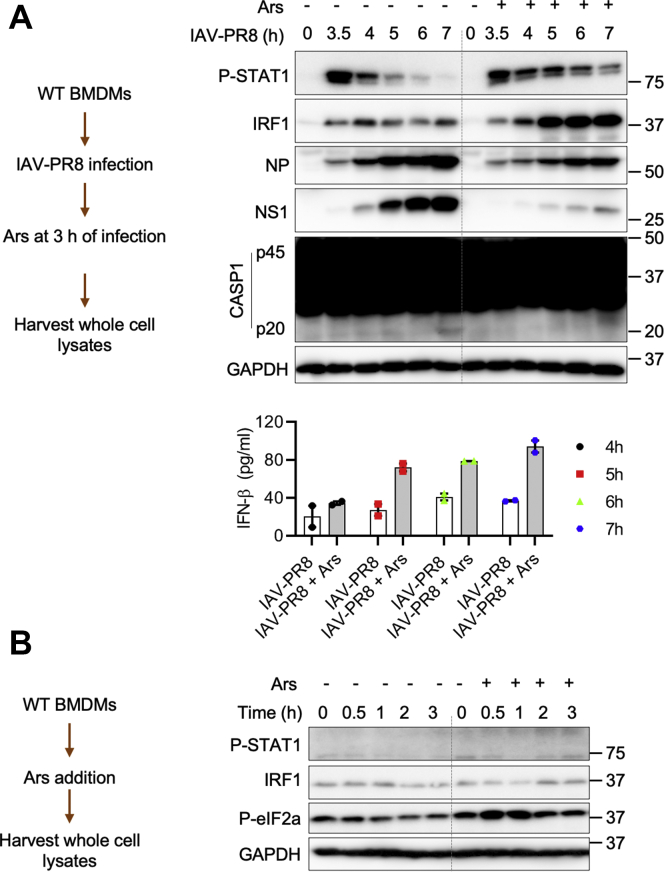
Viruses and hosts have coevolved for millions of years, leading to the development of complex host-pathogen interactions. Influenza A virus (IAV) causes severe pulmonary pathology and is a recurrent threat to human health. Innate immune sensing of IAV triggers a complex chain of host responses. IAV has adapted to evade host defense mechanisms, and the host has coevolved to counteract these evasion strategies. However, the molecular mechanisms governing the balance between host defense and viral immune evasion is poorly understood. Here, we show that the host protein DEAD-box helicase 3 X-linked (DDX3X) is critical to orchestrate a multifaceted antiviral innate response during IAV infection, coordinating the activation of the nucleotide-binding oligomerization domain-like receptor with a pyrin domain 3 (NLRP3) inflammasome, assembly of stress granules, and type I interferon (IFN) responses. DDX3X activated the NLRP3 inflammasome in response to WT IAV, which carries the immune evasive nonstructural protein 1 (NS1). However, in the absence of NS1, DDX3X promoted the formation of stress granules that facilitated efficient activation of type I IFN signaling. Moreover, induction of DDX3X-containing stress granules by external stimuli after IAV infection led to increased type I IFN signaling, suggesting that NS1 actively inhibits stress granule-mediated host responses and DDX3X-mediated NLRP3 activation counteracts this action. Furthermore, the loss of DDX3X expression in myeloid cells caused severe pulmonary pathogenesis and morbidity in IAV-infected mice. Together, our findings show that DDX3X orchestrates alternate modes of innate host defense which are critical to fight against NS1-mediated immune evasion strategies during IAV infection.
病毒和宿主共同进化了数百万年,导致了复杂的宿主-病原体相互作用的发展。甲型流感病毒(IAV)可引起严重的肺部病理变化,是人类健康的反复威胁。IAV 的先天免疫感应触发了宿主反应的复杂连锁反应。IAV 已经适应了逃避宿主防御机制,而宿主也协同进化以对抗这些逃避策略。然而,控制宿主防御和病毒免疫逃避之间平衡的分子机制还知之甚少。在这里,我们表明,宿主蛋白 DEAD-box 解旋酶 3 X 连锁(DDX3X)对于在 IAV 感染期间协调多方面的抗病毒先天反应至关重要,协调核苷酸结合寡聚化结构域样受体与含有吡喃结构域 3(NLRP3)炎性小体的激活、应激颗粒的组装和 I 型干扰素(IFN)反应。DDX3X 在响应 WT IAV 时激活 NLRP3 炎性小体,WT IAV 携带免疫逃避非结构蛋白 1(NS1)。然而,在没有 NS1 的情况下,DDX3X 促进应激颗粒的形成,这有利于有效激活 I 型 IFN 信号。此外,IAV 感染后外部刺激诱导含有 DDX3X 的应激颗粒导致 I 型 IFN 信号增加,这表明 NS1 主动抑制应激颗粒介导的宿主反应,而 DDX3X 介导的 NLRP3 激活则对抗这种作用。此外,髓样细胞中 DDX3X 表达的缺失导致 IAV 感染小鼠肺部严重发病和发病率增加。总之,我们的研究结果表明,DDX3X 协调了替代的先天宿主防御模式,这些模式对于对抗 IAV 感染期间 NS1 介导的免疫逃避策略至关重要。