Division of Gastroenterology/Hepatology, Medical College of Georgia, Augusta University, Augusta, Georgia, USA.
Division of Gastroenterology Northwestern University-Feinberg School of Medicine, Chicago, Illinois, USA.
Am J Gastroenterol. 2021 Jun 1;116(6):1156-1181. doi: 10.14309/ajg.0000000000001222.
Constipation is commonly treated with over-the-counter (OTC) products whose efficacy and safety remain unclear. We performed a systematic review of OTC therapies for chronic constipation and provide evidence-based recommendations.
We searched PubMed and Embase for randomized controlled trials of ≥4-week duration that evaluated OTC preparations between 2004 and 2020. Studies were scored using the US Preventive Services Task Force criteria (0-5 scale) including randomization, blinding, and withdrawals. The strengths of evidence were adjudicated within each therapeutic category, and recommendations were graded (A, B, C, D, and I) based on the level of evidence (level I, good; II, fair; or III, poor).
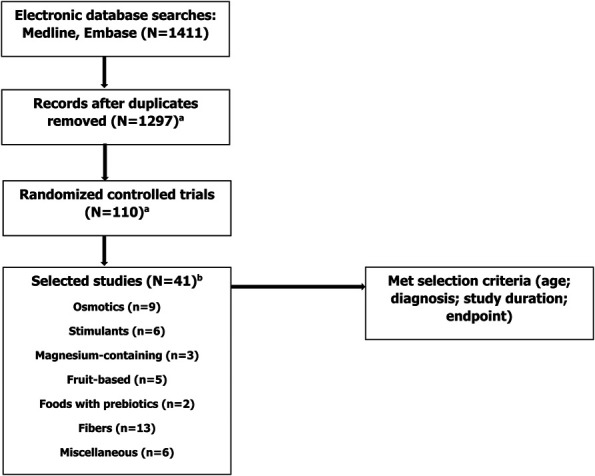
Of 1,297 studies identified, 41 met the inclusion criteria. There was good evidence (grade A recommendation) for the use of the osmotic laxative polyethylene glycol (PEG) and the stimulant senna; moderate evidence (grade B) for psyllium, SupraFiber, magnesium salts, stimulants (bisacodyl and sodium picosulfate), fruit-based laxatives (kiwi, mango, prunes, and ficus), and yogurt with galacto-oligosaccharide/prunes/linseed oil; and insufficient evidence (grade I) for polydextrose, inulin, and fructo-oligosaccharide. Diarrhea, nausea, bloating, and abdominal pain were common adverse events, but no serious adverse events were reported.
The spectrum of OTC products has increased and quality of evidence has improved, but methodological issues including variability in study design, primary outcome measures, trial duration, and small sample sizes remain. We found good evidence to recommend polyethylene glycol or senna as first-line laxatives and moderate evidence supporting fiber supplements, fruits, stimulant laxatives, and magnesium-based products. For others, further validation with more rigorously designed studies is warranted.
便秘常用非处方(OTC)产品治疗,但这些产品的疗效和安全性仍不清楚。我们对 2004 年至 2020 年期间用于慢性便秘的 OTC 治疗方法进行了系统评价,并提供了基于证据的推荐意见。
我们在 PubMed 和 Embase 中搜索了 2004 年至 2020 年期间评估 OTC 制剂的、持续时间≥4 周的随机对照试验。研究使用美国预防服务工作组标准(0-5 分制)进行评分,包括随机化、盲法和退出。在每个治疗类别中,对证据强度进行裁决,并根据证据水平(I 级,良好;II 级,中等;或 III 级,较差)对推荐意见进行分级(A、B、C、D 和 I)。
在 1297 项研究中,有 41 项符合纳入标准。聚乙二醇(PEG)和刺激性番泻苷等渗透性泻药以及车前子壳、SupraFiber、镁盐、刺激性泻药(比沙可啶和聚卡波非钙)、水果类泻药(奇异果、芒果、李子和榕属植物)和含半乳糖-低聚果糖/李子/亚麻籽油的酸奶具有良好证据(A级推荐);车前子壳、SupraFiber、镁盐、刺激性泻药(比沙可啶和聚卡波非钙)、水果类泻药(奇异果、芒果、李子和榕属植物)和含半乳糖-低聚果糖/李子/亚麻籽油的酸奶具有良好证据(A级推荐);而聚葡糖、菊粉和低聚果糖的证据不足(I 级)。腹泻、恶心、腹胀和腹痛是常见的不良事件,但未报告严重不良事件。
OTC 产品种类有所增加,证据质量也有所提高,但仍存在方法学问题,包括研究设计、主要结局指标、试验持续时间和样本量的差异。我们发现有良好证据推荐聚乙二醇或番泻苷作为一线泻药,有中等证据支持膳食纤维补充剂、水果、刺激性泻药和基于镁的产品。对于其他产品,需要进一步用设计更严谨的研究进行验证。