Jonah Ventures, 5485 Conestoga Ct #210, Boulder, CO, 80301, USA.
Sci Rep. 2021 Mar 25;11(1):6829. doi: 10.1038/s41598-021-86260-9.
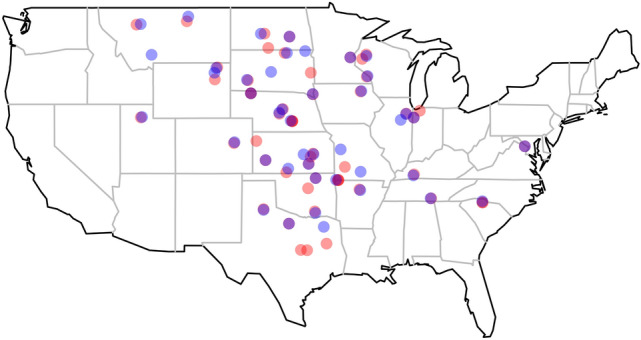
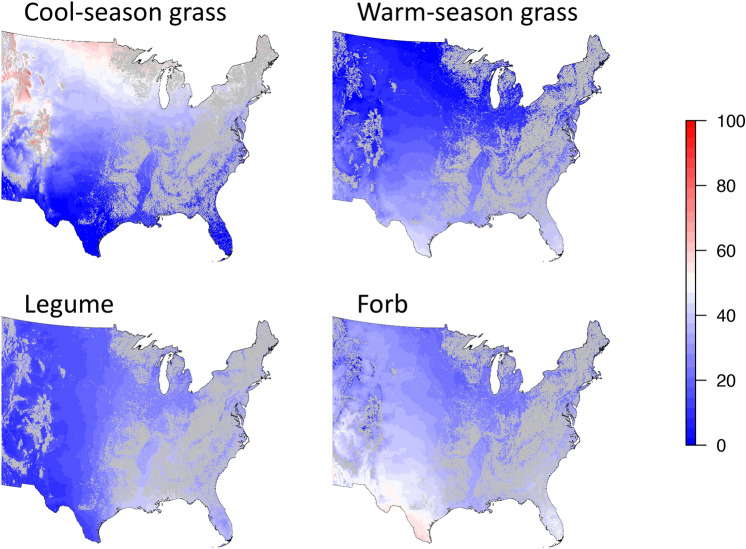
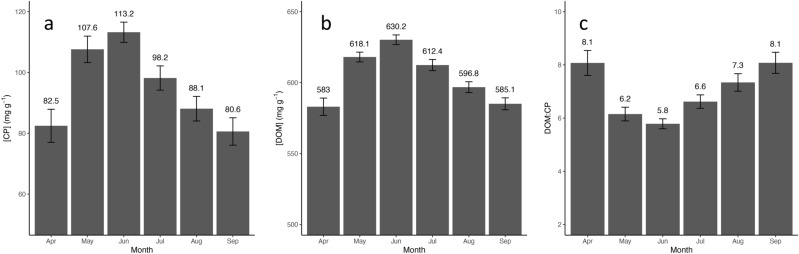
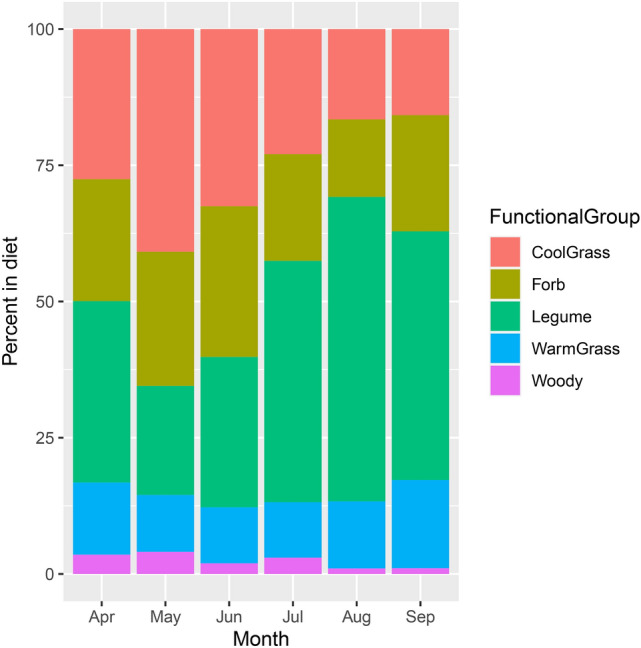
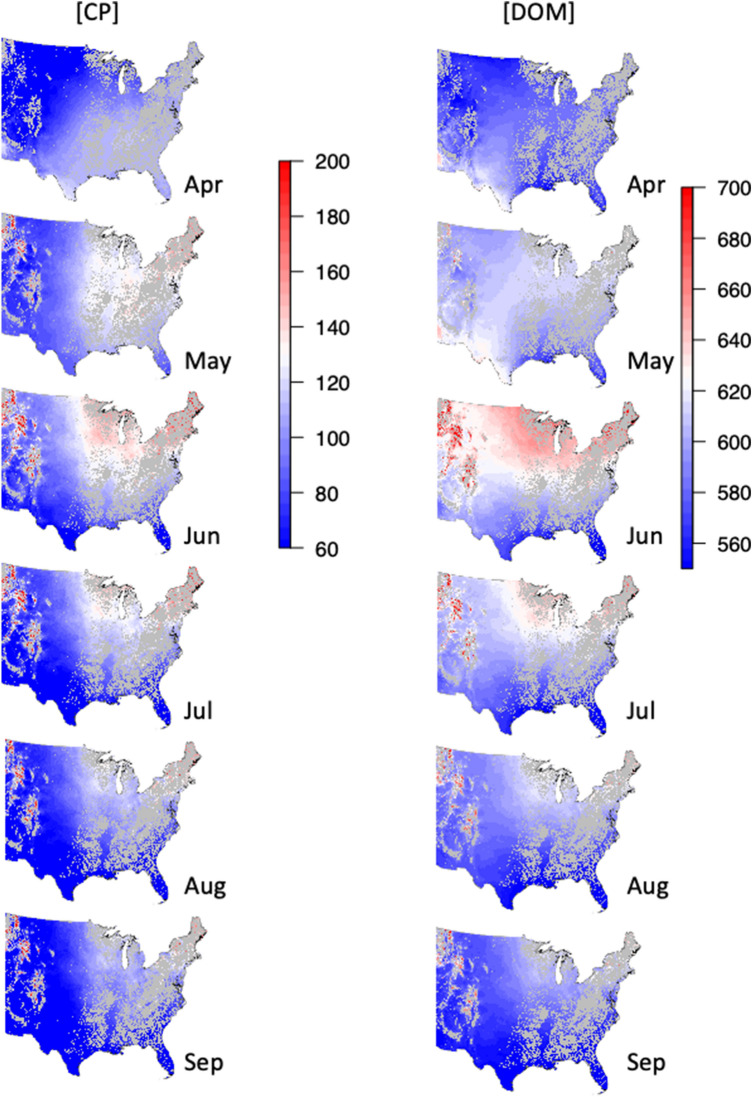
North American plains bison (Bison bison) have been reintroduced across their former range, yet we know too little about their current diet to understand what drove their past migrations as well as observed continental-scale variation in weight gain and reproduction. In order to better understand the seasonal diets of bison at the continental scale, bison fecal material was collected monthly from April to September in 2019 across 45 sites throughout the conterminous United States. Fecal material was analyzed for dietary quality using near infrared spectroscopy and dietary composition with DNA metabarcoding. As observed in previous research, dietary quality peaked in June and was on average greatest for sites with cold, wet climates. Yet, in April, dietary quality was highest in warmer regions, likely reflecting earlier phenology of plants in southern than northern regions. Independent of climate and season, bison that consumed more warm-season grasses had lower dietary protein concentrations. Interpreting the relative abundance of sequences from different plant species as the relative intake of protein from those species, only 38% of bison protein intake came from grasses. An equal amount of dietary protein came from legumes (38%) and 22% from non-leguminous forbs. Seasonal shifts in bison diet were also clear, in part, following the phenology of functional groups. For example, cool-season grass protein intake was highest in May, while legume protein intake was highest in August. Comparing data taken in June and September 2018 in a previous study with corresponding data in 2019, on average, June [CP] was 20% higher in 2019 than 2018, while September [CP] did not differ between years. Dietary functional group composition was generally similar in amounts and relationships with climate between years, yet in September 2019, legumes contributed 20% more protein and warm-season grasses 14% less than in September 2018. In all, this research demonstrates that bison consistently rely on eudicots for protein with the functional group composition of their diet in some ways consistent across space and time, but also spatially and temporally variable. The early-season inversion of plant quality gradients would have been a strong driver of migratory behavior for large numbers of bison optimizing protein intake. As most bison currently experience protein deficiency, optimizing protein intake under current non-migratory conditions will require increasing the relative abundance of high-protein species such as N-fixing species.
北美野牛(Bison bison)已在其原栖息地重新引入,但我们对它们目前的饮食知之甚少,无法了解过去的迁徙以及观察到的大陆尺度上的体重增加和繁殖的变化。为了更好地了解野牛在大陆范围内的季节性饮食,我们于 2019 年 4 月至 9 月在整个美国的 45 个地点每月收集野牛粪便样本。使用近红外光谱法分析粪便样本的饮食质量,并用 DNA 代谢组学分析饮食组成。如之前的研究中所观察到的,饮食质量在 6 月达到峰值,平均来说,寒冷潮湿气候的地点的饮食质量最大。然而,在 4 月,温暖地区的饮食质量最高,这可能反映了南部地区植物的物候期早于北部地区。独立于气候和季节,食用更多暖季草的野牛的饮食蛋白浓度较低。将不同植物物种的序列相对丰度解释为从这些物种摄入的蛋白质的相对量,只有 38%的野牛蛋白摄入来自草。豆类(38%)和非豆科草本植物(22%)提供了等量的饮食蛋白。野牛饮食的季节性变化也很明显,部分原因是功能群的物候期。例如,冷季草的蛋白质摄入量在 5 月最高,而豆类的蛋白质摄入量在 8 月最高。将 2018 年 6 月和 9 月在之前一项研究中采集的数据与 2019 年相应的数据进行比较,平均而言,2019 年 6 月的 [CP] 比 2018 年高出 20%,而 9 月的 [CP] 两年间没有差异。在几年间,饮食功能群组成在数量和与气候的关系上总体相似,但在 2019 年 9 月,豆类的蛋白质贡献增加了 20%,暖季草的蛋白质减少了 14%。总的来说,这项研究表明,野牛始终依赖真双子叶植物来获取蛋白质,其饮食的功能群组成在一定程度上在空间和时间上保持一致,但也存在空间和时间上的变化。早期植物质量梯度的反转将是大量野牛优化蛋白质摄入的迁徙行为的一个强大驱动力。由于目前大多数野牛都经历蛋白质缺乏,因此在当前非迁徙条件下优化蛋白质摄入需要增加固氮物种等高蛋白物种的相对丰度。