Craine Joseph M, Towne E Gene, Miller Mary, Fierer Noah
Jonah Ventures, Manhattan KS 66502, USA.
Kansas State University, Manhattan KS 66502, USA.
Sci Rep. 2015 Nov 16;5:16738. doi: 10.1038/srep16738.
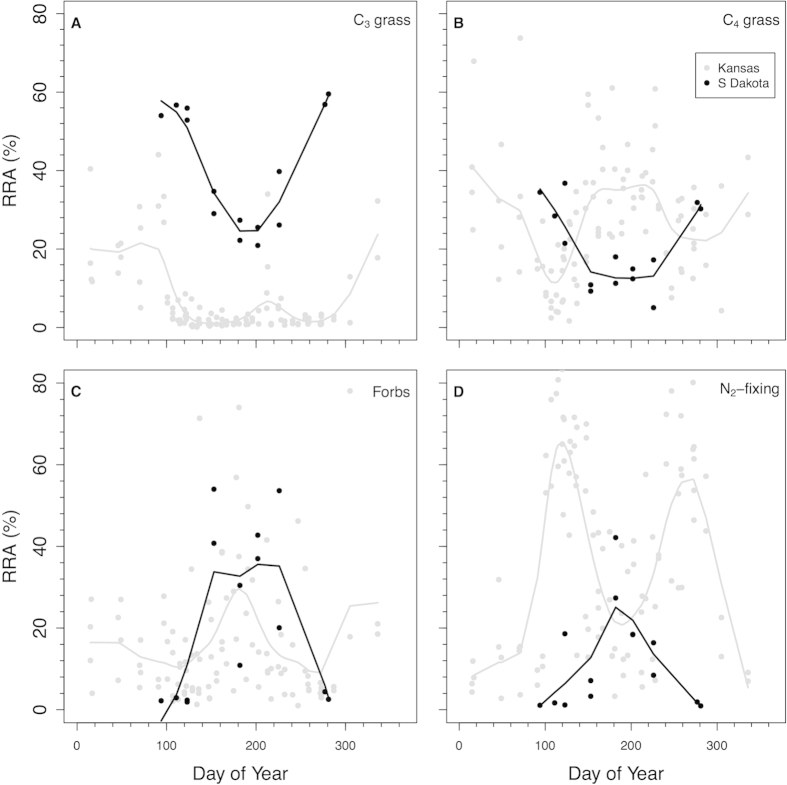
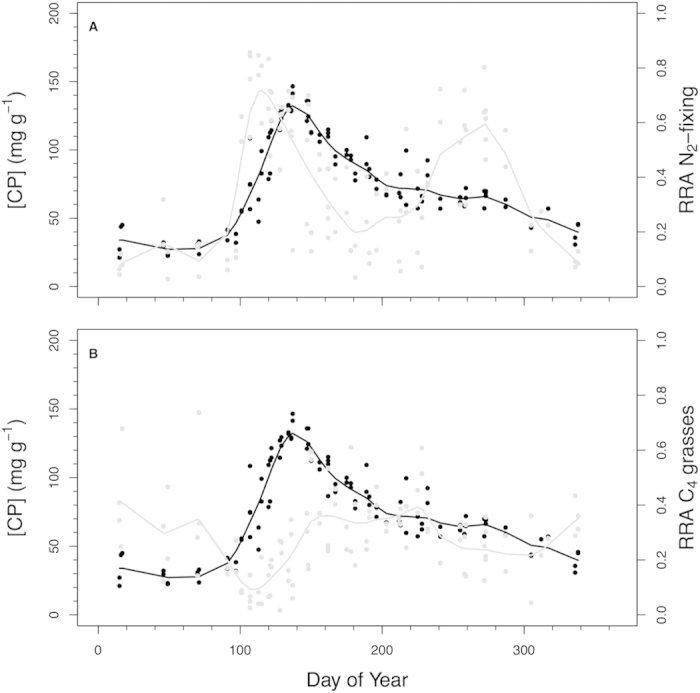
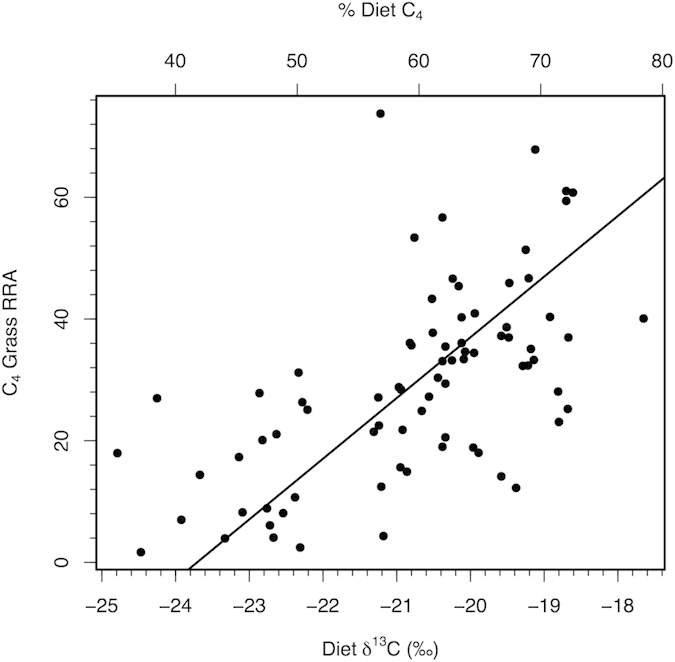
Climatic warming is likely to exacerbate nutritional stress and reduce weight gain in large mammalian herbivores by reducing plant nutritional quality. Yet accurate predictions of the effects of climatic warming on herbivores are limited by a poor understanding of how herbivore diet varies along climate gradients. We utilized DNA metabarcoding to reconstruct seasonal variation in the diet of North American bison (Bison bison) in two grasslands that differ in mean annual temperature by 6 °C. Here, we show that associated with greater nutritional stress in warmer climates, bison consistently consumed fewer graminoids and more shrubs and forbs, i.e. eudicots. Bison in the warmer grassland consumed a lower proportion of C3 grass, but not a greater proportion of C4 grass. Instead, bison diet in the warmer grassland had a greater proportion of N2-fixing eudicots, regularly comprising >60% of their protein intake in spring and fall. Although bison have been considered strict grazers, as climatic warming reduces grass protein concentrations, bison may have to attempt to compensate by grazing less and browsing more. Promotion of high-protein, palatable eudicots or increasing the protein concentrations of grasses will be critical to minimizing warming-imposed nutritional stress for bison and perhaps other large mammalian herbivores.
气候变暖可能会加剧营养压力,并通过降低植物营养质量减少大型哺乳动物食草动物的体重增加。然而,由于对食草动物饮食如何随气候梯度变化了解不足,对气候变暖对食草动物影响的准确预测受到限制。我们利用DNA宏条形码技术重建了北美野牛(Bison bison)在两个年平均温度相差6°C的草原上饮食的季节变化。在这里,我们表明,与温暖气候下更大的营养压力相关,野牛持续食用较少的禾本科植物,而更多地食用灌木和阔叶草本植物,即双子叶植物。温暖草原上的野牛食用C3草的比例较低,但食用C4草的比例并未增加。相反,温暖草原上野牛的饮食中固氮双子叶植物的比例更高,在春季和秋季,其蛋白质摄入量通常超过60%。尽管野牛一直被认为是严格的食草动物,但随着气候变暖降低了草的蛋白质浓度,野牛可能不得不通过减少吃草和增加啃食来试图弥补。推广高蛋白、可口的双子叶植物或提高草的蛋白质浓度对于将气候变暖给野牛以及其他大型哺乳动物食草动物带来的营养压力降至最低至关重要。