Esmaeili Saeideh, King Sarah R B, Schoenecker Kathryn A
Natural Resource Ecology Laboratory, Colorado State University, and in Cooperation with USGS Fort Collins Science Center, Fort Collins, CO 80523, USA.
U.S. Geological Survey, Fort Collins Science Center, Fort Collins, CO 80526, USA.
Animals (Basel). 2023 Aug 21;13(16):2683. doi: 10.3390/ani13162683.
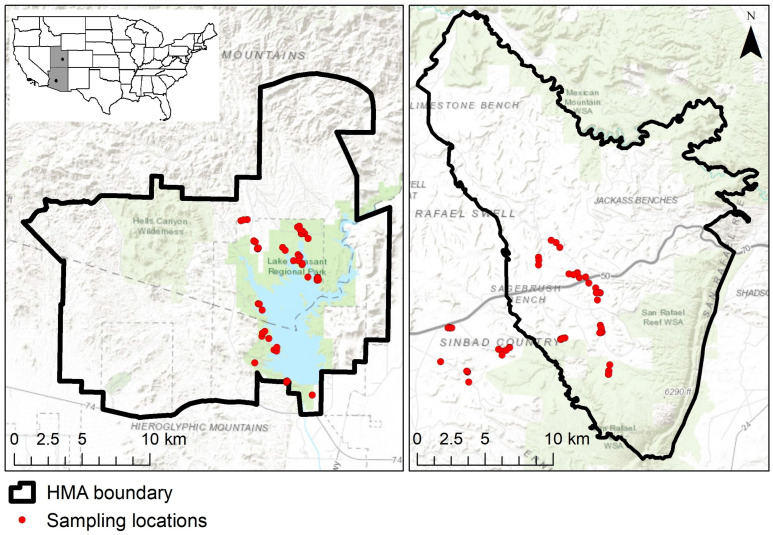
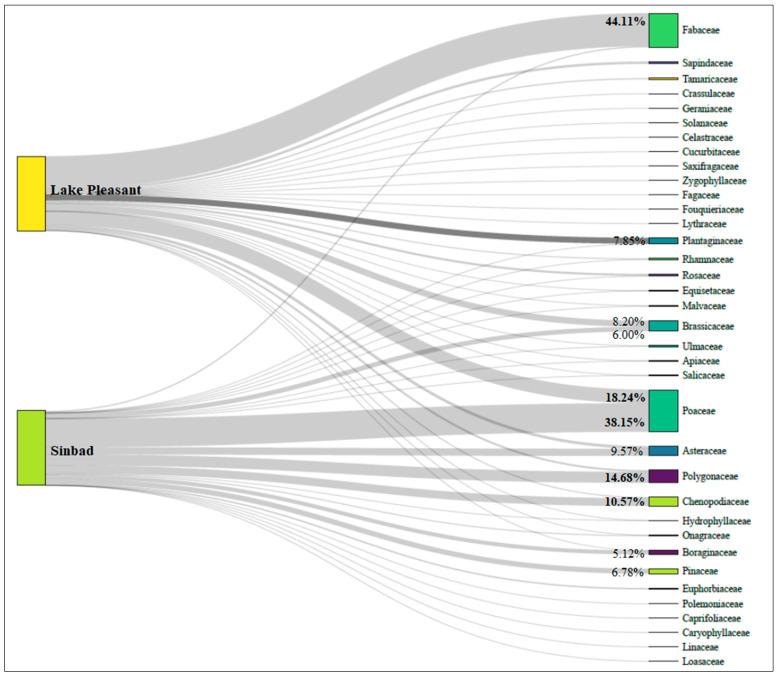
Ungulates play a large role in shaping ecosystems and communities by influencing plant composition, structure, and productivity. We investigated the summer diets of feral burros in two ecosystems in which they are found in the United States: a subtropical desert in Arizona and a temperate juniper shrubland in Utah. Between 24 June and 16 July of 2019, we gathered 50 burro fecal samples from each location and used plant DNA metabarcoding to determine the burros' diets. We found that during our sampling period the burros in the Sonoran Desert consumed a higher proportion of woody browse and had a narrower dietary niche breadth and lower degree of diet diversity compared to the burros in the juniper shrubland ecosystem, where the burros consumed higher proportions of graminoids and forbs and had a higher diet diversity index and broader dietary niche breadth. The burros in the Sonoran Desert relied primarily on spp. (mesquite) and grasses, whereas the burros in the juniper shrubland relied on a wider variety of forb and grass species, likely due to the greater variability in the forage species temporally and spatially available in that temperate ecosystem. We found that feral burros are highly adaptable with respect to diet and appear to be employing a mixed feeding strategy, similar to their ancestor, the African wild ass, to meet their nutritional needs in whichever ecosystem they are found.
有蹄类动物通过影响植物的组成、结构和生产力,在塑造生态系统和群落方面发挥着重要作用。我们调查了美国两个有野生驴的生态系统中野生驴的夏季饮食:亚利桑那州的亚热带沙漠和犹他州的温带杜松灌木丛。在2019年6月24日至7月16日期间,我们从每个地点收集了50份驴粪便样本,并使用植物DNA宏条形码技术来确定驴的饮食。我们发现,在我们的采样期间,与杜松灌木丛生态系统中的驴相比,索诺兰沙漠中的驴食用的木本植物比例更高,饮食生态位宽度更窄,饮食多样性程度更低。在杜松灌木丛生态系统中,驴食用的禾本科植物和草本植物比例更高,饮食多样性指数更高,饮食生态位宽度更宽。索诺兰沙漠中的驴主要依赖牧豆树属植物(牧豆树)和禾本科植物,而杜松灌木丛中的驴则依赖更广泛的草本植物和禾本科植物物种,这可能是由于在那个温带生态系统中,可获得的饲料物种在时间和空间上的变异性更大。我们发现,野生驴在饮食方面具有高度适应性,并且似乎正在采用一种混合觅食策略,类似于它们的祖先非洲野驴,以便在它们所处的任何生态系统中满足其营养需求。