National Institute of Immunology, New Delhi, India.
Translational Health Science and Technology Institute, NCR Biotech Science Cluster, Faridabad, India.
Commun Biol. 2021 Mar 25;4(1):410. doi: 10.1038/s42003-021-01926-4.
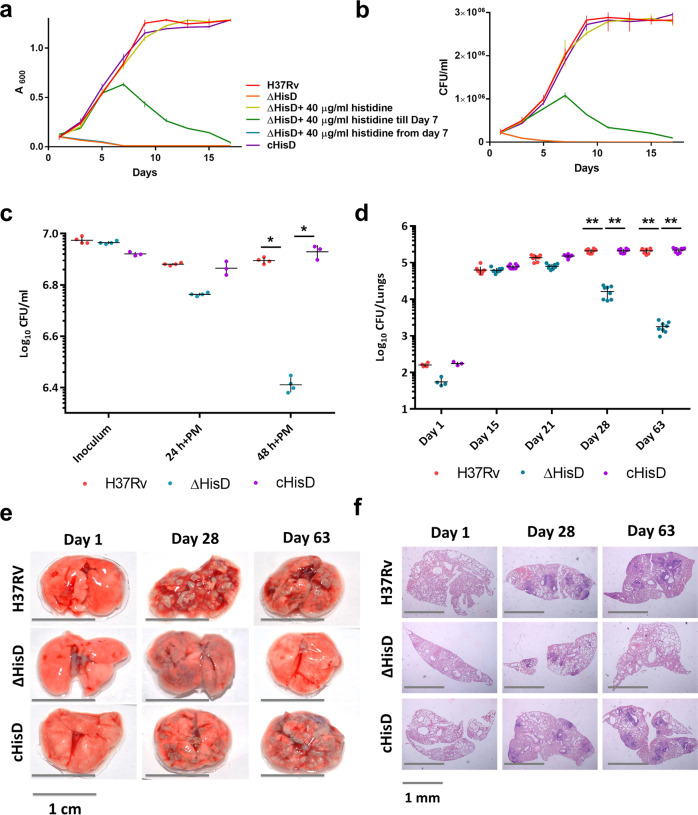
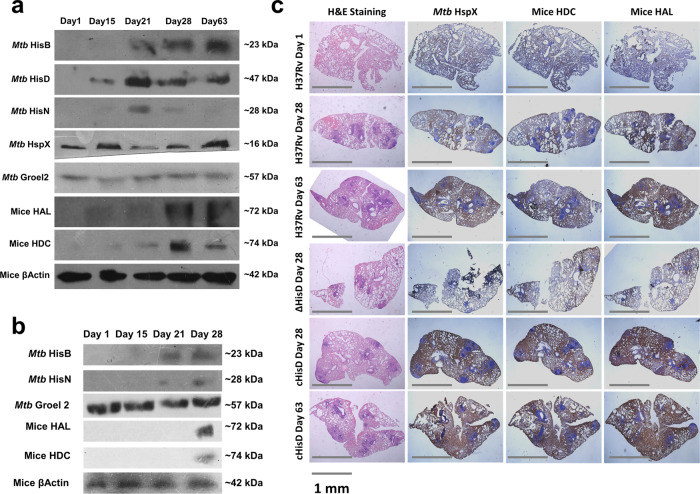
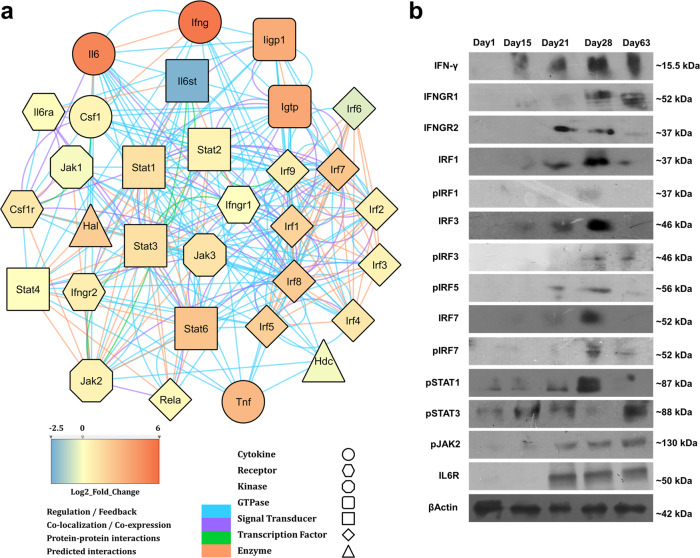
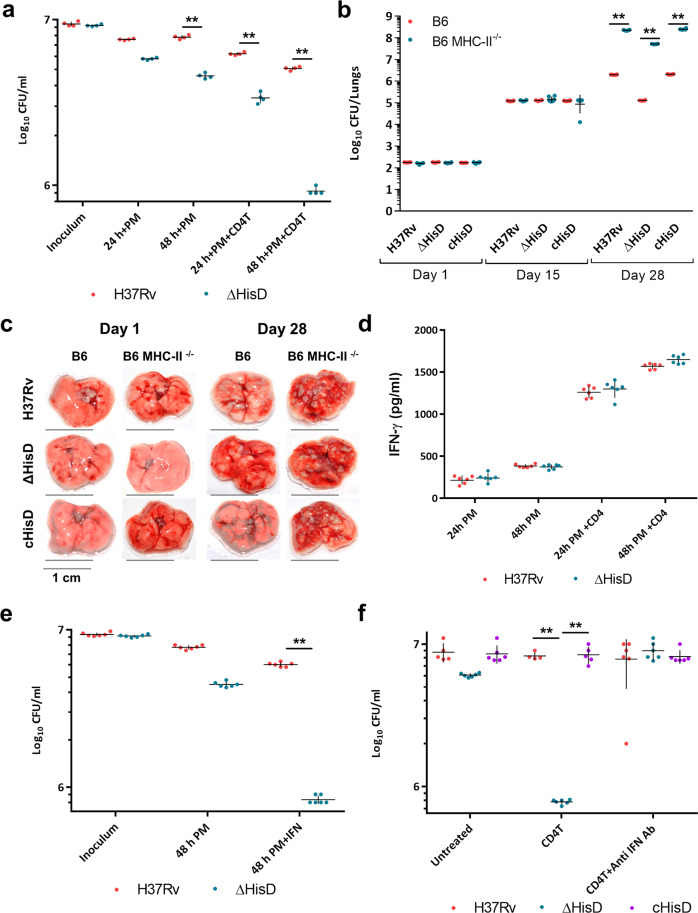
Intracellular pathogens including Mycobacterium tuberculosis (Mtb) have evolved with strategies to uptake amino acids from host cells to fulfil their metabolic requirements. However, Mtb also possesses de novo biosynthesis pathways for all the amino acids. This raises a pertinent question- how does Mtb meet its histidine requirements within an in vivo infection setting? Here, we present a mechanism in which the host, by up-regulating its histidine catabolizing enzymes through interferon gamma (IFN-γ) mediated signalling, exerts an immune response directed at starving the bacillus of intracellular free histidine. However, the wild-type Mtb evades this host immune response by biosynthesizing histidine de novo, whereas a histidine auxotroph fails to multiply. Notably, in an IFN-γ mouse model, the auxotroph exhibits a similar extent of virulence as that of the wild-type. The results augment the current understanding of host-Mtb interactions and highlight the essentiality of Mtb histidine biosynthesis for its pathogenesis.
包括结核分枝杆菌(Mtb)在内的细胞内病原体已经进化出从宿主细胞中摄取氨基酸以满足其代谢需求的策略。然而,Mtb 也拥有所有氨基酸的从头生物合成途径。这就提出了一个相关问题——在体内感染环境中,Mtb 如何满足其组氨酸需求?在这里,我们提出了一种机制,即宿主通过干扰素 γ(IFN-γ)介导的信号转导上调其组氨酸分解代谢酶,从而发挥免疫反应,旨在使杆菌细胞内游离组氨酸饥饿。然而,野生型 Mtb 通过从头合成组氨酸来逃避这种宿主免疫反应,而组氨酸营养缺陷型则无法繁殖。值得注意的是,在 IFN-γ 小鼠模型中,营养缺陷型的毒力与野生型相似。这些结果增加了我们对宿主-分枝杆菌相互作用的理解,并强调了 Mtb 组氨酸生物合成对于其发病机制的重要性。