Department of Neurology, Baylor College of Medicine, Houston, TX 77030, USA.
Brain. 2021 Oct 22;144(9):2863-2878. doi: 10.1093/brain/awab141.
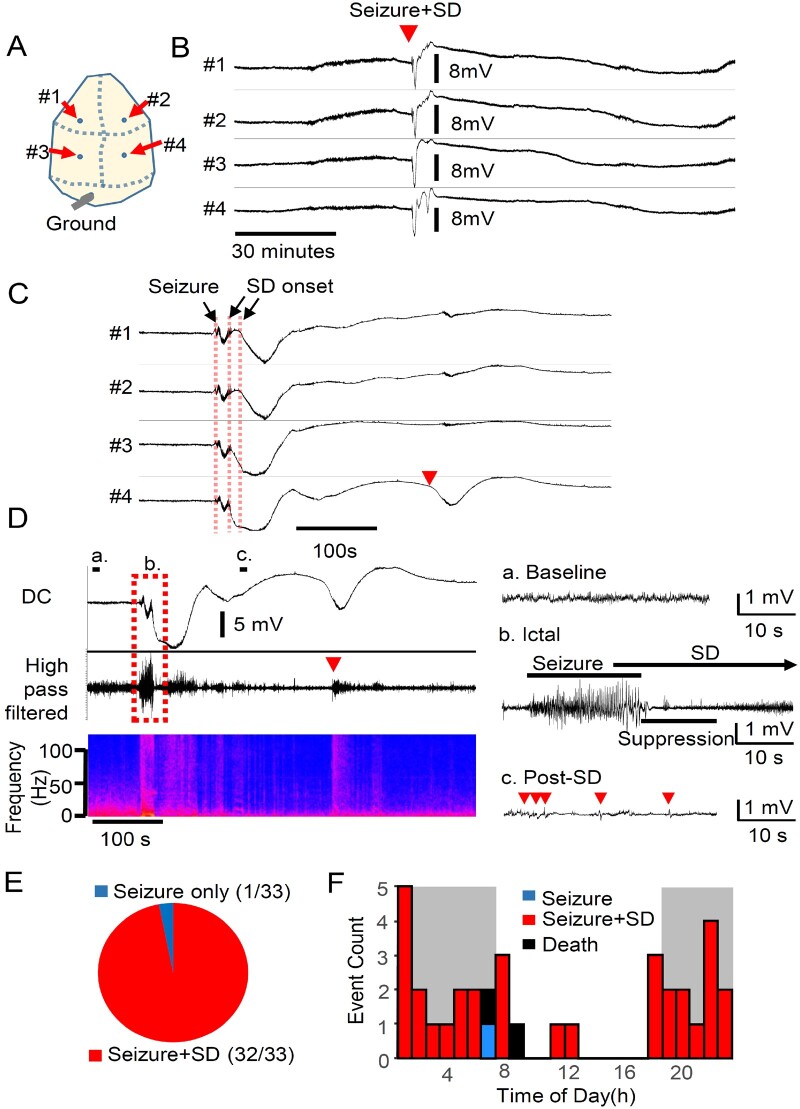
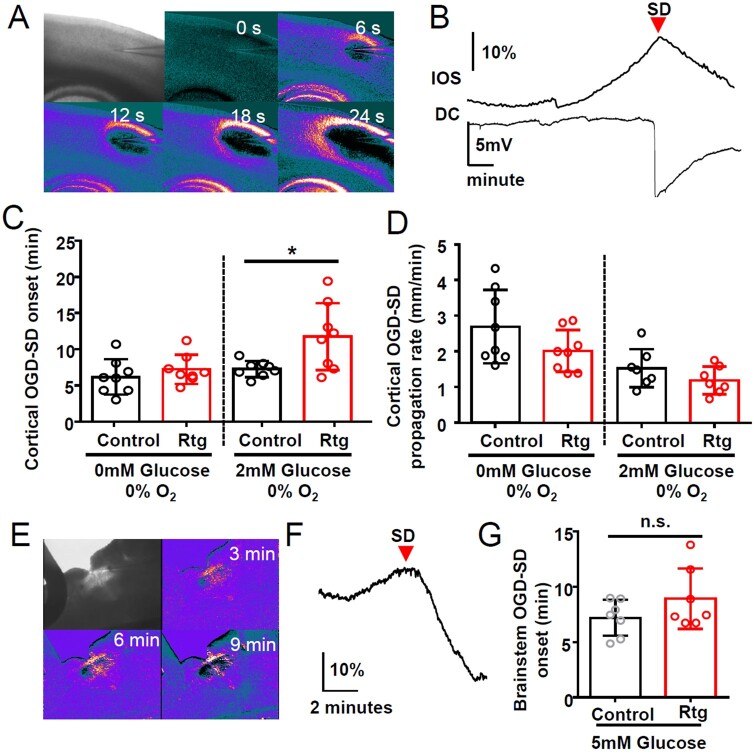
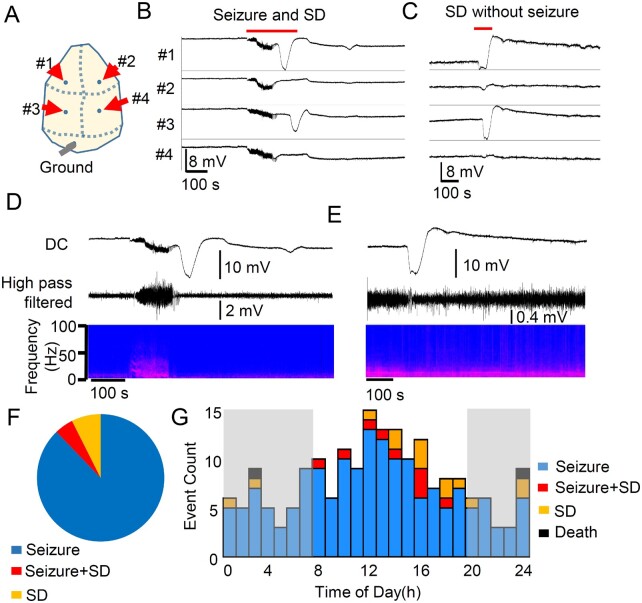
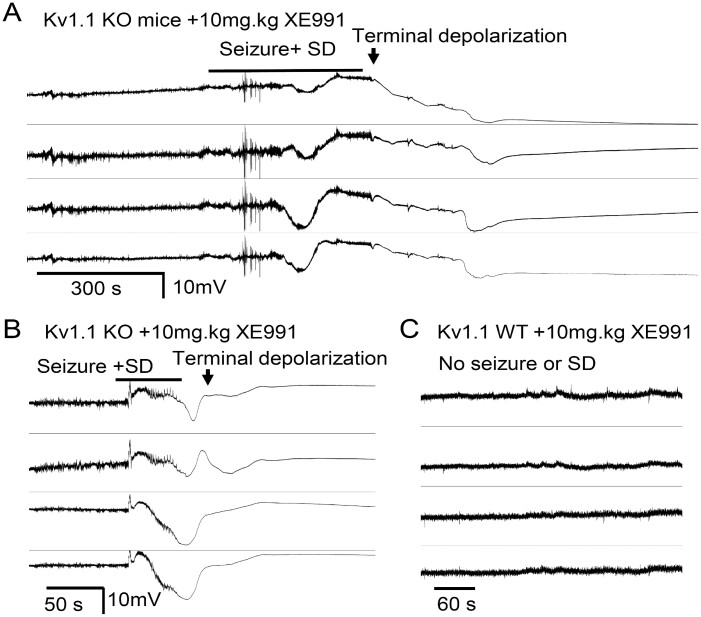
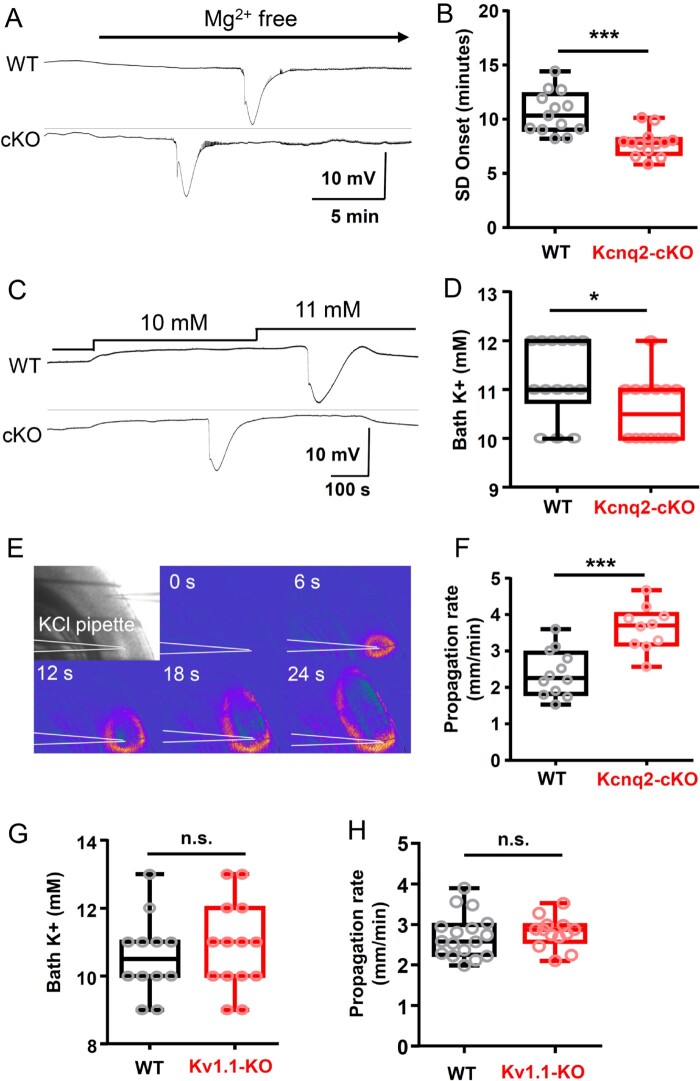
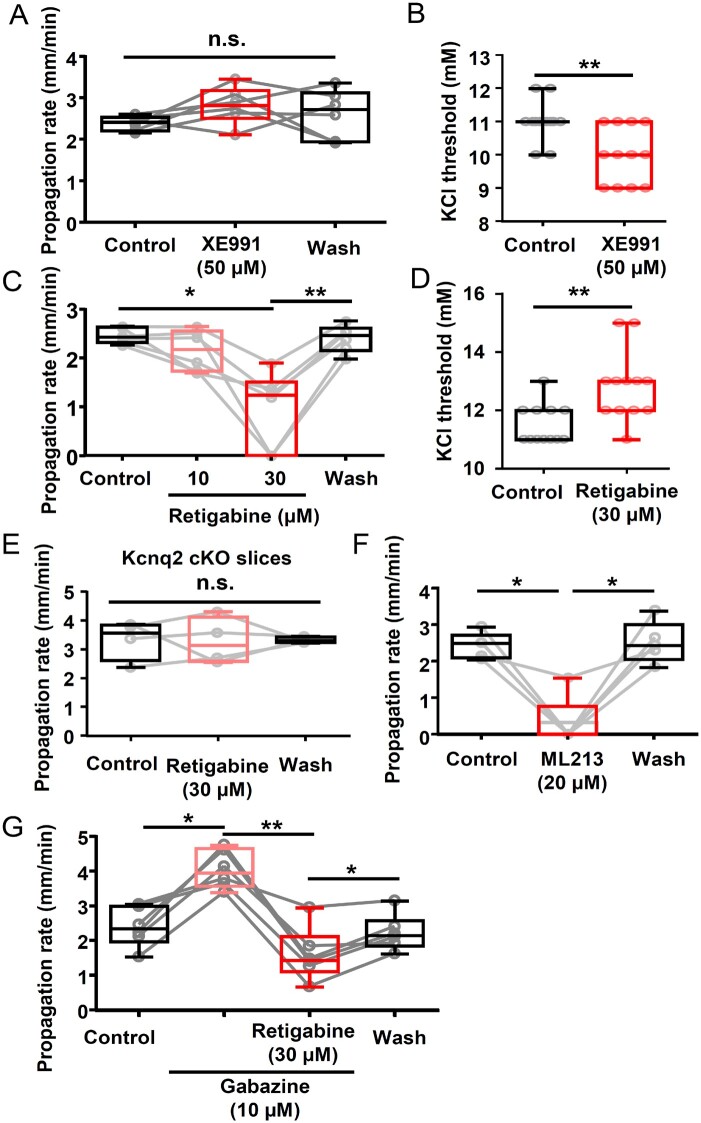
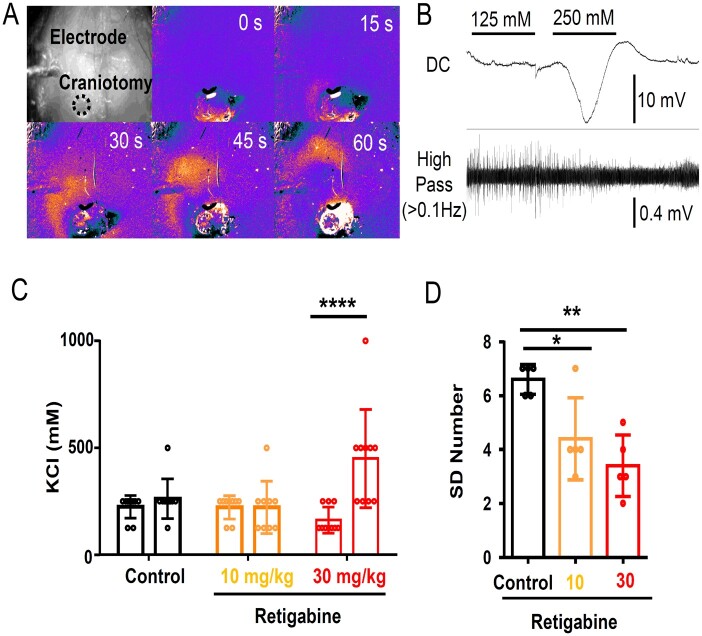
Spreading depolarization is a slowly propagating wave of massive cellular depolarization associated with acute brain injury and migraine aura. Genetic studies link depolarizing molecular defects in Ca2+ flux, Na+ current in interneurons, and glial Na+-K+ ATPase with spreading depolarization susceptibility, emphasizing the important roles of synaptic activity and extracellular ionic homeostasis in determining spreading depolarization threshold. In contrast, although gene mutations in voltage-gated potassium ion channels that shape intrinsic membrane excitability are frequently associated with epilepsy susceptibility, it is not known whether epileptogenic mutations that regulate membrane repolarization also modify spreading depolarization threshold and propagation. Here we report that the Kcnq2/Kv7.2 potassium channel subunit, frequently mutated in developmental epilepsy, is a spreading depolarization modulatory gene with significant control over the seizure-spreading depolarization transition threshold, bi-hemispheric cortical expression, and diurnal temporal susceptibility. Chronic DC-band cortical EEG recording from behaving conditional Kcnq2 deletion mice (Emx1cre/+::Kcnq2flox/flox) revealed spontaneous cortical seizures and spreading depolarization. In contrast to the related potassium channel deficient model, Kv1.1-KO mice, spontaneous cortical spreading depolarizations in Kcnq2 cKO mice are tightly coupled to the terminal phase of seizures, arise bilaterally, and are observed predominantly during the dark phase. Administration of the non-selective Kv7.2 inhibitor XE991 to Kv1.1-KO mice partly reproduced the Kcnq2 cKO-like spreading depolarization phenotype (tight seizure coupling and bilateral symmetry) in these mice, indicating that Kv7.2 currents can directly and actively modulate spreading depolarization properties. In vitro brain slice studies confirmed that Kcnq2/Kv7.2 depletion or pharmacological inhibition intrinsically lowers the cortical spreading depolarization threshold, whereas pharmacological Kv7.2 activators elevate the threshold to multiple depolarizing and hypometabolic spreading depolarization triggers. Together these results identify Kcnq2/Kv7.2 as a distinctive spreading depolarization regulatory gene, and point to spreading depolarization as a potentially significant pathophysiological component of KCNQ2-linked epileptic encephalopathy syndromes. Our results also implicate KCNQ2/Kv7.2 channel activation as a potential adjunctive therapeutic target to inhibit spreading depolarization incidence.
去极化扩散是一种与急性脑损伤和偏头痛先兆相关的细胞大规模去极化的缓慢传播波。遗传研究将钙流中的去极化分子缺陷、中间神经元的钠电流和胶质细胞的钠钾 ATP 酶与去极化扩散易感性联系起来,强调了突触活动和细胞外离子动态平衡在确定去极化扩散阈值中的重要作用。相比之下,尽管电压门控钾离子通道的基因突变,这些基因突变会影响内在膜兴奋性,经常与癫痫易感性相关,但尚不清楚调节膜复极化的致癫痫突变是否也会改变去极化扩散阈值和传播。在这里,我们报告 Kcnq2/Kv7.2 钾通道亚基,其在发育性癫痫中经常发生突变,是一种去极化扩散调节基因,对癫痫发作-去极化扩散过渡阈值、双半球皮质表达和昼夜时间易感性有显著控制作用。对行为条件性 Kcnq2 缺失小鼠(Emx1cre/+::Kcnq2flox/flox)进行皮质 DC 带脑电图记录显示自发性皮质癫痫发作和去极化扩散。与相关钾通道缺失模型 Kv1.1-KO 小鼠不同,Kcnq2 cKO 小鼠中的自发性皮质去极化扩散与癫痫发作的终末期紧密耦合,双侧出现,主要发生在暗期。非选择性 Kv7.2 抑制剂 XE991 的给药部分再现了 Kv1.1-KO 小鼠中的 Kcnq2 cKO 样去极化扩散表型(癫痫发作的紧密耦合和双侧对称性),表明 Kv7.2 电流可以直接和主动调节去极化扩散特性。体外脑片研究证实,Kcnq2/Kv7.2 耗竭或药理学抑制会降低皮质去极化扩散阈值,而药理学 Kv7.2 激活剂会提高多个去极化和低代谢去极化扩散触发的阈值。这些结果共同确定 Kcnq2/Kv7.2 为一种独特的去极化扩散调节基因,并指出去极化扩散可能是 KCNQ2 相关癫痫性脑病综合征的一个重要潜在病理生理成分。我们的结果还表明,KCNQ2/Kv7.2 通道激活可能是抑制去极化扩散发生率的潜在辅助治疗靶点。