Animal Welfare Division, University of Bern, Laenggassstrasse 120, 3012, Bern, Switzerland.
Theory Biosci. 2021 Jun;140(2):169-176. doi: 10.1007/s12064-021-00340-y. Epub 2021 Mar 25.
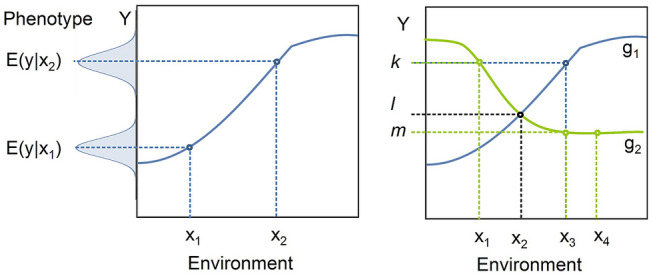
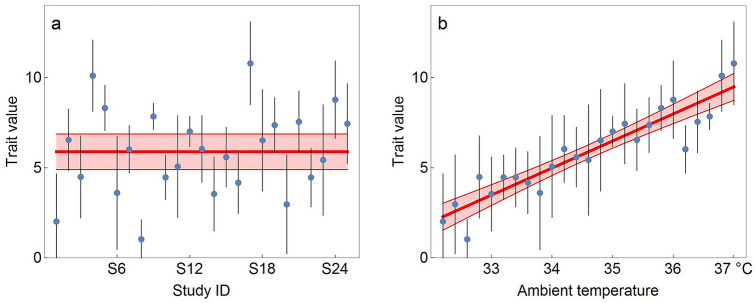
Reproducibility in biomedical research, and more specifically in preclinical animal research, has been seriously questioned. Several cases of spectacular failures to replicate findings published in the primary scientific literature have led to a perceived reproducibility crisis. Diverse threats to reproducibility have been proposed, including lack of scientific rigour, low statistical power, publication bias, analytical flexibility and fraud. An important aspect that is generally overlooked is the lack of external validity caused by rigorous standardization of both the animals and the environment. Here, we argue that a reaction norm approach to phenotypic variation, acknowledging gene-by-environment interactions, can help us seeing reproducibility of animal experiments in a new light. We illustrate how dominating environmental effects can affect inference and effect size estimates of studies and how elimination of dominant factors through standardization affects the nature of the expected phenotype variation through the reaction norms of small effect. Finally, we discuss the consequences of reaction norms of small effect for statistical analysis, specifically for random effect latent variable models and the random lab model.
生物医学研究的可重复性,特别是临床前动物研究的可重复性,受到了严重质疑。一些在主要科学文献中发表的研究结果未能得到重复的案例,导致人们认为存在可重复性危机。已经提出了多种对可重复性的威胁,包括缺乏科学严谨性、低统计功效、发表偏倚、分析灵活性和欺诈。一个通常被忽视的重要方面是,由于对动物和环境进行了严格的标准化,导致缺乏外部有效性。在这里,我们认为表型变异的反应规范方法,承认基因-环境相互作用,可以帮助我们以新的视角看待动物实验的可重复性。我们举例说明了主导环境效应如何影响研究的推断和效应大小估计,以及通过标准化消除主导因素如何通过小效应的反应规范影响预期表型变异的性质。最后,我们讨论了小效应反应规范对统计分析的影响,特别是对随机效应潜在变量模型和随机实验室模型的影响。