Neurorestoration Group, Wolfson Centre for Age-Related Diseases, King's College London, London, United Kingdom.
Spinal Cord Group, Institute of Neuroscience and Psychology, College of Medical, Veterinary and Life Sciences, University of Glasgow, Glasgow, United Kingdom.
Pain. 2021 Sep 1;162(9):2405-2417. doi: 10.1097/j.pain.0000000000002226.
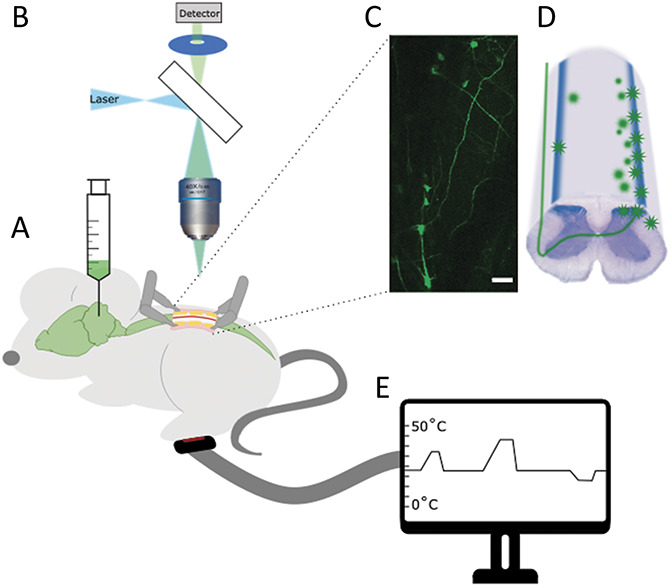
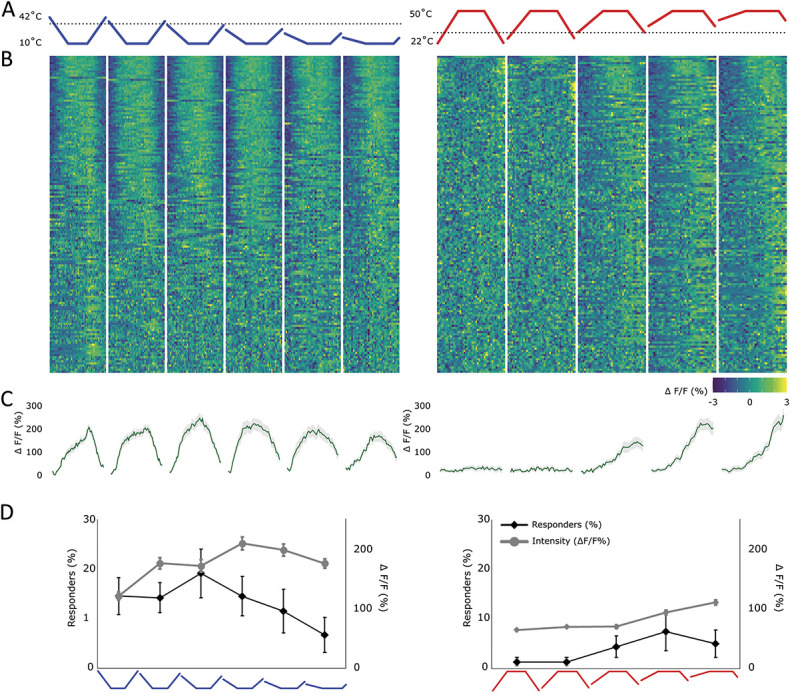
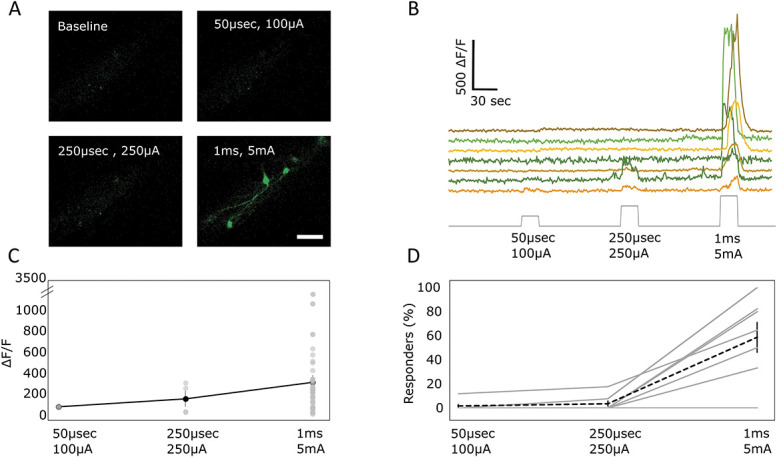
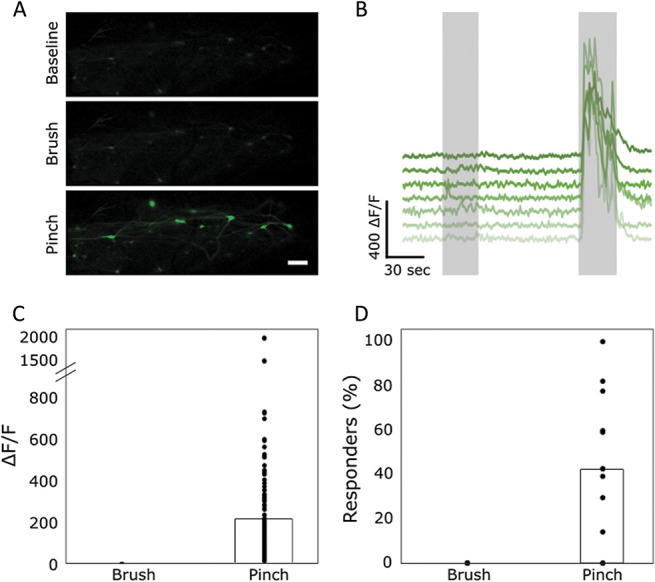
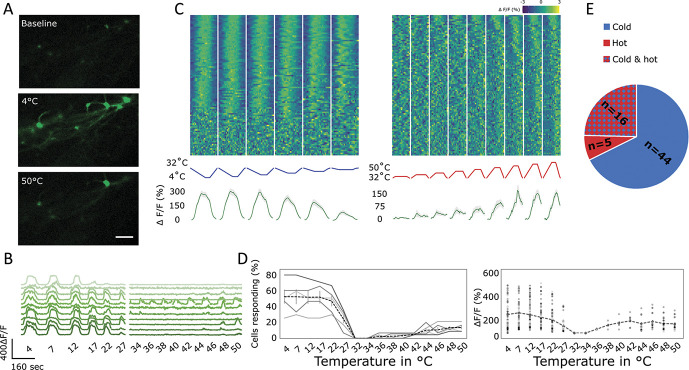
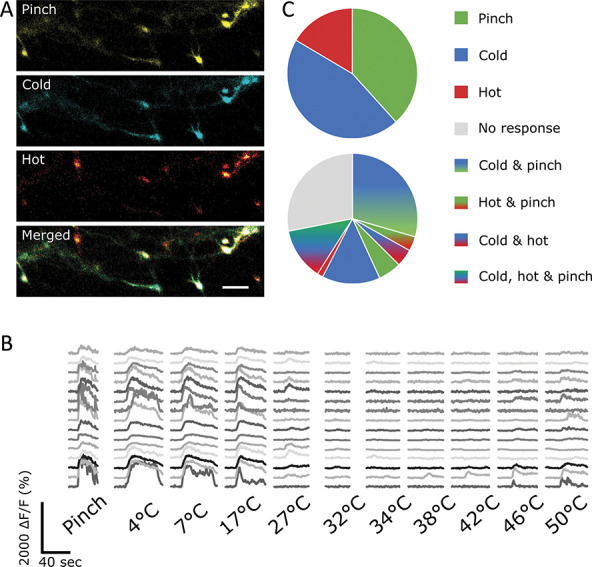
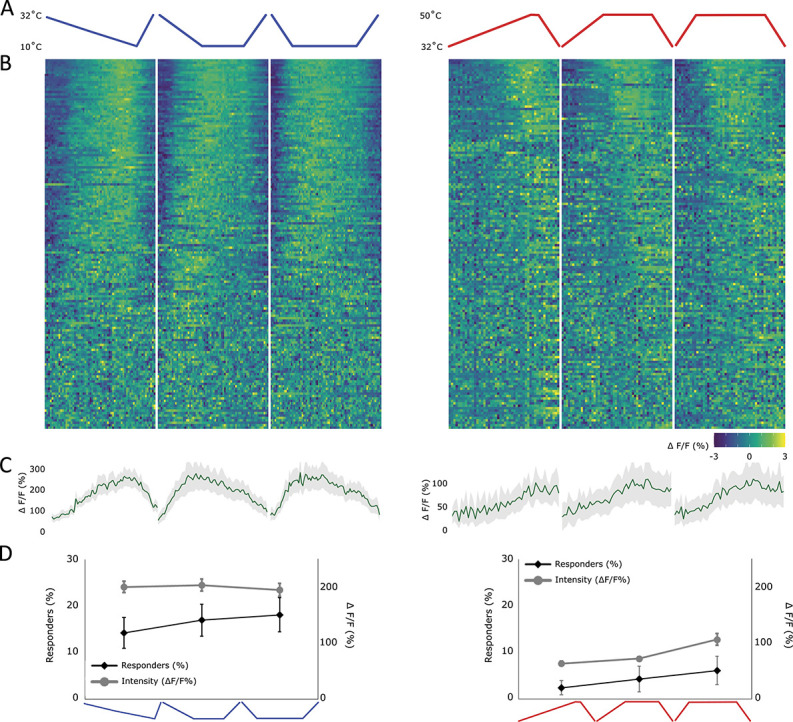
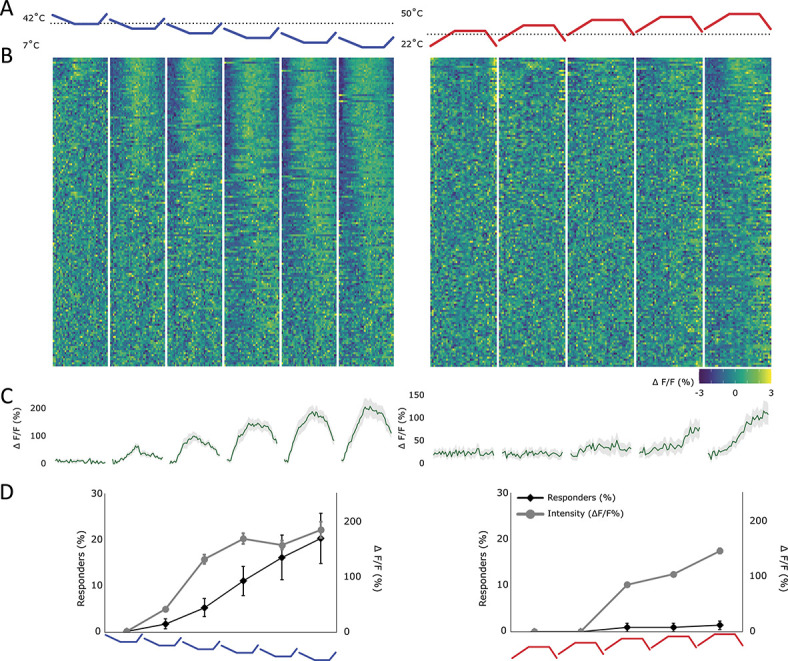
Lamina I of the dorsal horn, together with its main output pathway, lamina I projection neurons, has long been implicated in the processing of nociceptive stimuli, as well as the development of chronic pain conditions. However, the study of lamina I projection neurons is hampered by technical challenges, including the low throughput and selection biases of traditional electrophysiological techniques. Here we report on a technique that uses anatomical labelling strategies and in vivo imaging to simultaneously study a network of lamina I projection neurons in response to electrical and natural stimuli. Although we were able to confirm the nociceptive involvement of this group of cells, we also describe an unexpected preference for innocuous cooling stimuli. We were able to characterize the thermal responsiveness of these cells in detail and found cooling responses decline when exposed to stable cold temperatures maintained for more than a few seconds, as well as to encode the intensity of the end temperature, while heating responses showed an unexpected reliance on adaptation temperatures.
背角层 I 及其主要输出途径层 I 投射神经元长期以来一直被认为与伤害性刺激的处理以及慢性疼痛状况的发展有关。然而,层 I 投射神经元的研究受到技术挑战的阻碍,包括传统电生理技术的低通量和选择偏差。在这里,我们报告了一种使用解剖学标记策略和体内成像技术来同时研究对电和自然刺激作出反应的层 I 投射神经元网络的技术。尽管我们能够证实这群细胞与伤害性有关,但我们也描述了对无害冷刺激的意外偏好。我们能够详细地表征这些细胞的热反应,发现当暴露于持续几秒钟以上的稳定低温时,冷却反应会下降,并且能够编码最终温度的强度,而加热反应则出人意料地依赖于适应温度。