Laboratory for Retinal Regeneration, RIKEN Center for Biosystems Dynamics Research, Kobe 650-0047, Japan; Regenerative & Cellular Medicine Kobe Center, Sumitomo Dainippon Pharma Co., Ltd., Kobe 650-0047, Japan.
Laboratory for Retinal Regeneration, RIKEN Center for Biosystems Dynamics Research, Kobe 650-0047, Japan.
Stem Cell Reports. 2021 Apr 13;16(4):851-867. doi: 10.1016/j.stemcr.2021.02.021. Epub 2021 Mar 25.
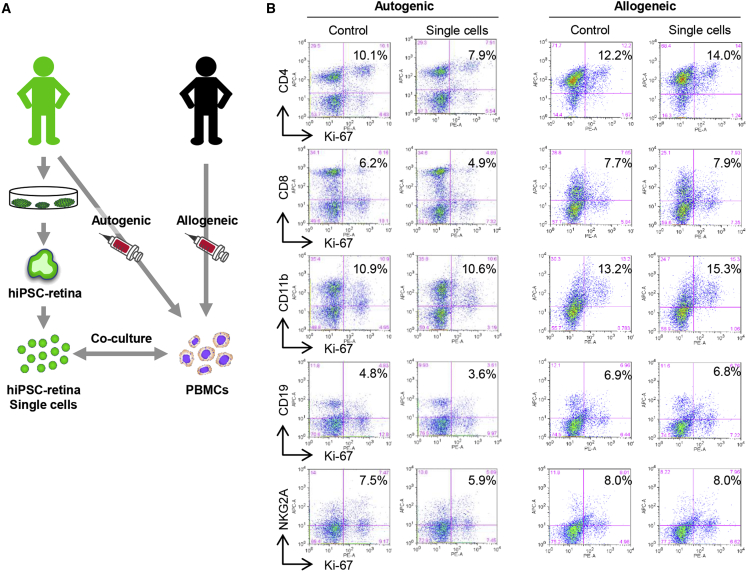
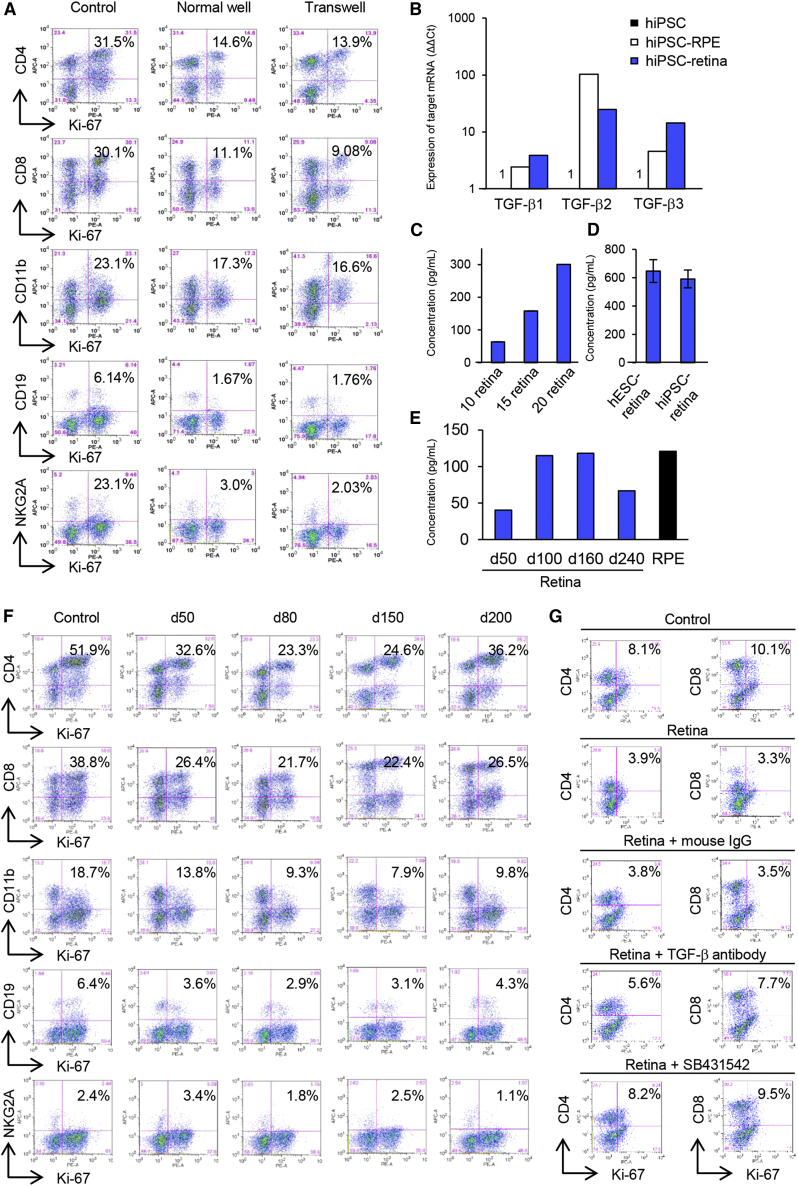
ESC- and iPSC-derived retinal transplantation is a promising therapeutic approach for disease with end-stage retinal degeneration, such as retinitis pigmentosa and age-related macular degeneration. We previously showed medium- to long-term survival, maturation, and light response of transplanted human ESC- and iPSC-retina in mouse, rat, and monkey models of end-stage retinal degeneration. Because the use of patient hiPSC-derived retina with a disease-causing gene mutation is not appropriate for therapeutic use, allogeneic transplantation using retinal tissue/cells differentiated from a stocked hESC and iPSC line would be most practical. Here, we characterize the immunological properties of hESC- and iPSC-retina and present their three major advantages: (1) hESC- and iPSC-retina expressed low levels of human leukocyte antigen (HLA) class I and little HLA class II in vitro, (2) hESC- and iPSC-retina greatly suppressed immune activation of lymphocytes in co-culture, and (3) hESC- and iPSC-retina suppressed activated immune cells partially via transforming growth factor β signaling. These results support the use of allogeneic hESC- and iPSC-retina in future clinical application.
ESC 和 iPSC 衍生的视网膜移植是一种有前途的治疗方法,适用于终末期视网膜变性疾病,如色素性视网膜炎和年龄相关性黄斑变性。我们之前已经在终末期视网膜变性的小鼠、大鼠和猴子模型中证明了移植的人类 ESC 和 iPSC 视网膜的中到长期存活、成熟和光反应。由于使用带有致病基因突变的患者 hiPSC 衍生的视网膜不适合治疗用途,因此使用从储存的 hESC 和 iPSC 系分化而来的视网膜组织/细胞的同种异体移植将是最实用的。在这里,我们描述了 hESC 和 iPSC 视网膜的免疫学特性,并提出了它们的三个主要优势:(1)hESC 和 iPSC 视网膜在体外表达低水平的人白细胞抗原(HLA)I 类和少量 HLA II 类,(2)hESC 和 iPSC 视网膜在共培养中大大抑制了淋巴细胞的免疫激活,(3)hESC 和 iPSC 视网膜通过转化生长因子 β 信号部分抑制了激活的免疫细胞。这些结果支持在未来的临床应用中使用同种异体 hESC 和 iPSC 视网膜。