MRC Cognition and Brain Sciences Unit (CBU), University of Cambridge, UK.
University College London Queen Square Institute of Neurology, UK.
Cortex. 2021 May;138:266-281. doi: 10.1016/j.cortex.2021.01.021. Epub 2021 Feb 19.
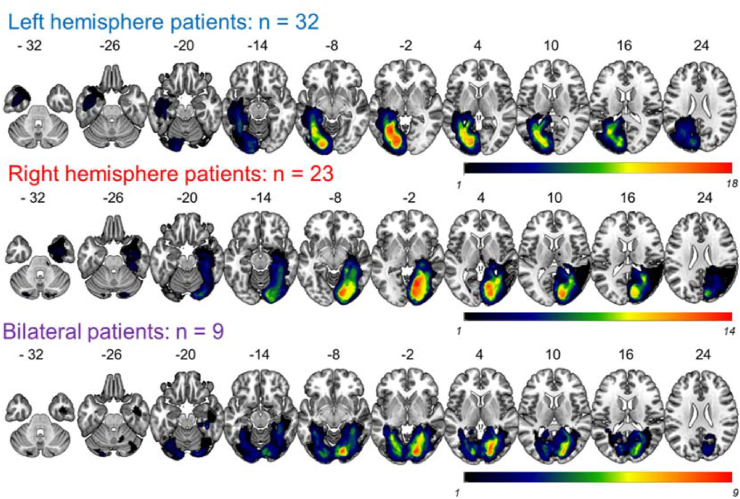
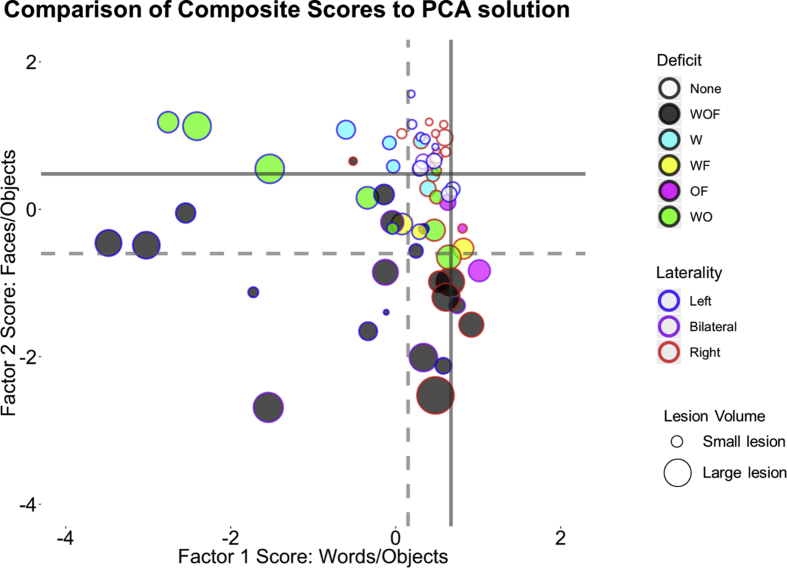
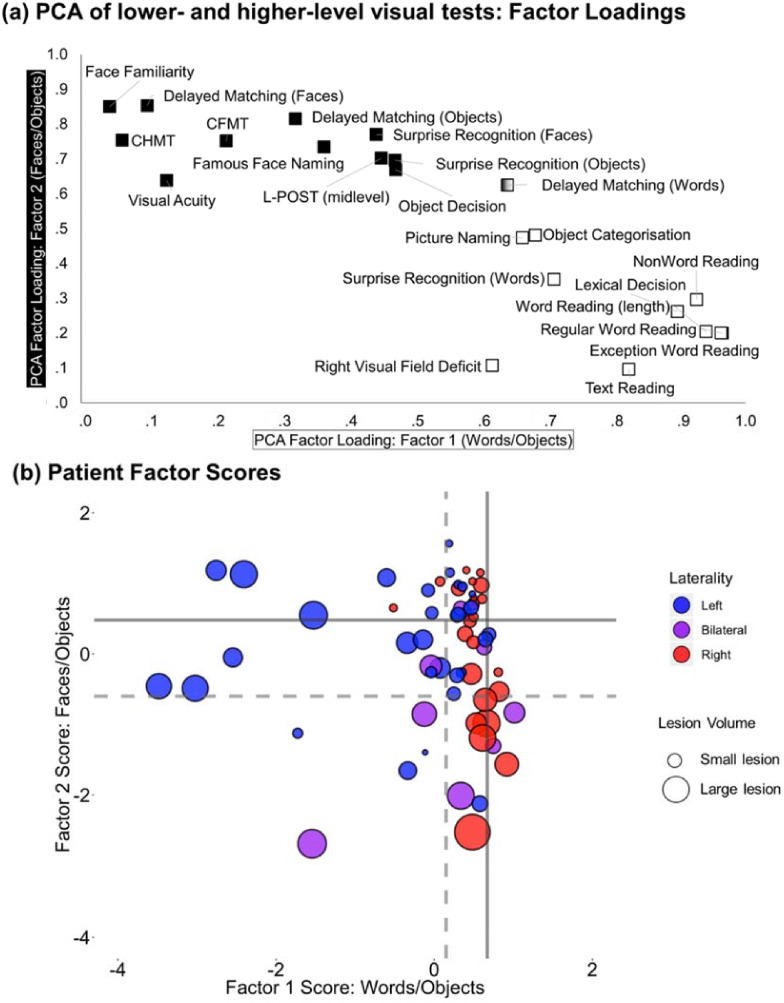
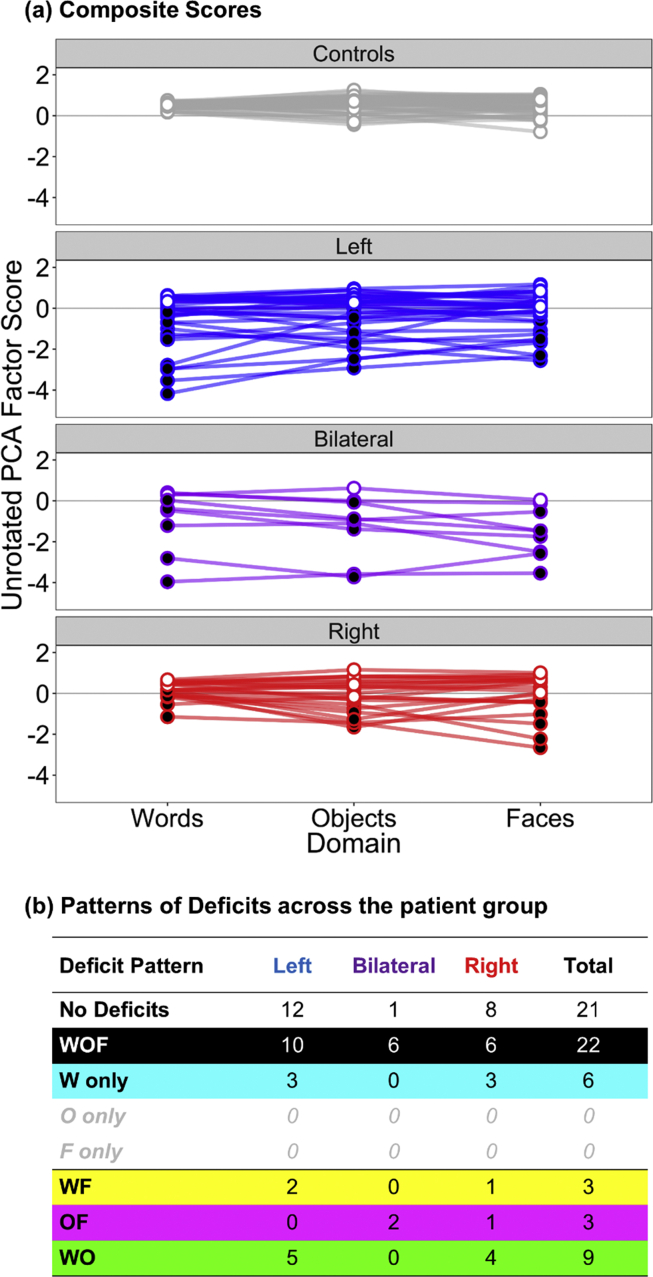
The organisational principles of the visual ventral stream are still highly debated, particularly the relative association/dissociation between word and face recognition and the degree of lateralisation of the underlying processes. Reports of dissociations between word and face recognition stem from single case-studies of category selective impairments, and neuroimaging investigations of healthy participants. Despite the historical reliance on single case-studies, more recent group studies have highlighted a greater commonality between word and face recognition. Studying individual patients with rare selective deficits misses (a) important variability between patients, (b) systematic associations between task performance, and (c) patients with mild, severe and/or non-selective impairments; meaning that the full spectrum of deficits is unknown. The Back of the Brain project assessed the range and specificity of visual perceptual impairment in 64 patients with posterior cerebral artery stroke recruited based on lesion localization and not behavioural performance. Word, object, and face processing were measured with comparable tests across different levels of processing to investigate associations and dissociations across domains. We present two complementary analyses of the extensive behavioural battery: (1) a data-driven analysis of the whole patient group, and (2) a single-subject case-series analysis testing for deficits and dissociations in each individual patient. In both analyses, the general organisational principle was of associations between words, objects, and faces even following unilateral lesions. The majority of patients either showed deficits across all domains or in no domain, suggesting a spectrum of visuo-perceptual deficits post stroke. Dissociations were observed, but they were the exception and not the rule: Category-selective impairments were found in only a minority of patients, all of whom showed disproportionate deficits for words. Interestingly, such selective word impairments were found following both left and right hemisphere lesions. This large-scale investigation of posterior cerebral artery stroke patients highlights the bilateral representation of visual perceptual function.
视觉腹侧流的组织原则仍存在高度争议,尤其是在单词和面部识别之间的相对关联/分离以及潜在过程的偏侧化程度方面。单词和面部识别之间的分离报告源于类别选择性损伤的单个病例研究,以及健康参与者的神经影像学研究。尽管历史上依赖于单个病例研究,但最近的群组研究强调了单词和面部识别之间的更大共性。研究罕见选择性缺陷的个别患者会错过:(a)患者之间的重要差异,(b)任务表现之间的系统关联,以及(c)轻度,重度和/或非选择性损伤的患者;这意味着未知的缺陷全貌。大脑后部项目根据病变定位而不是行为表现,评估了 64 名大脑后动脉中风患者的视觉感知障碍的范围和特异性。使用不同处理水平的可比测试来测量单词,物体和面部处理,以研究跨域的关联和分离。我们对广泛的行为电池进行了两种互补分析:(1)对整个患者组的数据分析,以及(2)对每个患者进行的单个病例系列分析,以测试缺陷和分离。在这两种分析中,即使是单侧病变,单词,物体和面部之间的一般组织原则仍然是关联。大多数患者要么在所有领域都有缺陷,要么在没有领域有缺陷,这表明中风后存在视觉感知缺陷谱。观察到分离,但它们是例外而不是规则:只有少数患者表现出类别选择性损伤,所有这些患者的单词损伤都不成比例。有趣的是,这种选择性单词损伤在左半球和右半球病变后均有发现。对大脑后动脉中风患者的这项大规模研究强调了视觉感知功能的双侧表现。