Department of Oral Science and Translational Research, College of Dental Medicine, Nova Southeastern University, Fort Lauderdale, FL 33314, United States.
Department of Oral Science and Translational Research, College of Dental Medicine, Nova Southeastern University, Fort Lauderdale, FL 33314, United States.
Biomed Pharmacother. 2021 Jun;138:111503. doi: 10.1016/j.biopha.2021.111503. Epub 2021 Mar 23.
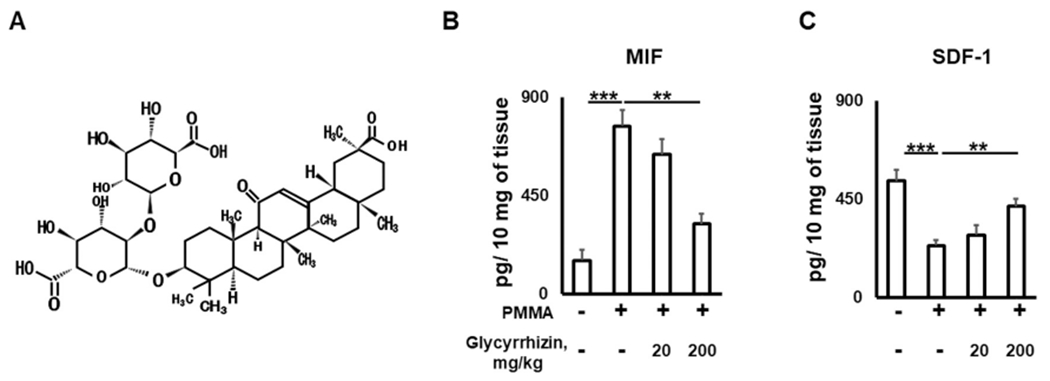
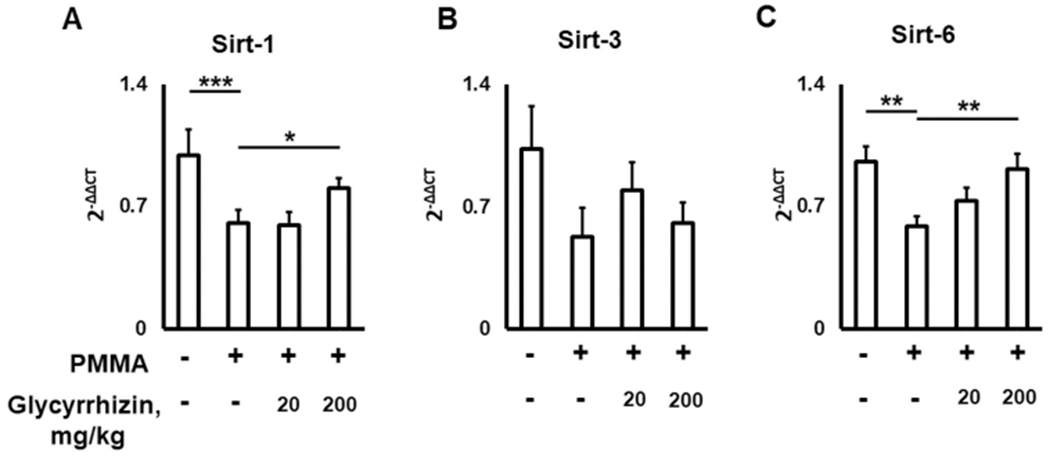
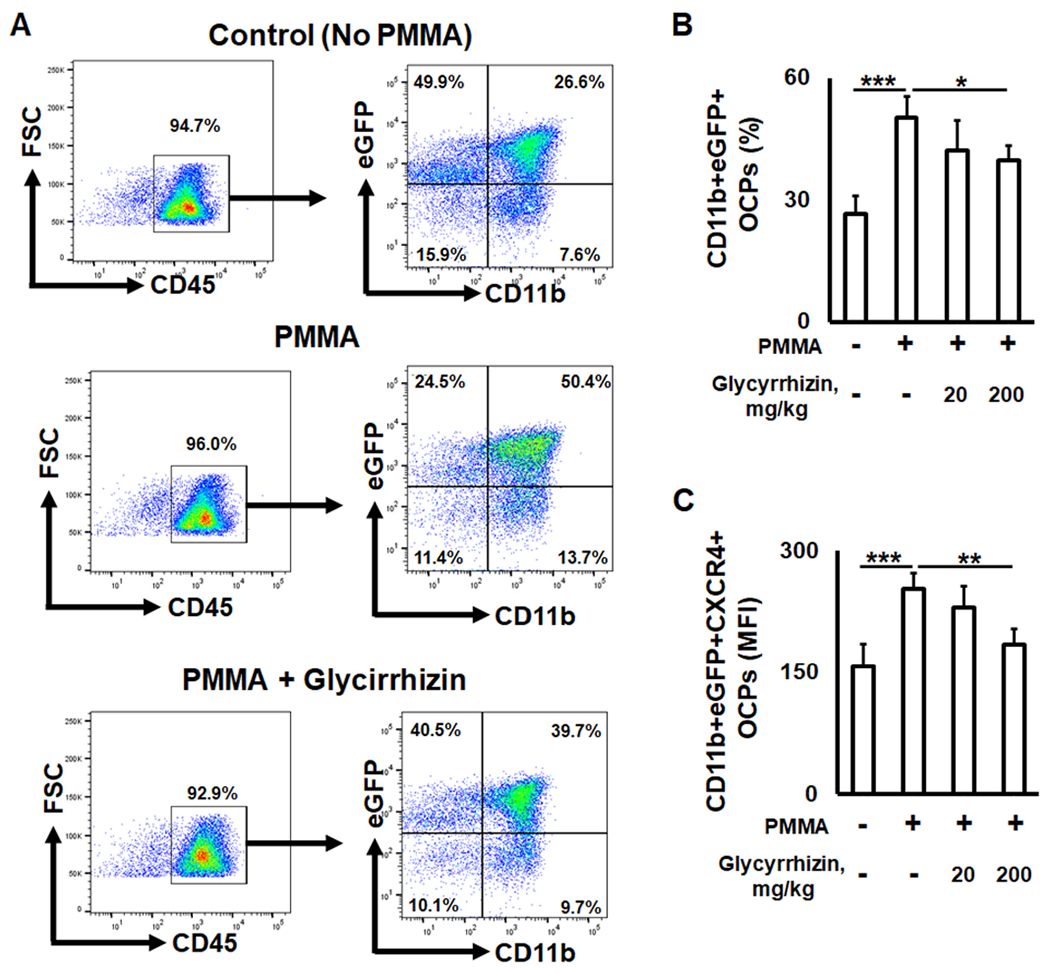
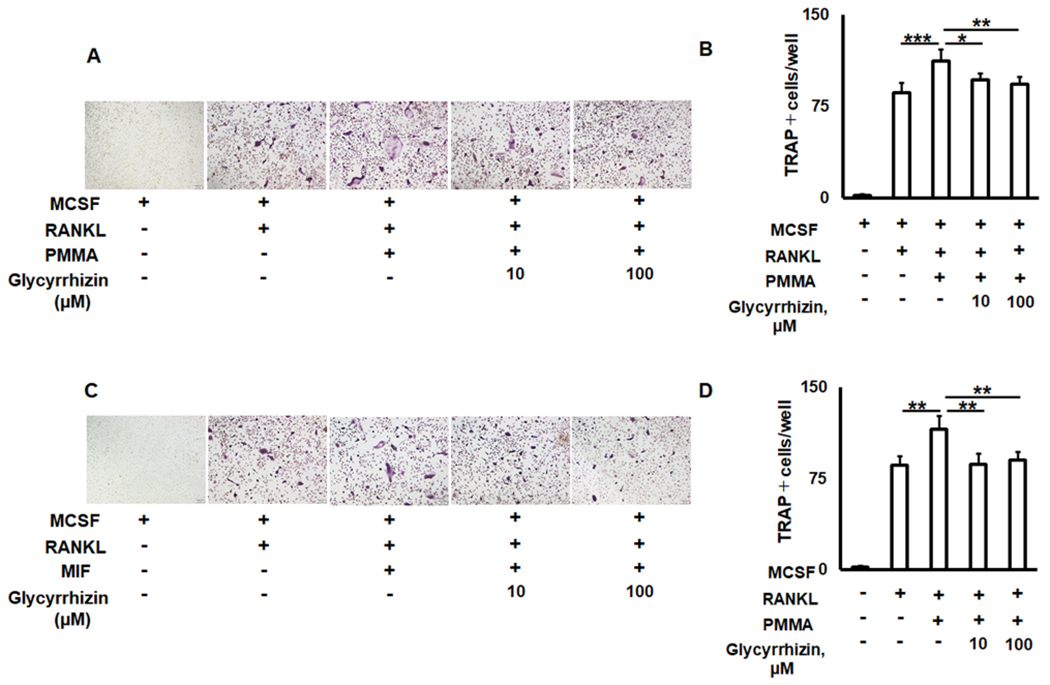
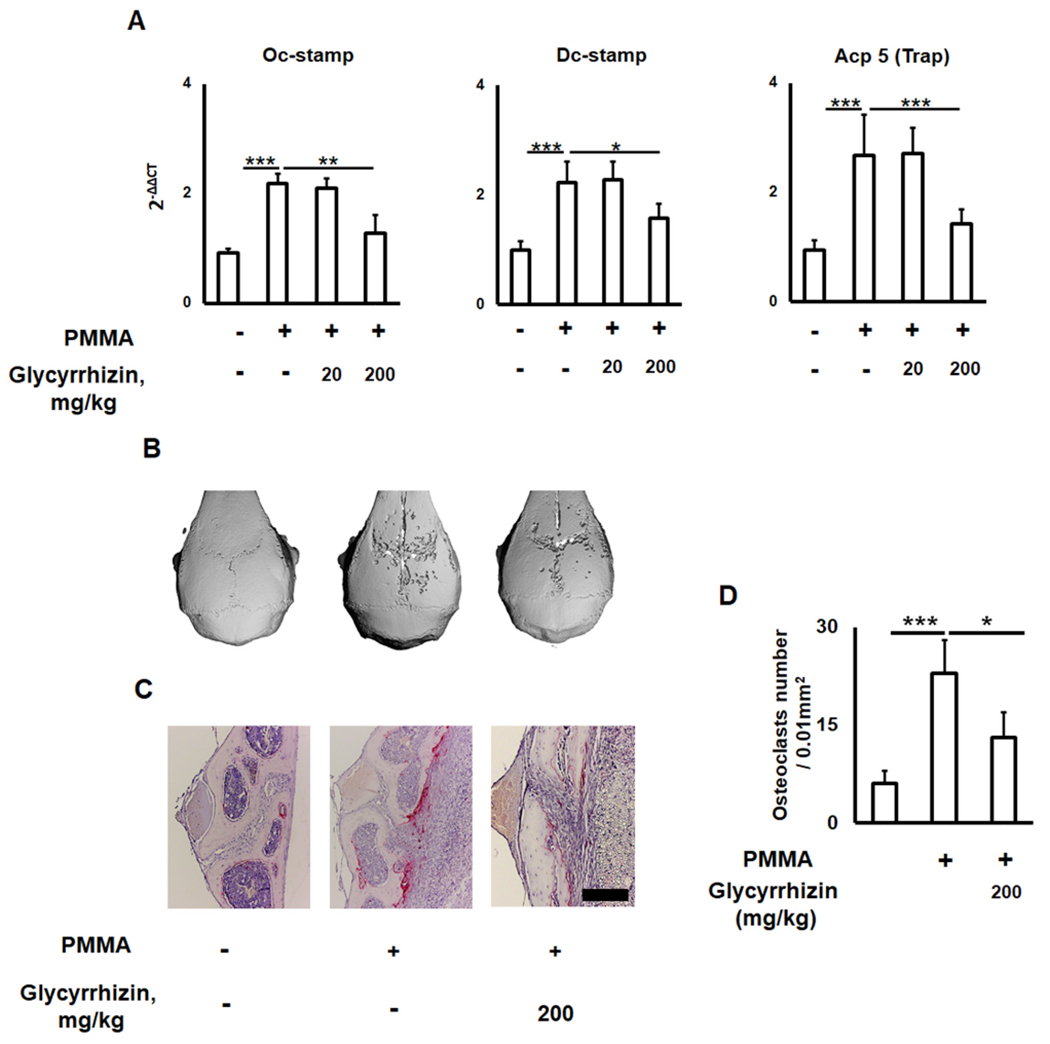
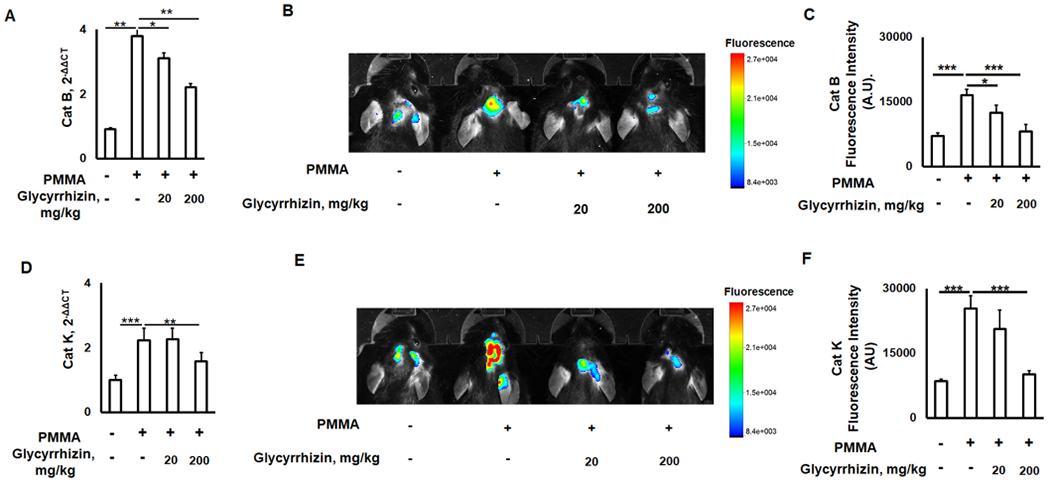
Although periprosthetic osteolysis induced by wear debris particles is significantly elevated in senior (65+ years old) patients, most of the published pre-clinical studies were performed using young (less than three-month old) mice indicating the critical need to employ experimental models of particle-induced osteolysis involving mice with advanced age. Emerging evidence indicates that currently available antiresorptive bone therapies have serious age-dependent side effects. However, a resurgence of healthcare interest has occurred in glycyrrhizin (GLY), a natural extract from the licorice roots, as alternative sources of drugs for treating inflammatory bone lytic diseases and prevention of cellular senescence. This study investigated the effects of GLY on inflammatory bone loss as well as expression patterns of senescence-associated secretory phenotype and senescence-protective markers using an experimental calvarium osteolytic model induced in aged (twenty-four-month-old) mice by polymethylmethacrylate (PMMA) particles. Our results indicate that local treatment with GLY significantly diminished the size of inflammatory osteolytic lesions in aged mice via the number of CXCR4+OCPs and Tartrate-resistant acid phosphatase positive (TRAP+) osteoclasts. Furthermore, GLY dramatically decreased the amounts of senescence-associated secretory phenotype markers, including pro-inflammatory macrophage migration inhibitory factor (MIF) chemokine, and cathepsins B and K in the bone lesions of aged mice. By contrast, GLY significantly elevated expression patterns of senescence-protective markers, including homeostatic stromal derived factor-1 (SDF-1) chemokine, and sirtuin-1, and sirtuin-6, in the PMMA particle-induced calvarial lesions of aged mice. Collectively, these data suggest that GLY can be used for the development of novel therapies to control bone loss and tissue aging in senior patients with periprosthetic osteolysis.
虽然由磨损颗粒引起的假体周围骨溶解在老年(65 岁以上)患者中明显升高,但大多数已发表的临床前研究都是使用年轻(不到三个月大)的小鼠进行的,这表明迫切需要使用涉及老年小鼠的颗粒诱导性骨溶解实验模型。新出现的证据表明,目前可用的抗吸收骨治疗方法具有严重的年龄依赖性副作用。然而,人们对甘草酸(GLY)重新产生了兴趣,GLY 是甘草根的天然提取物,是治疗炎症性骨溶解疾病和预防细胞衰老的替代药物来源。本研究使用聚甲基丙烯酸甲酯(PMMA)颗粒在老年(24 月龄)小鼠中诱导的实验性颅盖骨溶骨性模型,研究了 GLY 对炎症性骨丢失以及衰老相关分泌表型和衰老保护标志物表达模式的影响。我们的结果表明,通过 CXCR4+OCPs 和抗酒石酸酸性磷酸酶阳性(TRAP+)破骨细胞的数量,GLY 局部治疗可显著减少老年小鼠炎症性溶骨性病变的大小。此外,GLY 还显著降低了衰老小鼠骨病变中衰老相关分泌表型标志物的含量,包括促炎巨噬细胞迁移抑制因子(MIF)趋化因子和组织蛋白酶 B 和 K。相比之下,GLY 显著提高了衰老小鼠 PMMA 颗粒诱导的颅盖骨病变中衰老保护标志物的表达模式,包括稳态基质衍生因子-1(SDF-1)趋化因子、Sirtuin-1 和 Sirtuin-6。总的来说,这些数据表明 GLY 可用于开发新的治疗方法,以控制假体周围骨溶解老年患者的骨质流失和组织衰老。