Department of Neurology, University Hospital Bonn, Venusberg Campus 1, 53127, Bonn, Germany.
Gut Microbes & Health, Quadram Institute Bioscience, Norwich Research Park, Norwich, Norfolk, NR4 7UA, UK.
Microbiome. 2021 Mar 26;9(1):75. doi: 10.1186/s40168-021-01012-1.
Recent studies suggested the existence of (poly-)microbial infections in human brains. These have been described either as putative pathogens linked to the neuro-inflammatory changes seen in Parkinson's disease (PD) and Alzheimer's disease (AD) or as a "brain microbiome" in the context of healthy patients' brain samples.
Using 16S rRNA gene sequencing, we tested the hypothesis that there is a bacterial brain microbiome. We evaluated brain samples from healthy human subjects and individuals suffering from PD (olfactory bulb and pre-frontal cortex), as well as murine brains. In line with state-of-the-art recommendations, we included several negative and positive controls in our analysis and estimated total bacterial biomass by 16S rRNA gene qPCR.
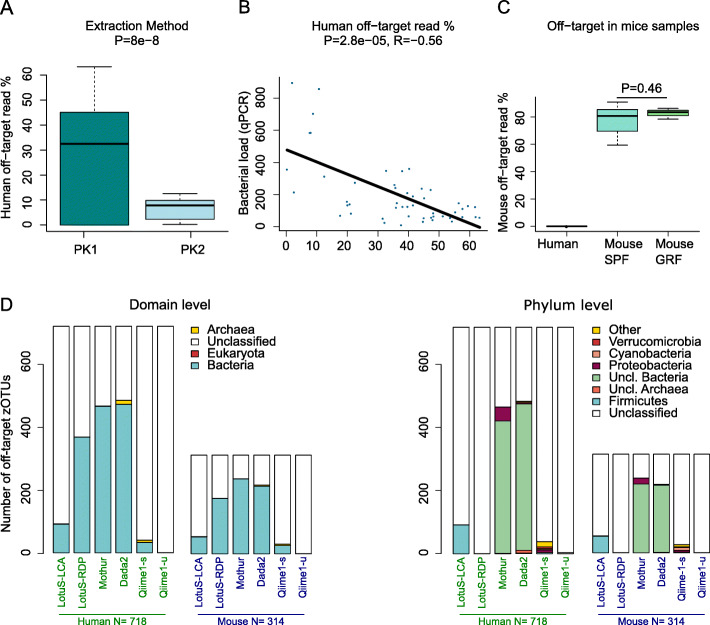
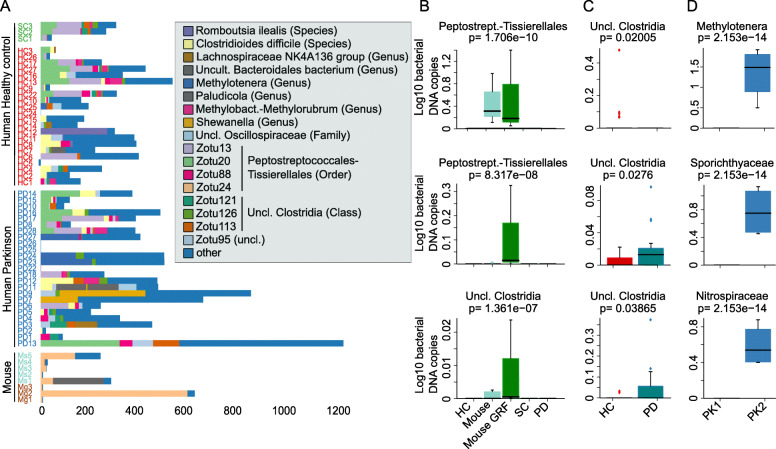
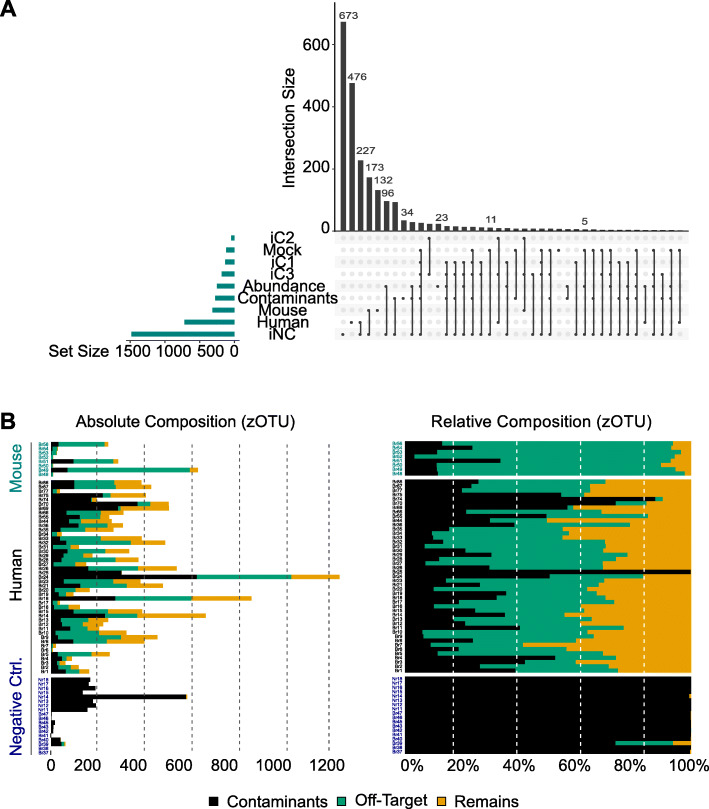
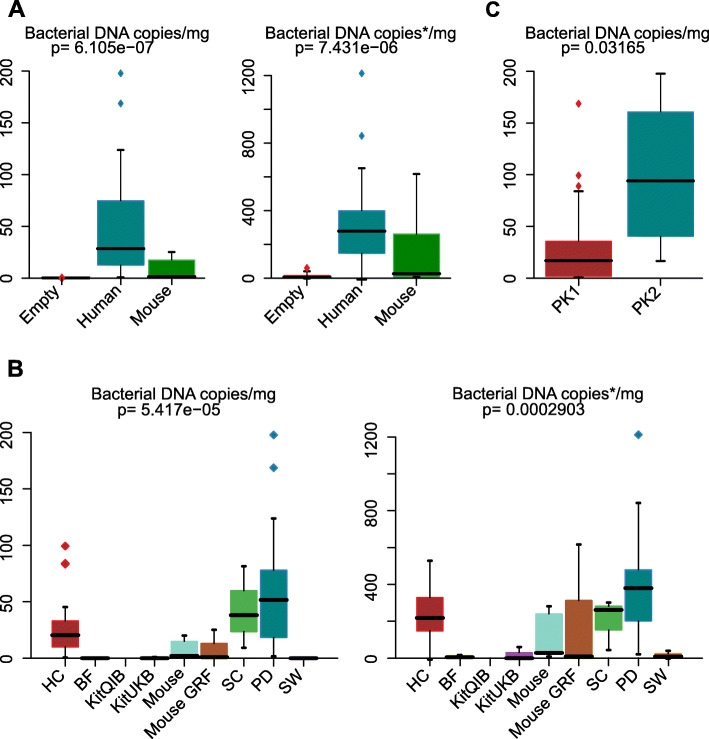
Amplicon sequencing did detect bacterial signals in both human and murine samples, but estimated bacterial biomass was extremely low in all samples. Stringent reanalyses implied bacterial signals being explained by a combination of exogenous DNA contamination (54.8%) and false positive amplification of host DNA (34.2%, off-target amplicons). Several seemingly brain-enriched microbes in our dataset turned out to be false-positive signals upon closer examination. We identified off-target amplification as a major confounding factor in low-bacterial/high-host-DNA scenarios. These amplified human or mouse DNA sequences were clustered and falsely assigned to bacterial taxa in the majority of tested amplicon sequencing pipelines. Off-target amplicons seemed to be related to the tissue's sterility and could also be found in independent brain 16S rRNA gene sequences.
Taxonomic signals obtained from (extremely) low biomass samples by 16S rRNA gene sequencing must be scrutinized closely to exclude the possibility of off-target amplifications, amplicons that can only appear enriched in biological samples, but are sometimes assigned to bacterial taxa. Sequences must be explicitly matched against any possible background genomes present in large quantities (i.e., the host genome). Using close scrutiny in our approach, we find no evidence supporting the hypothetical presence of either a brain microbiome or a bacterial infection in PD brains. Video abstract.
最近的研究表明,人类大脑中存在(多)微生物感染。这些被描述为与帕金森病(PD)和阿尔茨海默病(AD)中观察到的神经炎症变化相关的假定病原体,或在健康患者的脑样本中作为“脑微生物组”。
我们使用 16S rRNA 基因测序来检验大脑中存在细菌微生物组的假设。我们评估了来自健康人类受试者和 PD 患者(嗅球和前额叶皮层)的大脑样本,以及鼠脑样本。根据最新的建议,我们在分析中包括了几个阴性和阳性对照,并通过 16S rRNA 基因 qPCR 估计了总细菌生物量。
扩增子测序确实在人和鼠的样本中都检测到了细菌信号,但所有样本中的细菌生物量都极低。严格的重新分析表明,细菌信号是由外源性 DNA 污染(54.8%)和宿主 DNA 的假阳性扩增(34.2%,非靶标扩增子)共同解释的。我们的数据集中一些看似丰富的脑内微生物在进一步检查后被证明是假阳性信号。我们发现,非靶标扩增是低细菌/高宿主 DNA 情况下的主要混杂因素。这些扩增的人或鼠 DNA 序列在大多数测试的扩增子测序管中聚类,并被错误地分配给细菌分类群。非靶标扩增子似乎与组织的无菌性有关,也可以在独立的脑 16S rRNA 基因序列中找到。
通过 16S rRNA 基因测序从(极低)生物量样本中获得的分类学信号必须仔细检查,以排除非靶标扩增的可能性,即仅在生物样本中出现富集但有时被分配给细菌分类群的扩增子。序列必须与大量存在的任何可能的背景基因组(即宿主基因组)明确匹配。在我们的方法中使用仔细检查,我们没有发现任何支持 PD 大脑中存在脑微生物组或细菌感染的假设的证据。视频摘要。