Department of Biomedical Engineering, National University of Singapore, Singapore, Singapore.
Department of Bioengineering, Imperial College London, London, UK.
Biomech Model Mechanobiol. 2021 Aug;20(4):1337-1351. doi: 10.1007/s10237-021-01447-3. Epub 2021 Mar 28.
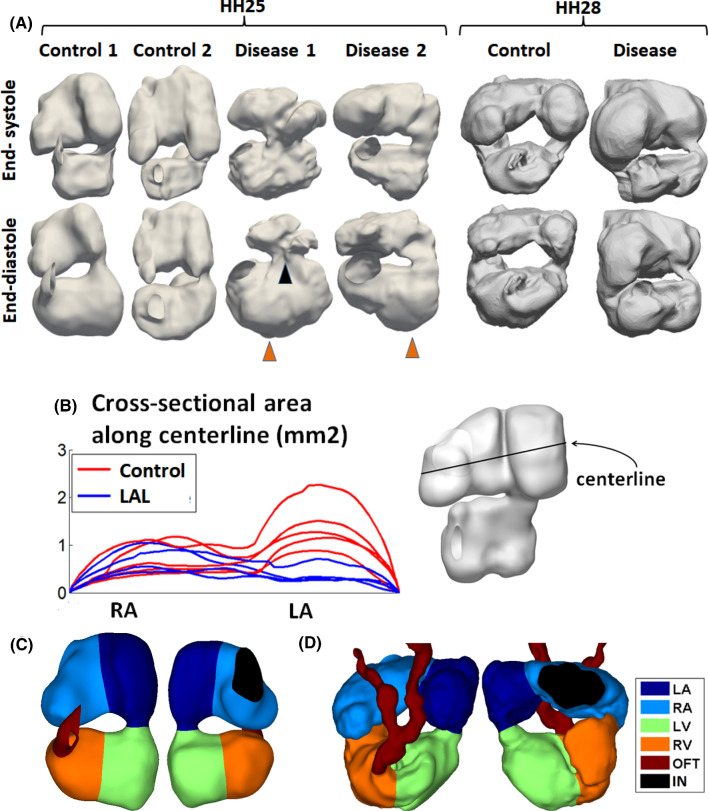
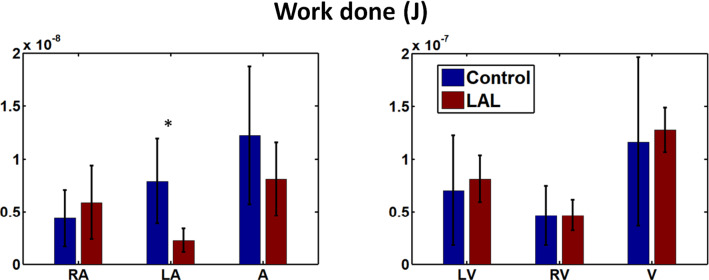
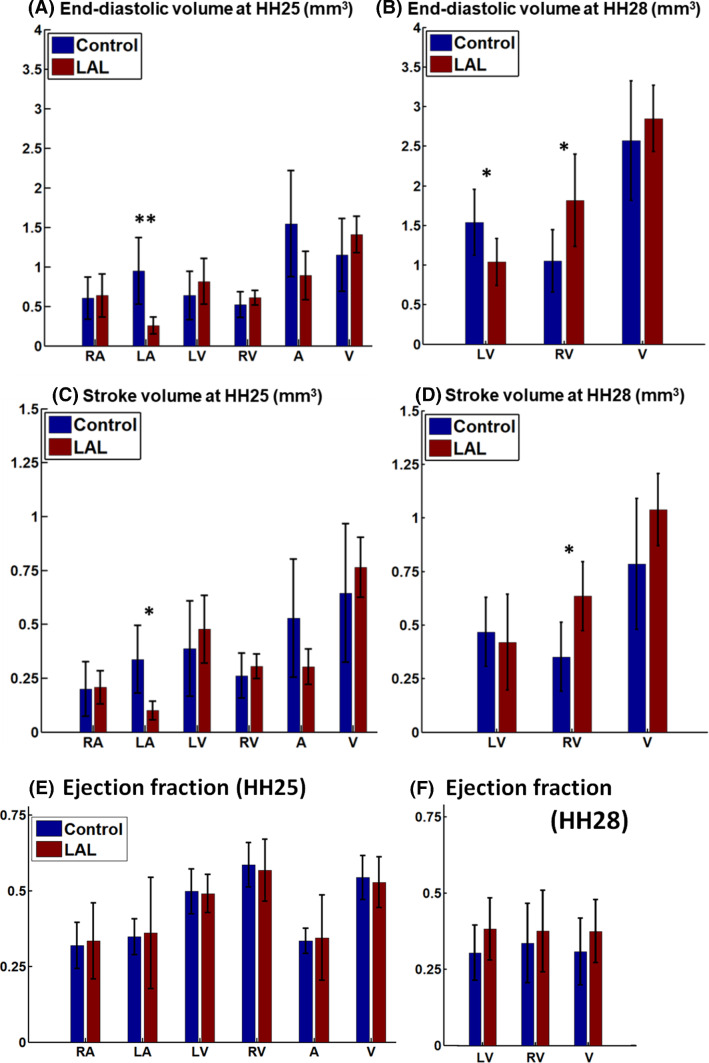
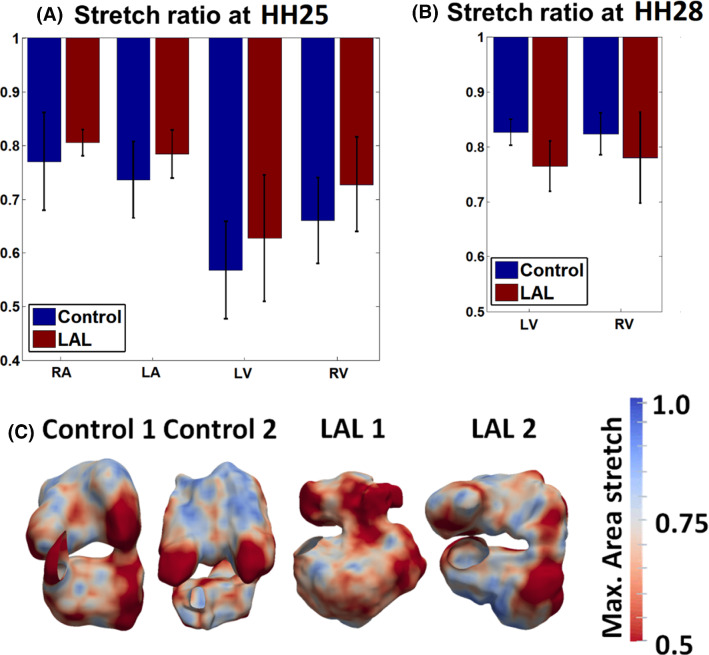
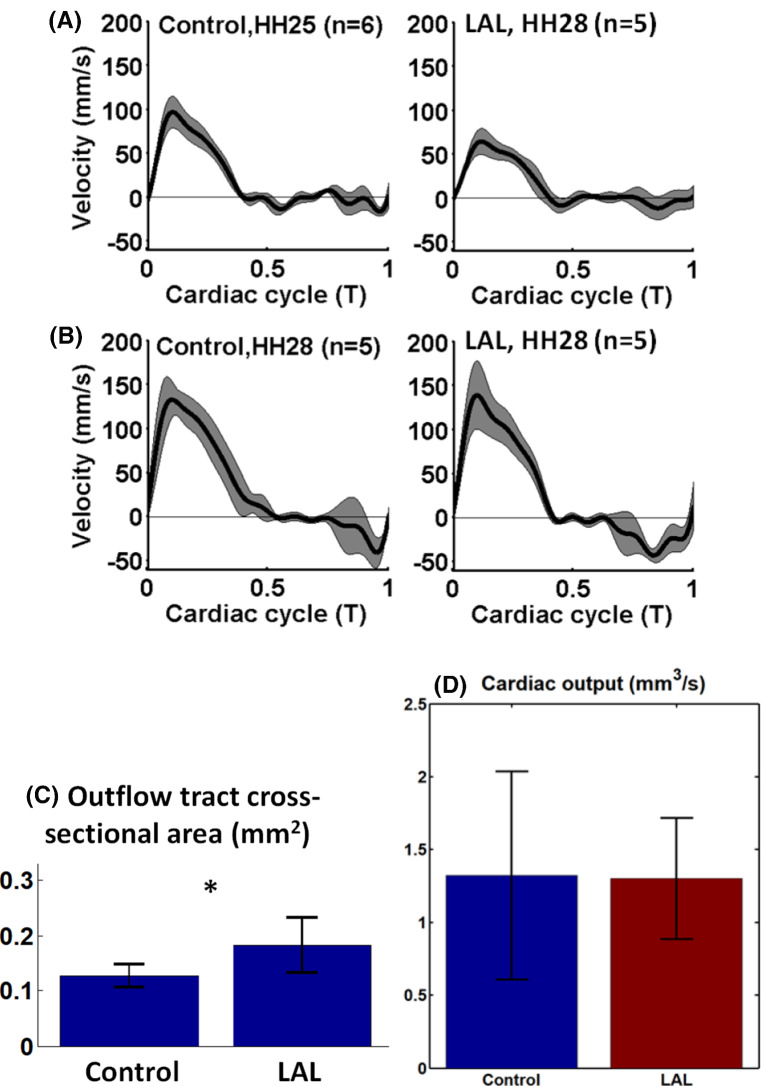
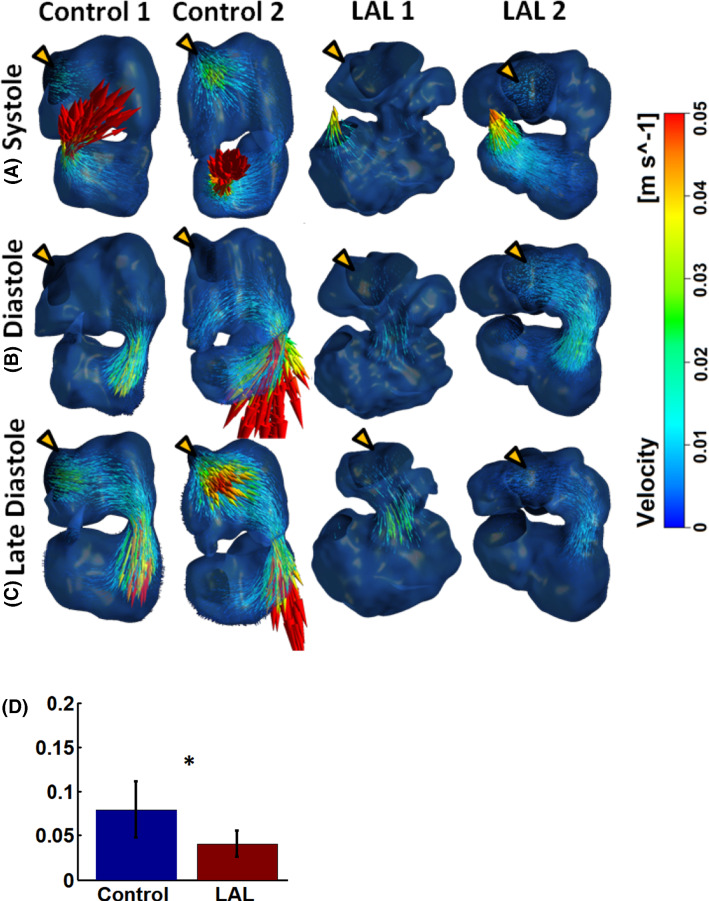
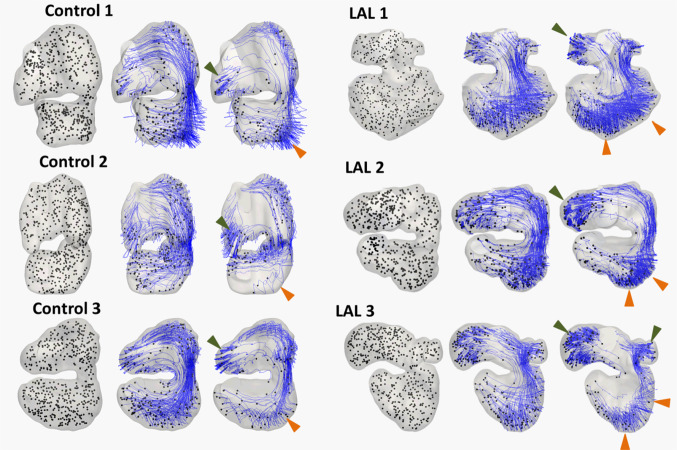
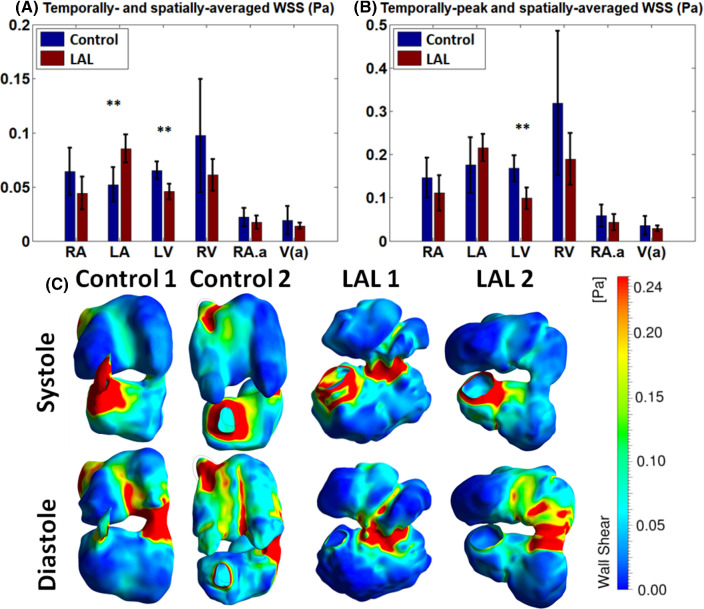
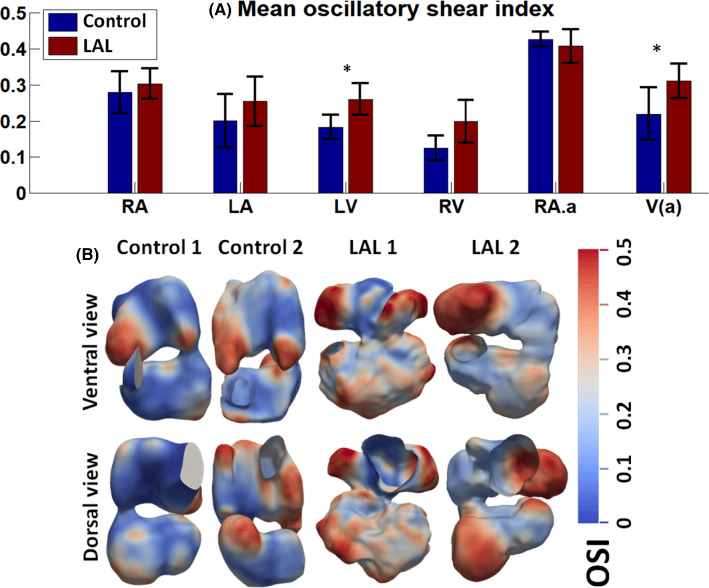
Left atrial ligation (LAL) of the chick embryonic heart at HH21 is a model of the hypoplastic left heart syndrome (HLHS) disease, demonstrating morphological and hemodynamic features similar to human HLHS cases. Since it relies on mechanical intervention without genetic or pharmacological manipulations, it is a good model for understanding the biomechanics origins of such HLHS malformations. To date, however, the fluid mechanical environment of this model is poorly understood. In the current study, we performed 4D ultrasound imaging of LAL and normal chick embryonic hearts and 4D cardiac flow simulations to help shed light on the mechanical environment that may lead to the HLHS morphology. Results showed that the HH25 LAL atrial function was compromised, and velocities in the ventricle were reduced. The HH25 LAL ventricles developed a more triangular shape with a sharper apex, and in some cases, the atrioventricular junction shifted medially. These changes led to more sluggish flow near the ventricular free wall and apex, where more fluid particles moved in an oscillatory manner with the motion of the ventricular wall, while slowly being washed out, resulting in lower wall shear stresses and higher oscillatory indices. Consequent to these flow conditions, at HH28, even before septation is complete, the left ventricle was found to be hypoplastic while the right ventricle was found to be larger in compensation. Our results suggest that the low and oscillatory flow near the left side of the heart may play a role in causing the HLHS morphology in the LAL model.
在 HH21 时对鸡胚心脏进行左心房结扎(LAL)是一种左心发育不全综合征(HLHS)疾病的模型,表现出与人类 HLHS 病例相似的形态和血液动力学特征。由于它依赖于机械干预而没有遗传或药物操作,因此是理解此类 HLHS 畸形的生物力学起源的良好模型。然而,迄今为止,该模型的流体力学环境还了解甚少。在当前的研究中,我们对 LAL 和正常鸡胚心脏进行了 4D 超声成像和 4D 心脏流模拟,以帮助阐明可能导致 HLHS 形态的机械环境。结果表明,HH25 LAL 的心房功能受损,心室中的速度降低。HH25 LAL 的心室发育成更三角形的形状,顶点更尖锐,在某些情况下,房室交界处向内侧移位。这些变化导致心室游离壁和顶点附近的流动更加缓慢,更多的流体颗粒随着心室壁的运动以振荡方式移动,同时缓慢地被冲洗掉,导致壁面剪切应力降低和振荡指数升高。由于这些流动条件,在 HH28 时,即使在分隔完全完成之前,就发现左心室发育不良,而右心室代偿性增大。我们的结果表明,心脏左侧的低流量和振荡流可能在导致 LAL 模型中的 HLHS 形态中起作用。