Robertson T M, Brown J E, Fielding B A, Hovorka R, Robertson M D
University of Surrey Guildford UK.
University of Cambridge Cambridge UK.
Nutr Bull. 2021 Mar;46(1):52-59. doi: 10.1111/nbu.12476. Epub 2020 Nov 22.
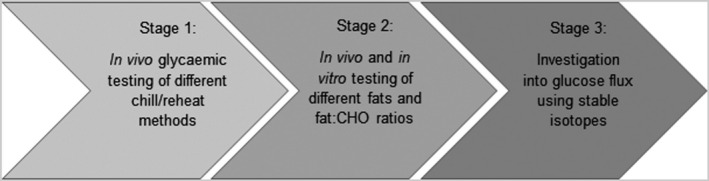
With an increasing prevalence of diabetes worldwide, effective dietary strategies for blood glucose control are crucial. As carbohydrates make up approximately 50% of the diet, it is neither practical nor advisable to avoid them altogether. Most of the carbohydrate in the diet is derived from starch, found in potatoes, pasta, rice and bread. These foods are often processed in some way before consumption, yet little is known about the effects processing, such as chilling and reheating, has on the glycaemic response, particularly when the food is consumed in the context of a mixed meal. This article introduces the project, a BBSRC DRINC-funded initiative. Taking the potato as the model carbohydrate, this project will investigate, via and studies, the effects of domestic food processing techniques on the glycaemic response. A final study, utilising intrinsically labelled potato and a dual stable isotope methodology, will model glucose flux data to determine the underlying mechanisms of action.
随着全球糖尿病患病率的不断上升,有效的饮食控制血糖策略至关重要。由于碳水化合物约占饮食的50%,完全避免摄入碳水化合物既不实际也不可取。饮食中的大部分碳水化合物来自淀粉,存在于土豆、意大利面、米饭和面包中。这些食物在食用前通常会经过某种加工,但对于诸如冷藏和重新加热等加工方式对血糖反应的影响,尤其是在混合餐的情况下食用这些食物时的影响,人们了解甚少。本文介绍了一个由英国生物技术与生物科学研究委员会(BBSRC)糖尿病研究与创新网络(DRINC)资助的项目。该项目以土豆作为碳水化合物模型,将通过体外和体内研究,探究家庭食品加工技术对血糖反应的影响。最后一项研究将利用内源性标记的土豆和双稳定同位素方法,模拟葡萄糖通量数据,以确定其潜在的作用机制。