Smith David, Jheeta Sohan, Fuentes Hannya V, Palacios-Pérez Miryam
Network of Researchers on the Chemical Evolution of Life (NoRCEL), Leeds LS7 3RB, UK.
Instituto de Investigaciones Biomédicas, Universidad Nacional Autónoma de México (UNAM), Mexico City 04510, Mexico.
Life (Basel). 2022 Aug 5;12(8):1197. doi: 10.3390/life12081197.
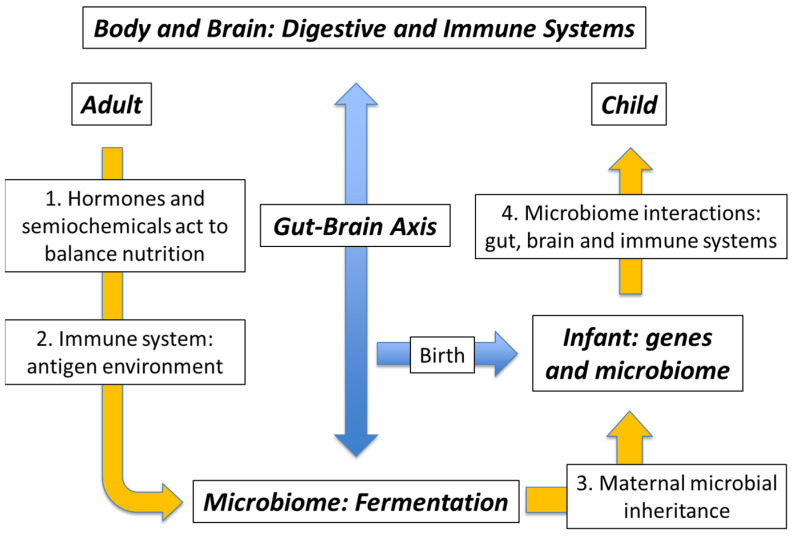
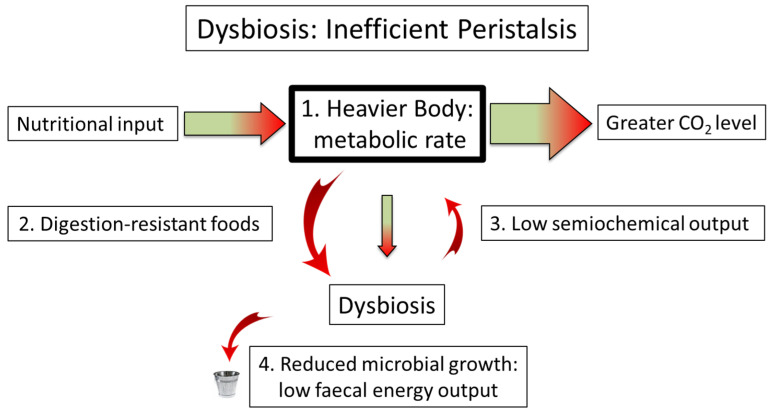
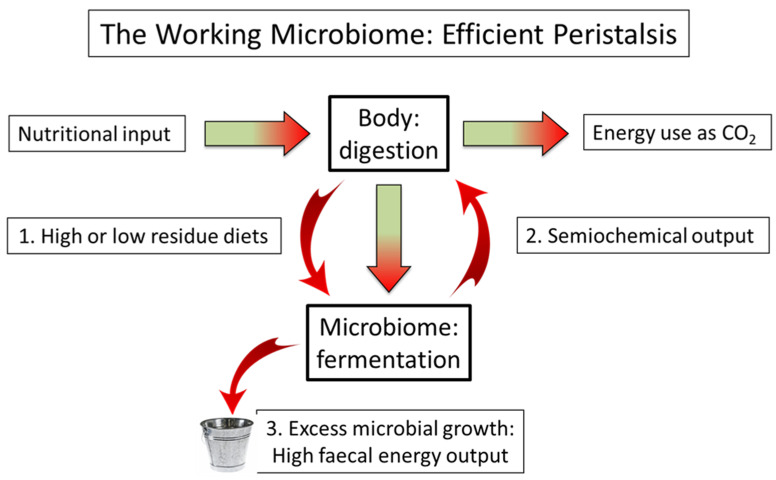
Non-communicable diseases are those conditions to which causative infectious agents cannot readily be assigned. It is increasingly likely that at least some of these conditions are due to the breakdown of the previously mutualistic intestinal microbiota under the influence of a polluted, biocide-rich, environment. Following the mid-20th century African studies of Denis Burkitt, the environmental cause of conditions such as obesity has been ascribed to the absence of sufficient fibre in the modern diet, however in itself that is insufficient to explain the parallel rise of problems with both the immune system and of mental health. Conversely, Burkitt himself noted that the Maasai, a cattle herding people, remained healthy even with their relatively low intake of dietary fibre. Interestingly, however, Burkitt also emphasised that levels of non-communicable disease within a population rose as faecal weight decreased significantly, to about one third of the levels found in healthy populations. Accordingly, a more cogent explanation for all the available facts is that the fully functioning, adequately diverse microbiome, communicating through what has been termed the microbiota-gut-brain axis, helps to control the passage of food through the digestive tract to provide itself with the nutrition it needs. The method of communication is via the production of semiochemicals, interkingdom signalling molecules, potentially including dopamine. In turn, the microbiome aids the immune system of both adult and, most importantly, the neonate. In this article we consider the role of probiotics and prebiotics, including fermented foods and dietary fibre, in the stimulation of the immune system and of semiochemical production in the gut lumen. Finally, we reprise our suggestion of an ingestible sensor, calibrated to the detection of such semiochemicals, to assess both the effectiveness of individual microbiomes and methods of amelioration of the associated non-communicable diseases.
非传染性疾病是指那些难以直接确定致病传染因子的病症。越来越有可能的是,这些病症中至少有一部分是由于在受污染、富含杀生物剂的环境影响下,先前互利共生的肠道微生物群遭到破坏所致。继20世纪中叶丹尼斯·伯基特在非洲进行的研究之后,肥胖等病症的环境成因被归因于现代饮食中缺乏足够的纤维,然而这本身不足以解释免疫系统和心理健康问题同时出现的情况。相反,伯基特本人指出,马赛人作为一个以放牧牛群为生的群体,即使膳食纤维摄入量相对较低,仍保持健康。然而,有趣的是,伯基特还强调,随着粪便重量显著下降至健康人群中发现的水平的约三分之一,人群中非传染性疾病的发病率上升。因此,对所有现有事实更有说服力的解释是,功能完备、种类足够多样的微生物群通过所谓的微生物群-肠道-脑轴进行交流,有助于控制食物在消化道中的通过,以便为自身提供所需营养。交流方式是通过产生信息化学物质,即跨界信号分子,可能包括多巴胺。反过来,微生物群有助于成年人以及最重要的新生儿的免疫系统。在本文中,我们考虑了益生菌和益生元,包括发酵食品和膳食纤维,在刺激免疫系统以及肠道腔中信息化学物质产生方面的作用。最后,我们再次提出我们的建议,即一种可摄入的传感器,经过校准以检测此类信息化学物质,用于评估个体微生物群的有效性以及改善相关非传染性疾病的方法。