Römer Christine
Max Delbrück Center for Molecular Medicine in the Helmholtz Association, The Berlin Institute for Medical Systems Biology, Berlin, Germany.
Front Neurosci. 2021 Mar 12;15:648629. doi: 10.3389/fnins.2021.648629. eCollection 2021.
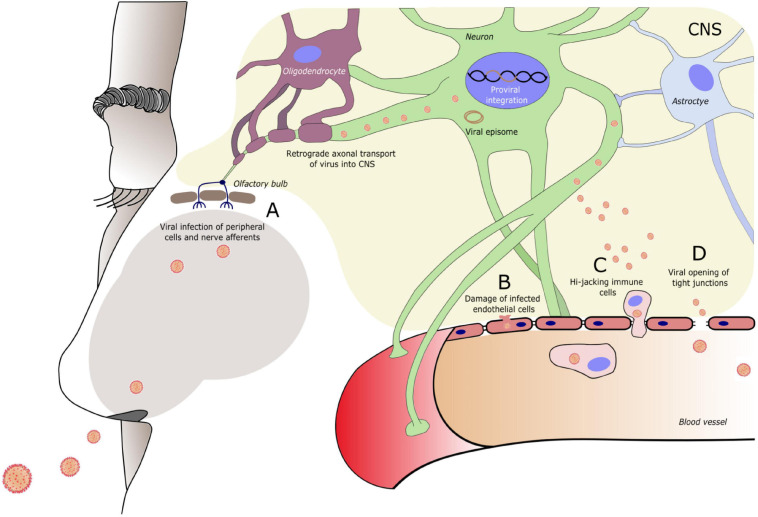
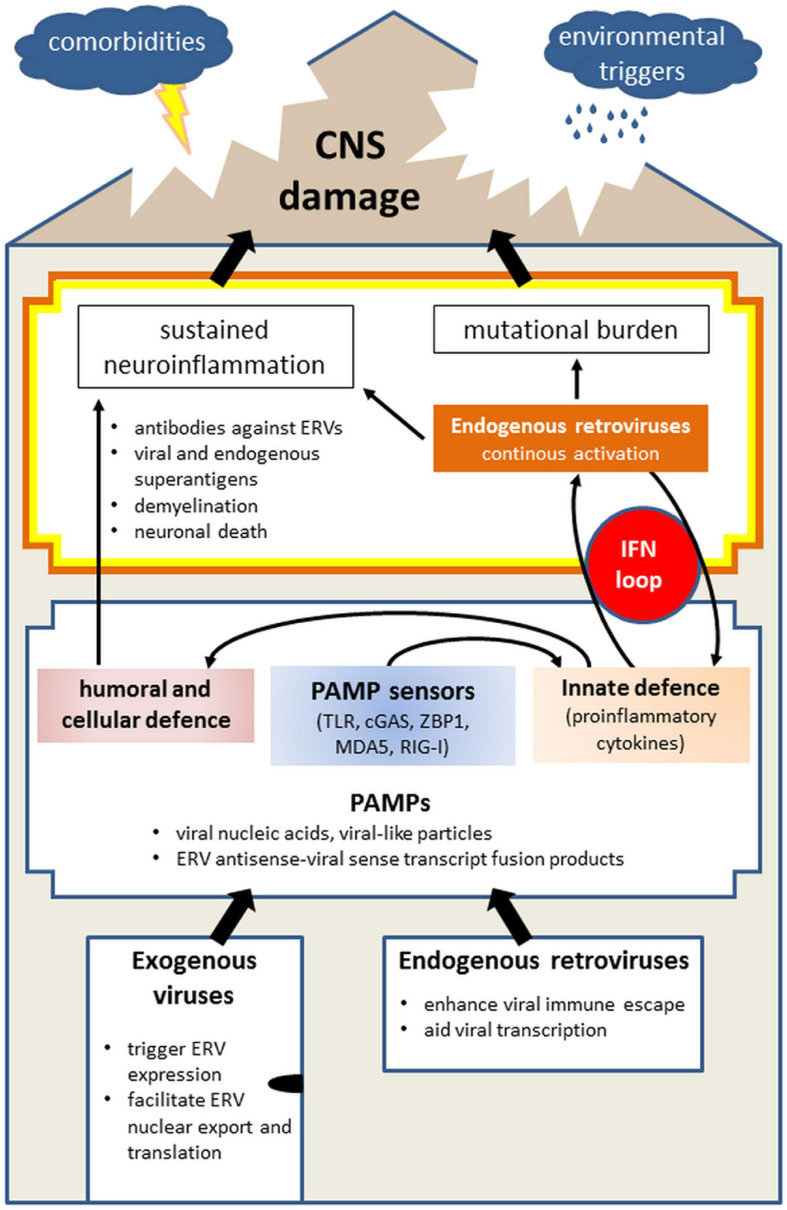
Many neurodegenerative diseases are associated with chronic inflammation in the brain and periphery giving rise to a continuous imbalance of immune processes. Next to inflammation markers, activation of transposable elements, including long intrespersed nuclear elements (LINE) elements and endogenous retroviruses (ERVs), has been identified during neurodegenerative disease progression and even correlated with the clinical severity of the disease. ERVs are remnants of viral infections in the human genome acquired during evolution. Upon activation, they produce transcripts and the phylogenetically youngest ones are still able to produce viral-like particles. In addition, ERVs can bind transcription factors and modulate immune response. Being between own and foreign, ERVs are reviewed in the context of viral infections of the central nervous system, in aging and neurodegenerative diseases. Moreover, this review tests the hypothesis that viral infection may be a trigger at the onset of neuroinflammation and that ERVs sustain the inflammatory imbalance by summarizing existing data of neurodegenerative diseases associated with viruses and/or ERVs.
许多神经退行性疾病与大脑和外周的慢性炎症相关,导致免疫过程持续失衡。除炎症标志物外,在神经退行性疾病进展过程中还发现了转座元件的激活,包括长散在核元件(LINE)和内源性逆转录病毒(ERV),甚至与疾病的临床严重程度相关。ERV是人类基因组在进化过程中获得的病毒感染残余物。激活后,它们会产生转录本,而系统发育上最年轻的ERV仍能够产生病毒样颗粒。此外,ERV可以结合转录因子并调节免疫反应。由于ERV处于自身与外来之间,因此在中枢神经系统病毒感染、衰老和神经退行性疾病的背景下对其进行了综述。此外,本综述通过总结与病毒和/或ERV相关的神经退行性疾病的现有数据,检验了病毒感染可能是神经炎症发作的触发因素以及ERV维持炎症失衡的假设。