Sehnal Ludek, Brammer-Robbins Elizabeth, Wormington Alexis M, Blaha Ludek, Bisesi Joe, Larkin Iske, Martyniuk Christopher J, Simonin Marie, Adamovsky Ondrej
RECETOX, Faculty of Science, Masaryk University, Brno, Czechia.
Department of Large Animal Clinical Sciences, University of Florida, Gainesville, FL, United States.
Front Microbiol. 2021 Mar 11;12:567408. doi: 10.3389/fmicb.2021.567408. eCollection 2021.
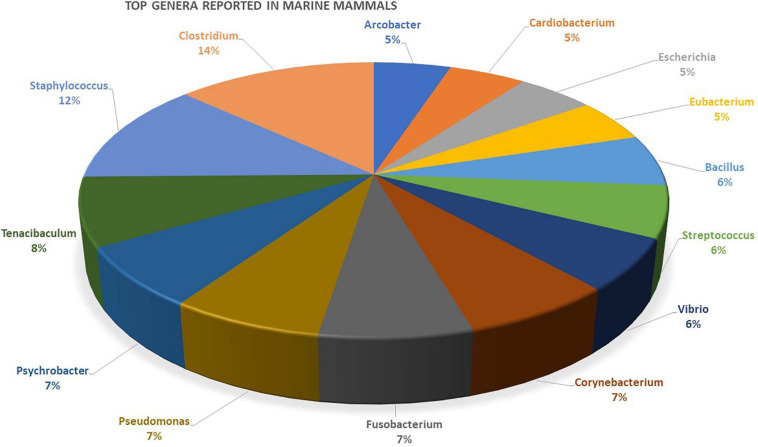
Aquatic ecosystems are under increasing stress from global anthropogenic and natural changes, including climate change, eutrophication, ocean acidification, and pollution. In this critical review, we synthesize research on the microbiota of aquatic vertebrates and discuss the impact of emerging stressors on aquatic microbial communities using two case studies, that of toxic cyanobacteria and microplastics. Most studies to date are focused on host-associated microbiomes of individual organisms, however, few studies take an integrative approach to examine aquatic vertebrate microbiomes by considering both host-associated and free-living microbiota within an ecosystem. We highlight what is known about microbiota in aquatic ecosystems, with a focus on the interface between water, fish, and marine mammals. Though microbiomes in water vary with geography, temperature, depth, and other factors, core microbial functions such as primary production, nitrogen cycling, and nutrient metabolism are often conserved across aquatic environments. We outline knowledge on the composition and function of tissue-specific microbiomes in fish and marine mammals and discuss the environmental factors influencing their structure. The microbiota of aquatic mammals and fish are highly unique to species and a delicate balance between respiratory, skin, and gastrointestinal microbiota exists within the host. In aquatic vertebrates, water conditions and ecological niche are driving factors behind microbial composition and function. We also generate a comprehensive catalog of marine mammal and fish microbial genera, revealing commonalities in composition and function among aquatic species, and discuss the potential use of microbiomes as indicators of health and ecological status of aquatic ecosystems. We also discuss the importance of a focus on the functional relevance of microbial communities in relation to organism physiology and their ability to overcome stressors related to global change. Understanding the dynamic relationship between aquatic microbiota and the animals they colonize is critical for monitoring water quality and population health.
水生生态系统正承受着来自全球人为和自然变化的日益增加的压力,这些变化包括气候变化、富营养化、海洋酸化和污染。在这篇批判性综述中,我们综合了关于水生脊椎动物微生物群的研究,并通过两个案例研究——有毒蓝藻细菌和微塑料,来讨论新出现的压力源对水生微生物群落的影响。迄今为止,大多数研究都集中在个体生物的宿主相关微生物群上,然而,很少有研究采用综合方法,通过考虑生态系统内宿主相关和自由生活的微生物群来检查水生脊椎动物的微生物群。我们重点介绍了关于水生生态系统中微生物群的已知情况,重点关注水、鱼类和海洋哺乳动物之间的界面。尽管水中的微生物群因地理、温度、深度和其他因素而有所不同,但诸如初级生产、氮循环和营养代谢等核心微生物功能在水生环境中通常是保守的。我们概述了关于鱼类和海洋哺乳动物组织特异性微生物群的组成和功能的知识,并讨论了影响其结构的环境因素。水生哺乳动物和鱼类的微生物群在物种上高度独特,宿主内呼吸、皮肤和胃肠道微生物群之间存在微妙的平衡。在水生脊椎动物中,水的条件和生态位是微生物组成和功能背后的驱动因素。我们还生成了一份海洋哺乳动物和鱼类微生物属的综合目录,揭示了水生物种在组成和功能上的共性,并讨论了微生物群作为水生生态系统健康和生态状况指标的潜在用途。我们还讨论了关注微生物群落与生物体生理功能相关性及其克服与全球变化相关压力源能力的重要性。了解水生微生物群与其所定殖动物之间的动态关系对于监测水质和种群健康至关重要。