Ye Jing, Yang Gang, Zhang Jing, Xiao Zhenghua, He Ling, Zhang Han, Liu Qi
College of Biomedical Engineering, Sichuan University, Chengdu, Sichuan, China.
Department of Cardiovascular Surgery, West China Hospital of Sichuan University, Chengdu, Sichuan, China.
PeerJ. 2021 Mar 15;9:e11022. doi: 10.7717/peerj.11022. eCollection 2021.
Tissue engineering, which involves the selection of scaffold materials, presents a new therapeutic strategy for damaged tissues or organs. Scaffold design based on blends of proteins and polysaccharides, as mimicry of the native extracellular matrix, has recently become a valuable strategy for tissue engineering.
This study aimed to construct composite hydrogels based on natural polymers for tissue engineering.
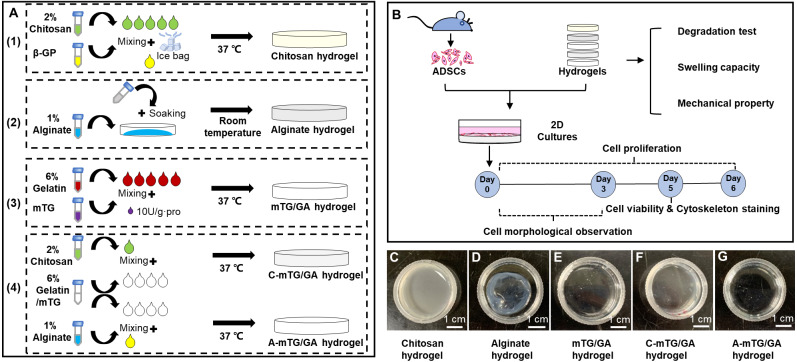
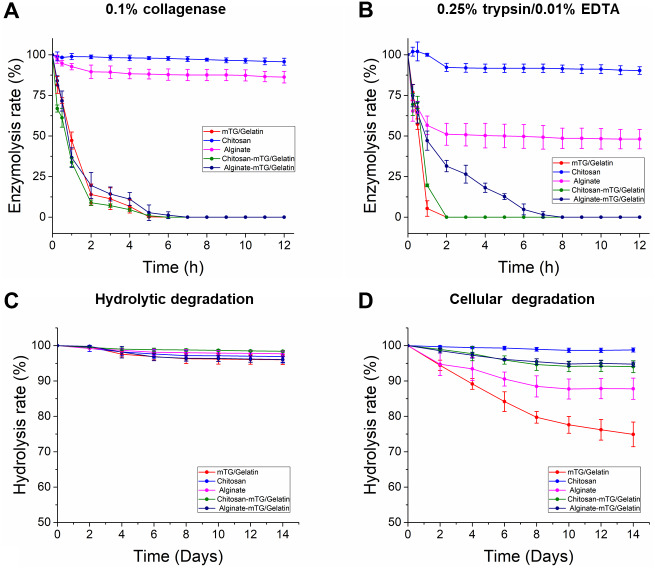
Composite hydrogels based on blends of gelatin with a polysaccharide component (chitosan or alginate) were produced and subsequently enzyme crosslinked. The other three hydrogels, chitosan hydrogel, sodium alginate hydrogel, and microbial transglutaminase-crosslinked gelatin (mTG/GA) hydrogel were also prepared. All hydrogels were evaluated for in vitro degradation property, swelling capacity, and mechanical property. Rat adipose-derived stromal stem cells (ADSCs) were isolated and seeded on (or embedded into) the above-mentioned hydrogels. The morphological features of ADSCs were observed and recorded. The effects of the hydrogels on ADSC survival and adhesion were investigated by immunofluorescence staining. Cell proliferation was tested by thiazolyl blue tetrazolium bromide (MTT) assay.
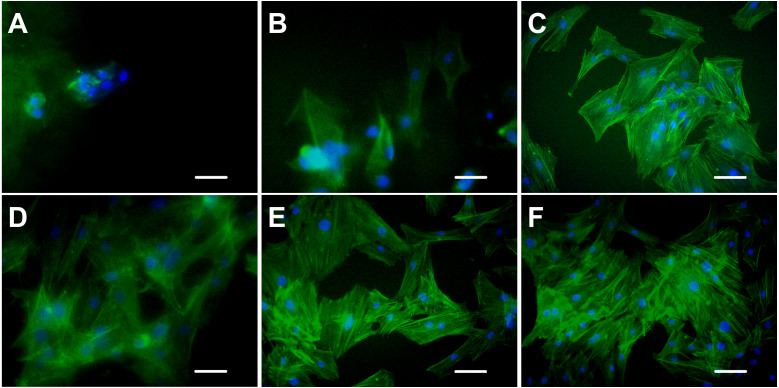
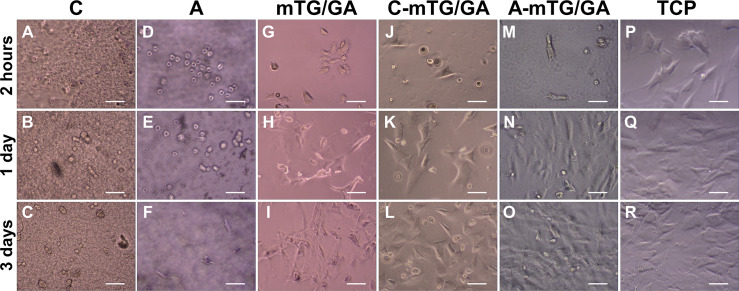
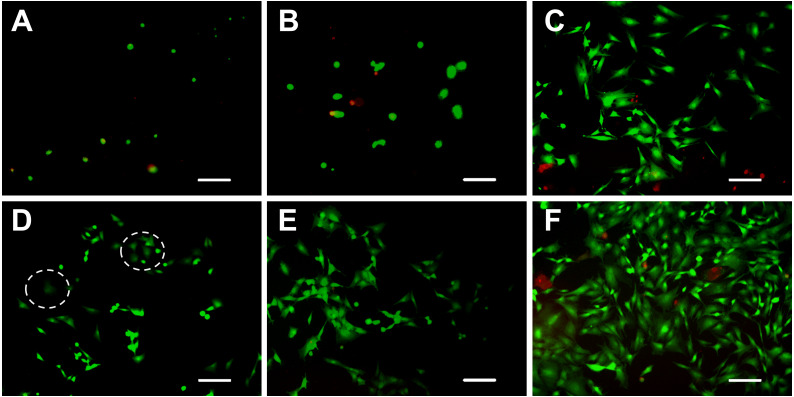
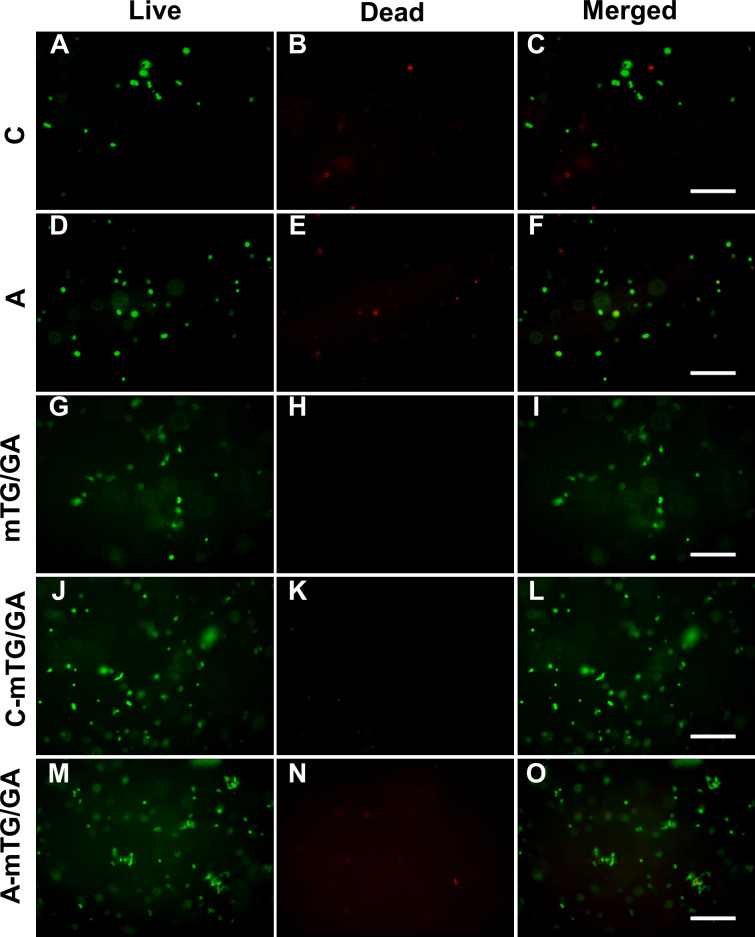
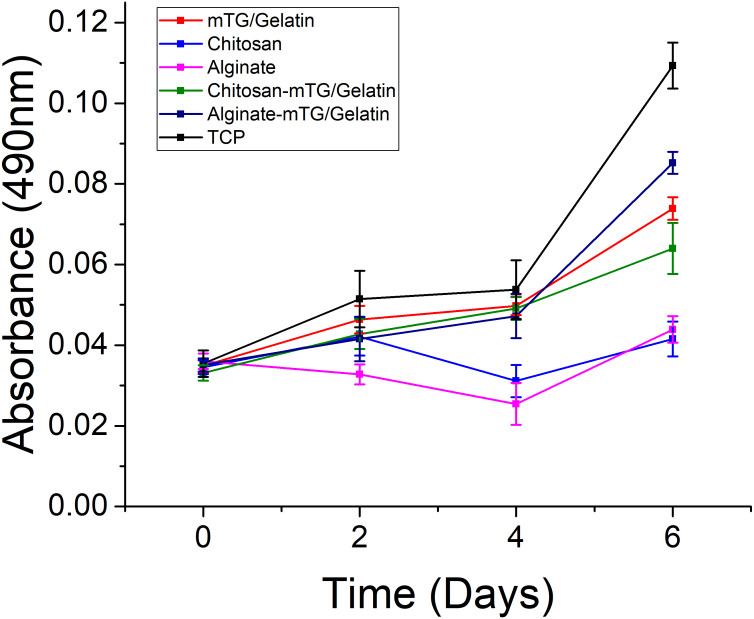
Cell viability assay results showed that the five hydrogels are not cytotoxic. The mTG/GA and its composite hydrogels showed higher compressive moduli than the single-component chitosan and alginate hydrogels. MTT assay results showed that ADSCs proliferated better on the composite hydrogels than on the chitosan and alginate hydrogels. Light microscope observation and cell cytoskeleton staining showed that hydrogel strength had obvious effects on cell growth and adhesion. The ADSCs seeded on chitosan and alginate hydrogels plunged into the hydrogels and could not stretch out due to the low strength of the hydrogel, whereas cells seeded on composite hydrogels with higher elastic modulus, could spread out, and grew in size.
The gelatin-polysaccharide composite hydrogels could serve as attractive biomaterials for tissue engineering due to their easy preparation and favorable biophysical properties.
组织工程涉及支架材料的选择,为受损组织或器官提供了一种新的治疗策略。基于蛋白质和多糖混合物的支架设计,作为天然细胞外基质的模拟物,最近已成为组织工程的一种有价值的策略。
本研究旨在构建基于天然聚合物的复合水凝胶用于组织工程。
制备基于明胶与多糖成分(壳聚糖或海藻酸盐)混合物的复合水凝胶,随后进行酶交联。还制备了另外三种水凝胶,壳聚糖水凝胶、海藻酸钠水凝胶和微生物转谷氨酰胺酶交联明胶(mTG/GA)水凝胶。对所有水凝胶进行体外降解性能、溶胀能力和力学性能评估。分离大鼠脂肪来源的基质干细胞(ADSCs)并接种于(或包埋于)上述水凝胶。观察并记录ADSCs的形态特征。通过免疫荧光染色研究水凝胶对ADSC存活和黏附的影响。通过噻唑蓝四氮唑溴盐(MTT)法检测细胞增殖。
细胞活力测定结果表明,这五种水凝胶均无细胞毒性。mTG/GA及其复合水凝胶的压缩模量高于单一组分的壳聚糖和海藻酸钠水凝胶。MTT法检测结果表明,ADSCs在复合水凝胶上的增殖情况优于壳聚糖和海藻酸钠水凝胶。光学显微镜观察和细胞骨架染色表明,水凝胶强度对细胞生长和黏附具有明显影响。接种于壳聚糖和海藻酸钠水凝胶上的ADSCs由于水凝胶强度低而陷入水凝胶中无法伸展,而接种于具有较高弹性模量的复合水凝胶上的细胞能够铺展并生长变大。
明胶-多糖复合水凝胶易于制备且具有良好的生物物理性能,可作为组织工程中有吸引力的生物材料。