Edechi Chidalu A, Ikeogu Nnamdi M, Akaluka Gloria N, Terceiro Lucas E L, Machado Mikayla, Salako Enitan S, Barazandeh Aida F, Kung Sam K P, Uzonna Jude E, Myal Yvonne
Department of Pathology, Max Rady College of Medicine, University of Manitoba, Winnipeg, MB, Canada.
Department of Immunology, Max Rady College of Medicine, University of Manitoba, Winnipeg, MB, Canada.
Front Oncol. 2021 Mar 12;11:639859. doi: 10.3389/fonc.2021.639859. eCollection 2021.
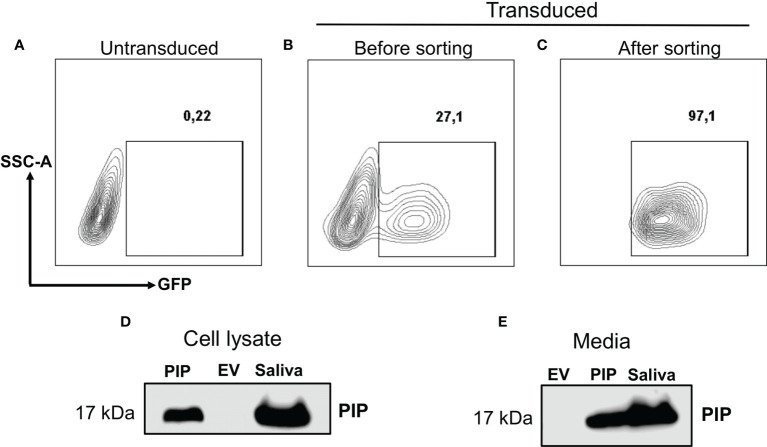
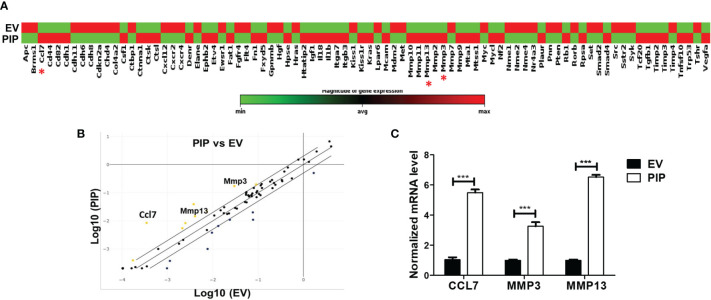
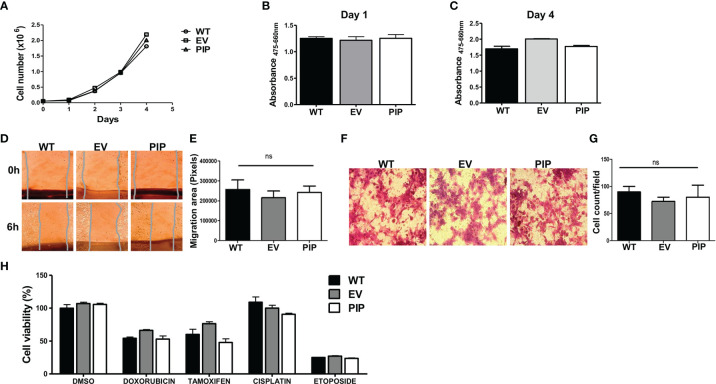
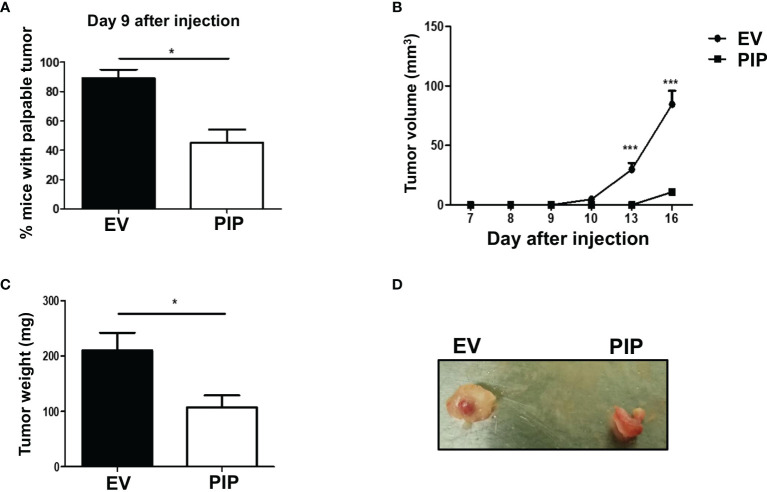
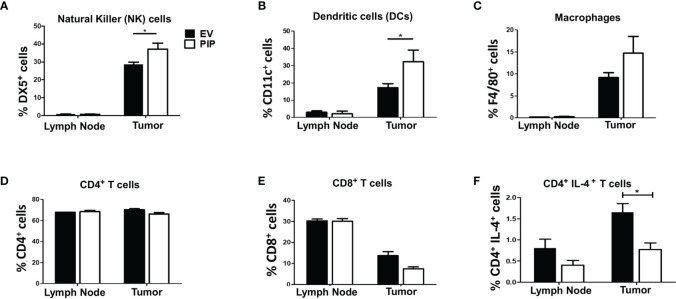
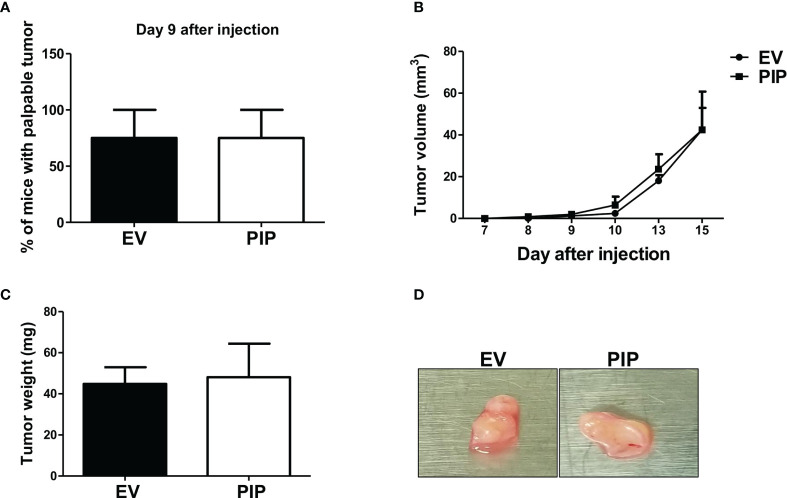
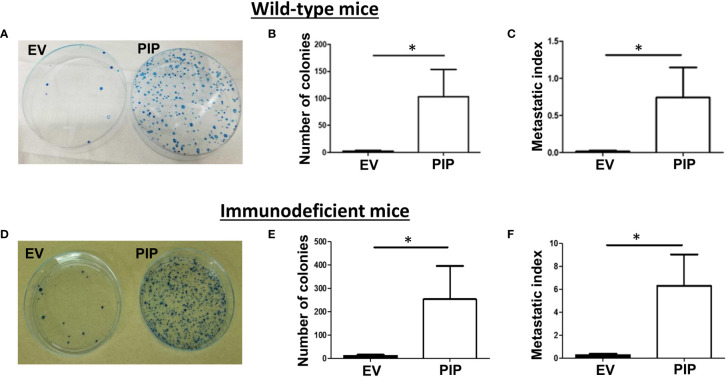
The prolactin inducible protein (PIP) is expressed to varying degrees in more than 90% of breast cancers (BCs). Although high levels of PIP expression in BC has been shown to correlate with better prognosis and patient response to chemotherapy, some studies suggest that PIP may also play a role in metastasis. Here, we investigated the role of PIP in BC using the well-established 4T1 and E0771 mouse BC cell lines. Stable expression of PIP in both cell lines did not significantly alter their proliferation, migration, and response to anticancer drugs compared to empty vector control. To assess the effect of PIP expression on breast tumorigenesis , the 4T1 syngeneic transplantable mouse model was utilized. In immunocompetent syngeneic BALB/c mice, PIP-expressing 4T1 primary tumors displayed delayed tumor onset and reduced tumor growth, and this was associated with higher percentages of natural killer cells and reduced percentages of type 2 T-helper cells in the tumor environment. The delayed tumor onset and growth were abrogated in immunodeficient mice, suggesting that PIP-mediated modulation of primary tumor growth involves an intact immune system. Paradoxically, we also observed that PIP expression was associated with a higher number of 4T1 colonies in the lungs in both the immunocompetent and immunodeficient mice. Gene expression analysis of PIP-expressing 4T1 cells (4T1-PIP) revealed that genes associated with tumor metastasis such as CCL7, MMP3 and MMP13, were significantly upregulated in 4T1-PIP cells when compared to the empty vector control (4T1-EV) cells. Collectively, these studies strongly suggest that PIP may possess a double-edge sword effect in BC, enhancing both antitumor immunity as well as metastasis.
催乳素诱导蛋白(PIP)在90%以上的乳腺癌(BC)中均有不同程度的表达。虽然已表明BC中高水平的PIP表达与更好的预后及患者对化疗的反应相关,但一些研究表明PIP可能在转移中也发挥作用。在此,我们使用成熟的4T1和E0771小鼠BC细胞系研究了PIP在BC中的作用。与空载体对照相比,两种细胞系中PIP的稳定表达均未显著改变其增殖、迁移及对抗癌药物的反应。为评估PIP表达对乳腺肿瘤发生的影响,我们利用了4T1同基因可移植小鼠模型。在具有免疫活性的同基因BALB/c小鼠中,表达PIP的4T1原发性肿瘤显示出肿瘤发生延迟且肿瘤生长减缓,这与肿瘤环境中自然杀伤细胞百分比升高及2型辅助性T细胞百分比降低有关。在免疫缺陷小鼠中,肿瘤发生延迟和生长减缓的现象消失,这表明PIP介导的原发性肿瘤生长调节涉及完整的免疫系统。矛盾的是,我们还观察到,在免疫活性和免疫缺陷小鼠中,PIP表达均与肺部4T1集落数量增加有关。对表达PIP的4T1细胞(4T1-PIP)的基因表达分析显示,与肿瘤转移相关的基因,如CCL7、MMP3和MMP13,与空载体对照(4T1-EV)细胞相比,在4T1-PIP细胞中显著上调。总体而言,这些研究有力地表明,PIP在BC中可能具有双刃剑效应,既能增强抗肿瘤免疫力,又能促进转移。