Department of Geriatrics Neurology, The Second Affiliated Hospital of Xi'an Jiaotong University, Xi'an, China.
Department of Neurology, The First Affiliated Hospital of Xi'an Jiaotong University, Xi'an, China.
Yonsei Med J. 2021 Apr;62(4):325-337. doi: 10.3349/ymj.2021.62.4.325.
Ischemic brain injury results in high mortality and serious neurologic morbidity. Here, we explored the role of SNHG15 in modulating neuronal damage and microglial inflammation after ischemia stroke.
The hypoxia/ischemia models were induced by middle cerebral artery occlusion in mice and oxygen-glucose deprivation/reoxygenation (OGD/R) in vitro. Quantitative real-time PCR (qRT-PCR) and Western blot were conducted to determine the levels of SNHG15, miR-302a-3p, and STAT1/NF-κB. Moreover, gain- or loss-of functional assays of SNHG15 and miR-302a-3p were conducted. MTT assay was used to evaluate the viability of HT22 cells, and the apoptotic level was determined by flow cytometry. Furthermore, enzyme-linked immunosorbent assay was performed to detect oxidative stress and inflammatory mediators in the ischemia cortex and OGD/R-treated BV2 microglia.
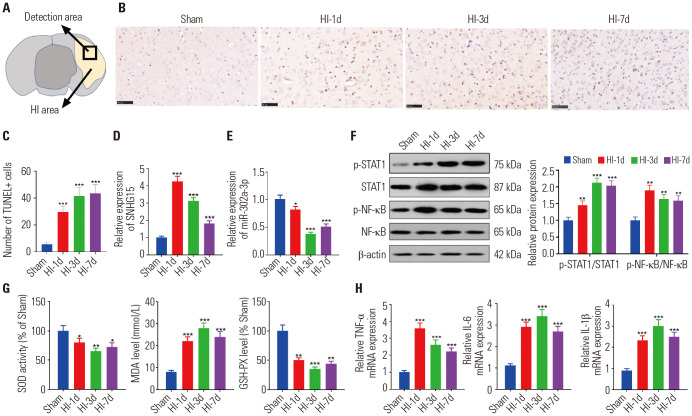
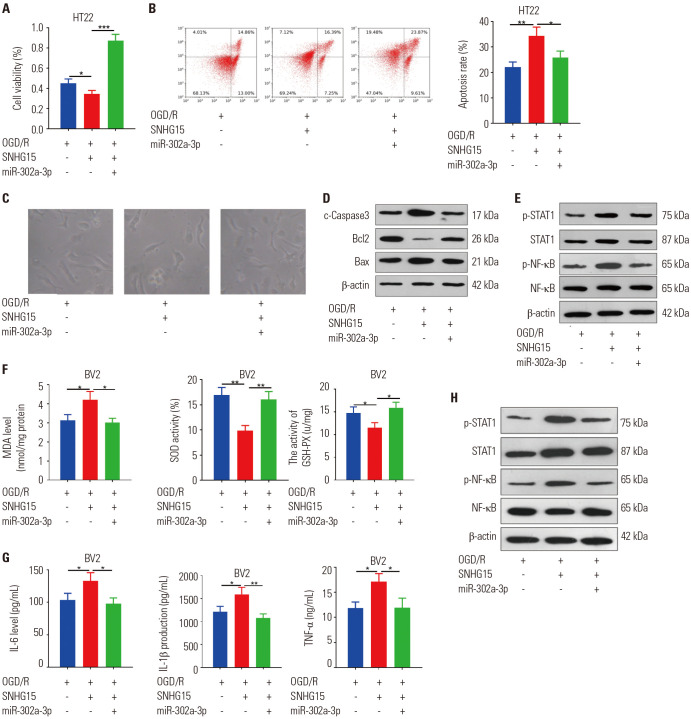
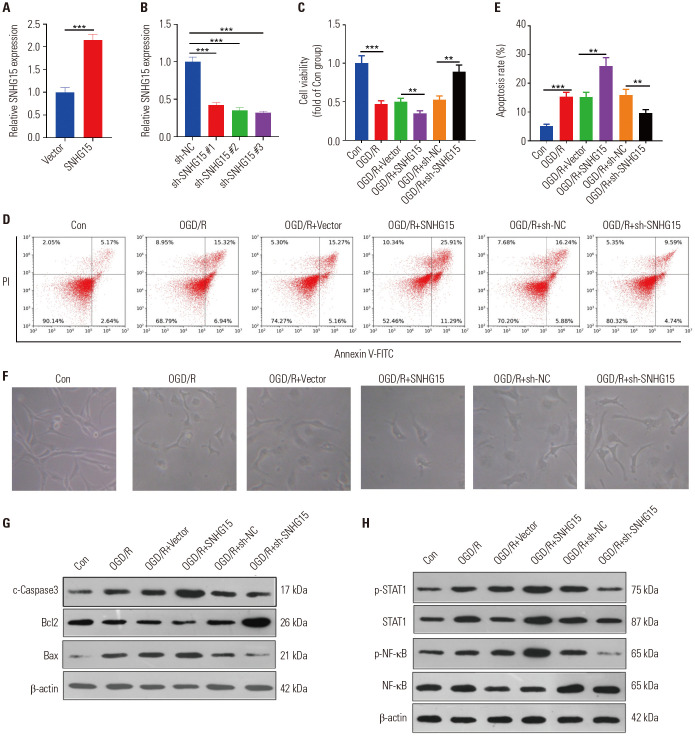
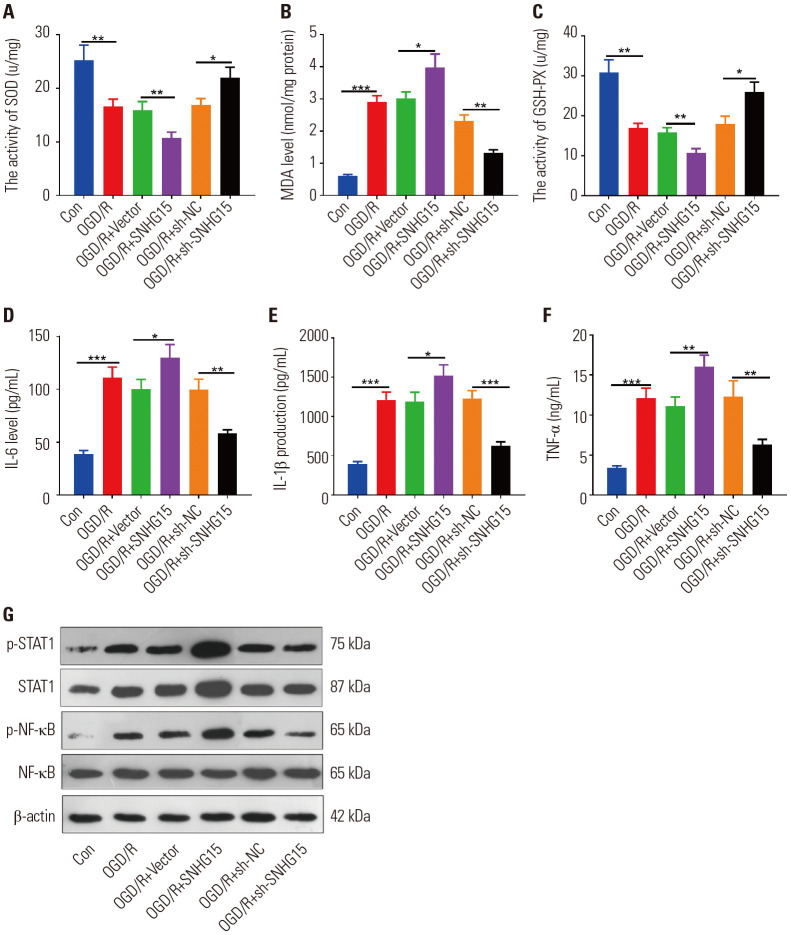
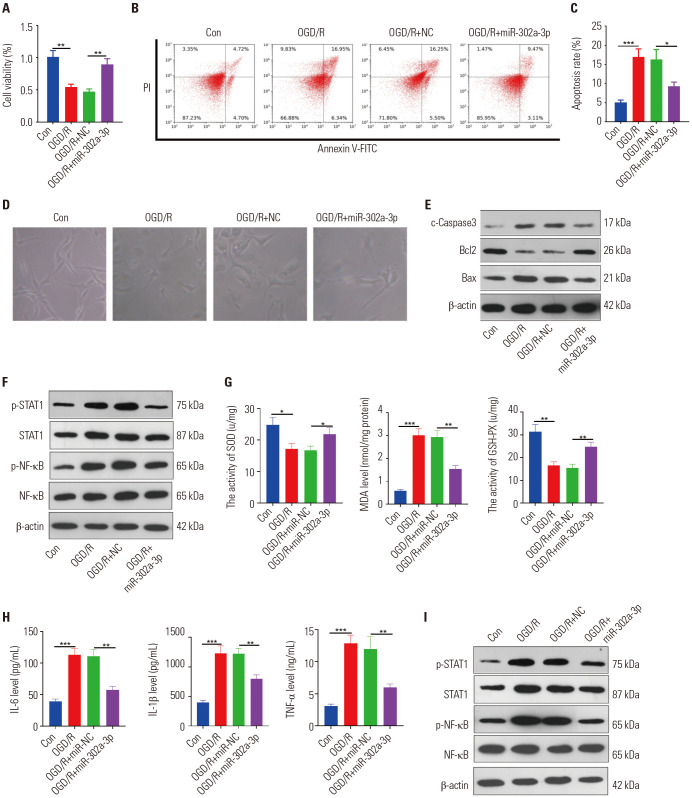
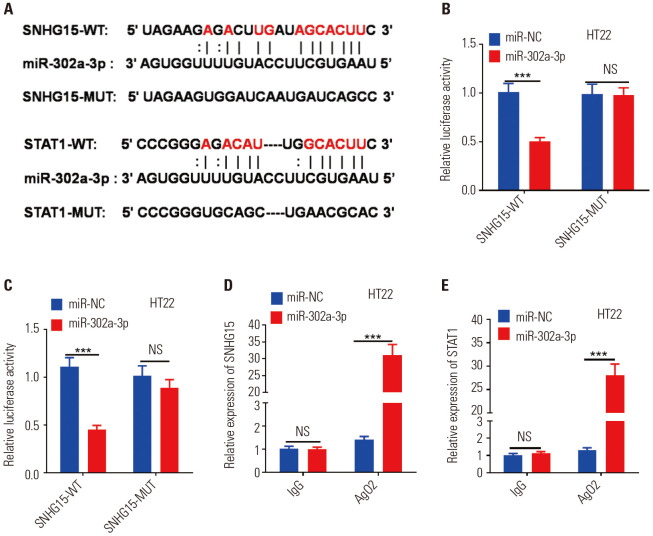
The SNHG15 and STAT1/NF-κB pathways were both distinctly up-regulated, while miR-302a-3p was notably down-regulated in the ischemia cortex. Additionally, overexpressing SNHG15 dramatically enhanced OGD/R-mediated neuronal apoptosis as well as the expression of oxidative stress and inflammation factors from microglia. In contrast, knocking down SNHG15 or overexpressing miR-302a-3p relieved OGD/R-mediated neuronal apoptosis and microglial activation. Moreover, the rescue experiment testified that overexpressing miR-302a-3p also attenuated SNHG15 up-regulation-induced effects. In terms of the mechanisms, SNHG15 sponged miR-302a-3p and activated STAT1/NF-κB as a competitive endogenous RNA, while miR-302a-3p targeted STAT1 and negatively regulated the STAT1/NF-κB pathway.
SNHG15 was up-regulated in the hypoxia/ischemia mouse or cell model. The inhibition of SNHG15 ameliorates ischemia/hypoxia-induced neuronal damage and microglial inflammation by regulating the miR-302a-3p/STAT1/NF-κB pathway.
缺血性脑损伤导致高死亡率和严重的神经功能障碍。在这里,我们探讨了 SNHG15 在调节缺血性中风后神经元损伤和小胶质细胞炎症中的作用。
通过大脑中动脉闭塞在小鼠中诱导缺氧/缺血模型,并在体外进行氧葡萄糖剥夺/再灌注(OGD/R)。采用实时定量 PCR(qRT-PCR)和 Western blot 检测 SNHG15、miR-302a-3p 和 STAT1/NF-κB 的水平。此外,还进行了 SNHG15 和 miR-302a-3p 的功能增益或缺失实验。MTT 法检测 HT22 细胞活力,流式细胞术检测细胞凋亡水平。此外,酶联免疫吸附试验检测缺血皮质和 OGD/R 处理的 BV2 小胶质细胞中氧化应激和炎症介质。
缺血皮质中 SNHG15 和 STAT1/NF-κB 通路明显上调,而 miR-302a-3p 明显下调。此外,过表达 SNHG15 可显著增强 OGD/R 介导的神经元凋亡以及小胶质细胞中氧化应激和炎症因子的表达。相反,敲低 SNHG15 或过表达 miR-302a-3p 可减轻 OGD/R 介导的神经元凋亡和小胶质细胞激活。此外,挽救实验证明,过表达 miR-302a-3p 也可减轻 SNHG15 上调诱导的作用。就机制而言,SNHG15 作为竞争性内源性 RNA 吸附 miR-302a-3p 并激活 STAT1/NF-κB,而 miR-302a-3p 靶向 STAT1 并负调控 STAT1/NF-κB 通路。
在缺氧/缺血的小鼠或细胞模型中 SNHG15 上调。抑制 SNHG15 可通过调节 miR-302a-3p/STAT1/NF-κB 通路改善缺血/缺氧引起的神经元损伤和小胶质细胞炎症。