Department of Molecular and Cellular Biology, University of California, Davis, Davis, United States.
Elife. 2021 Mar 29;10:e60562. doi: 10.7554/eLife.60562.
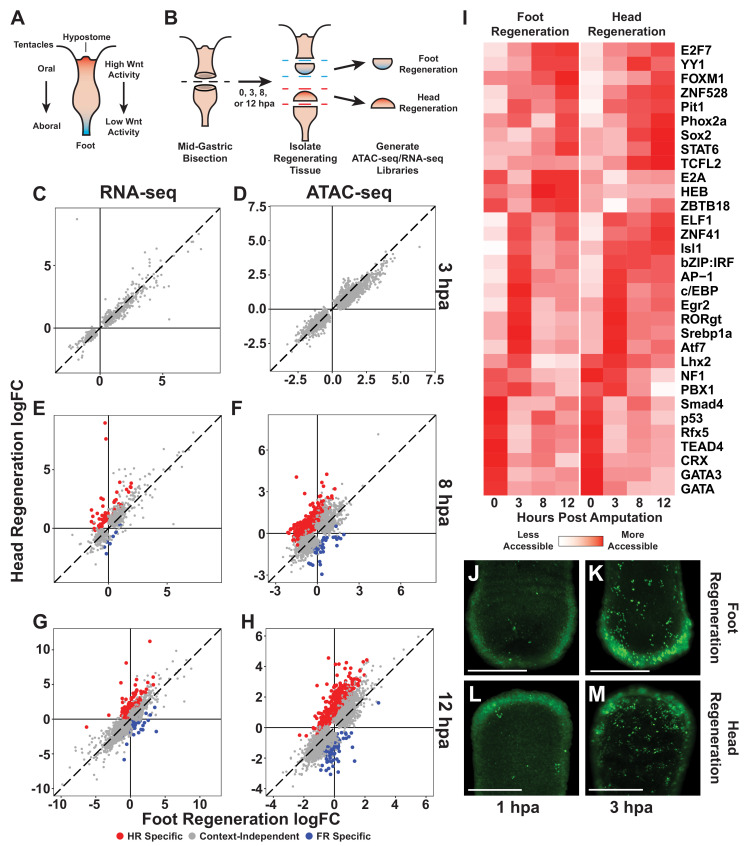
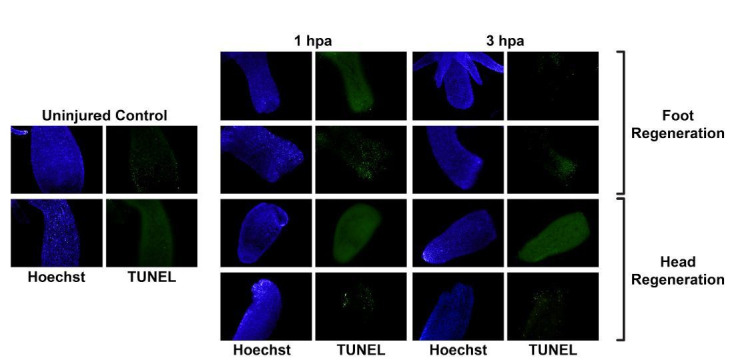
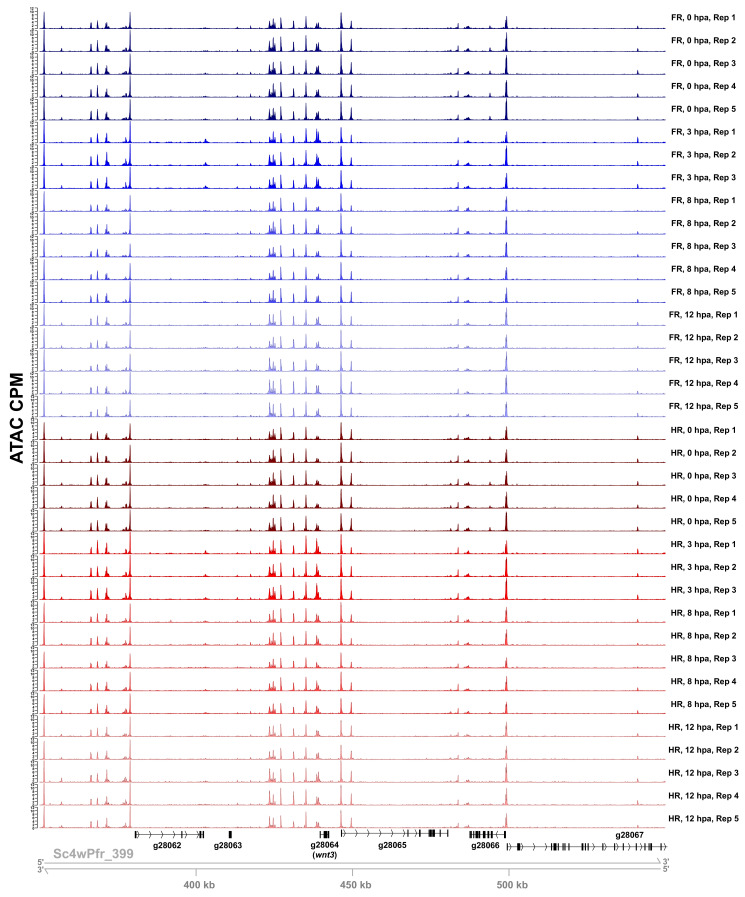
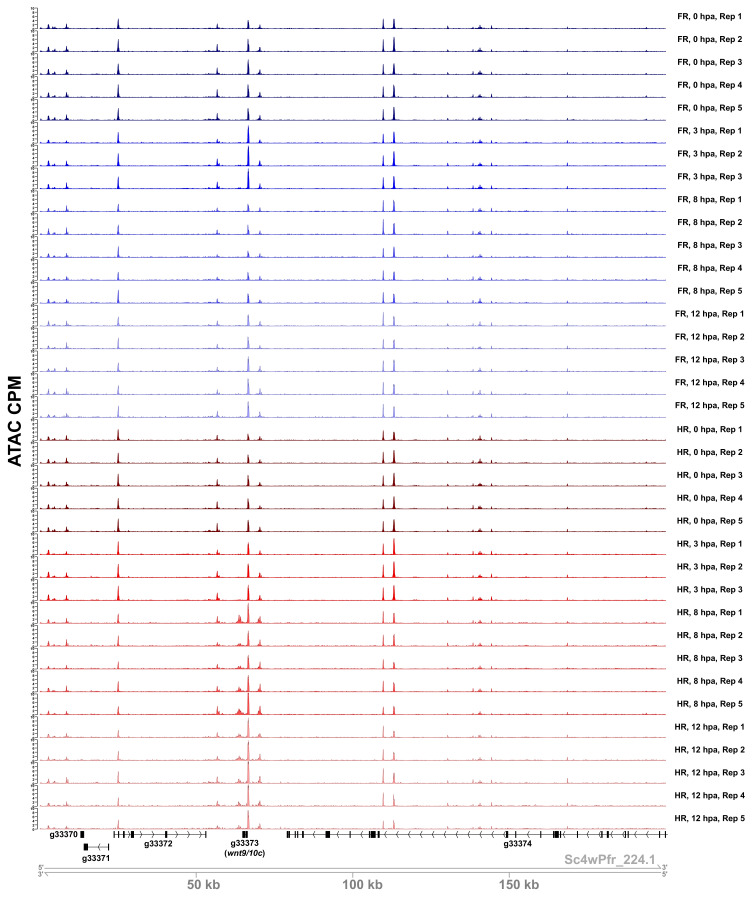
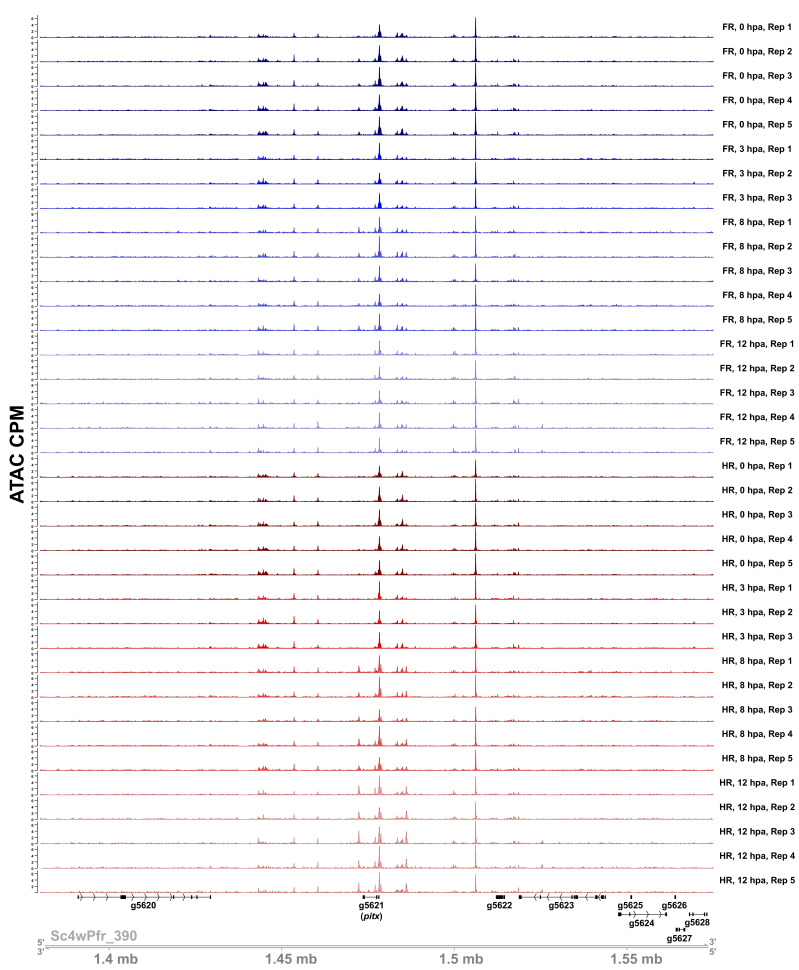
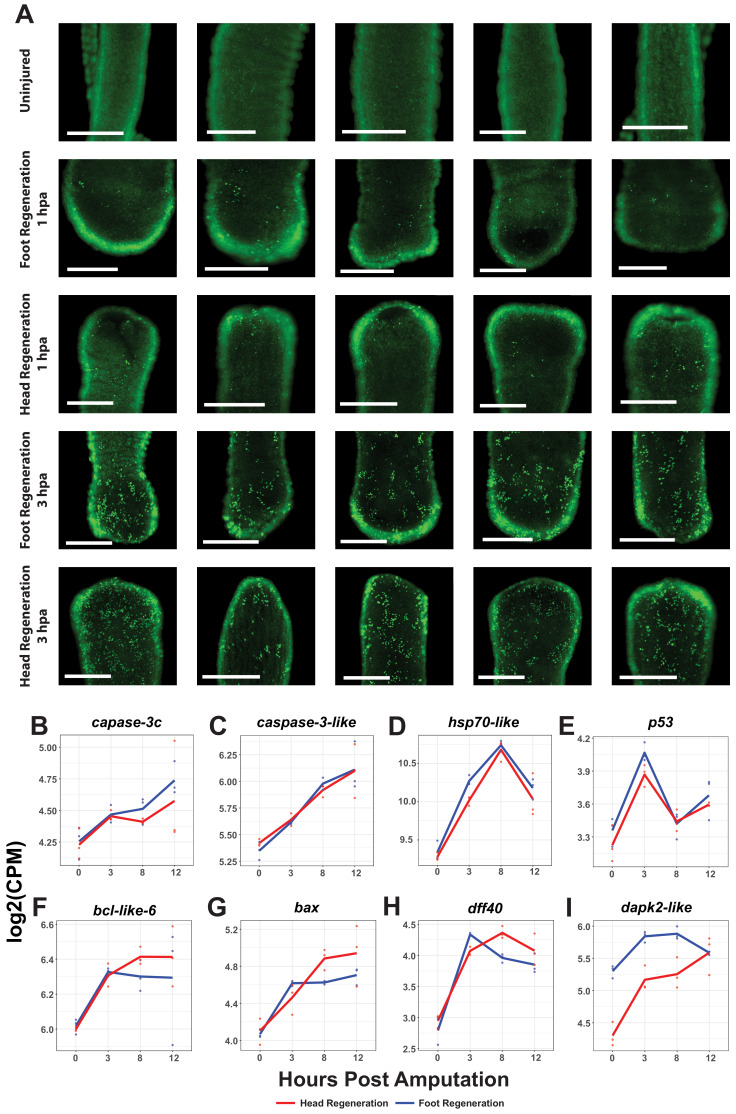
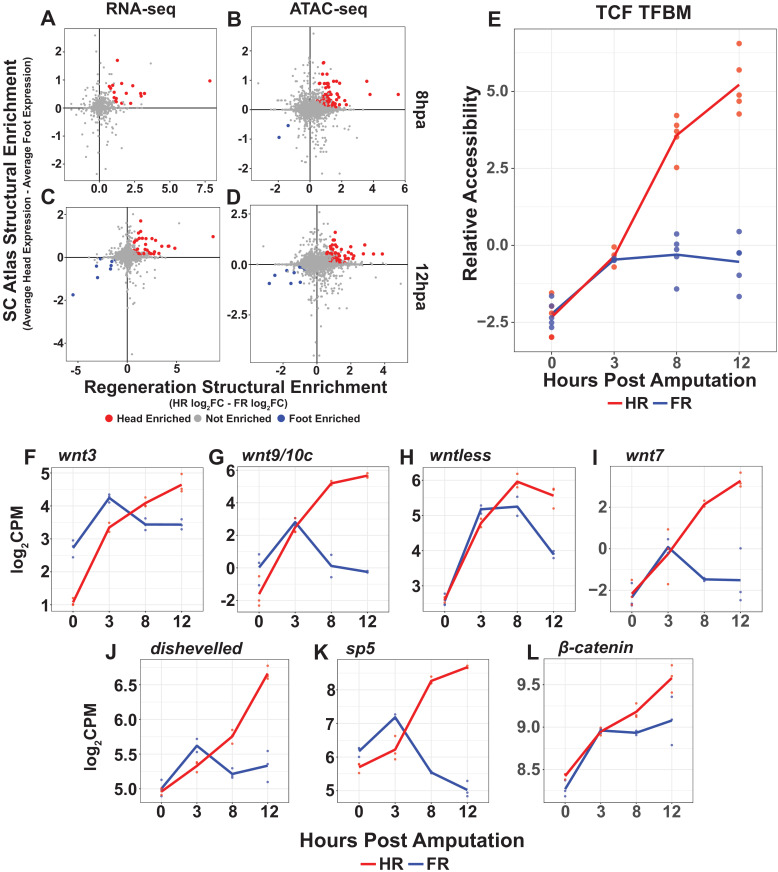
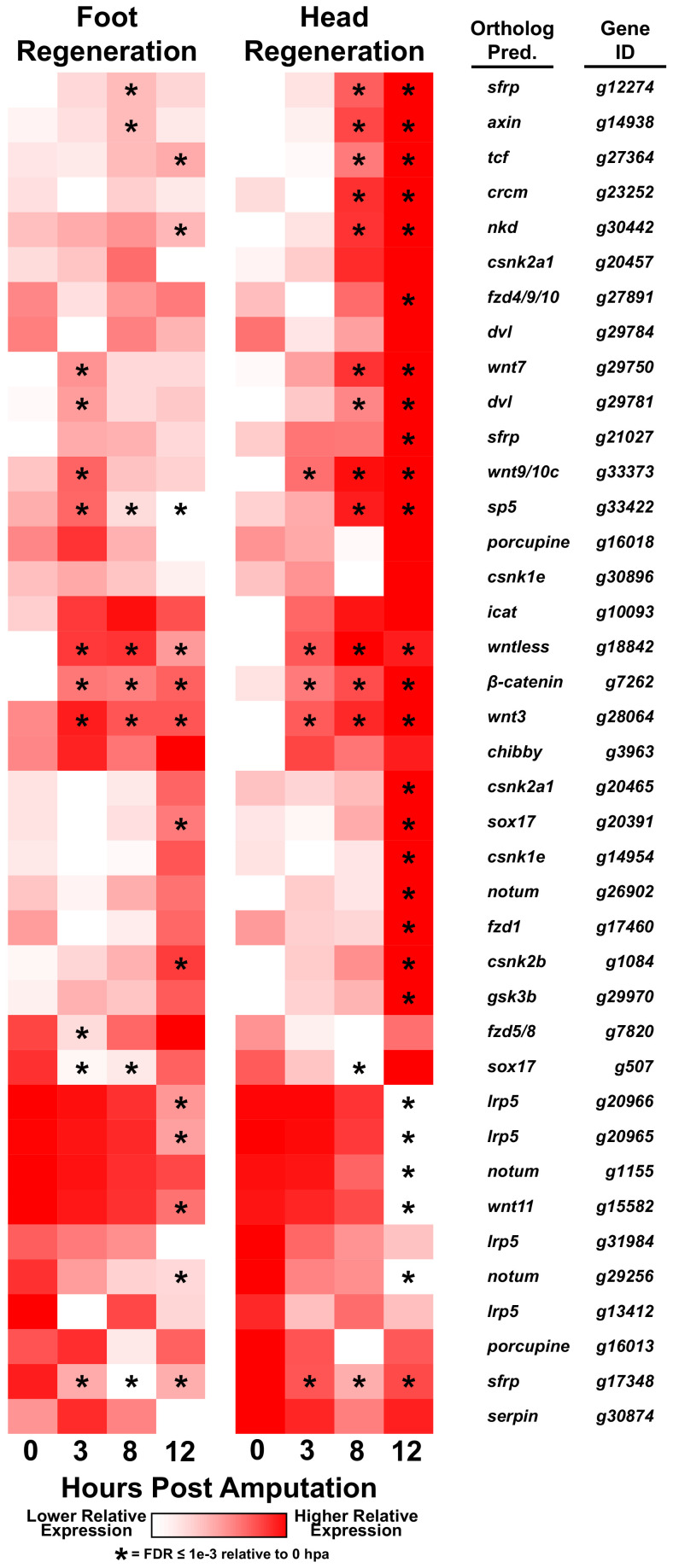
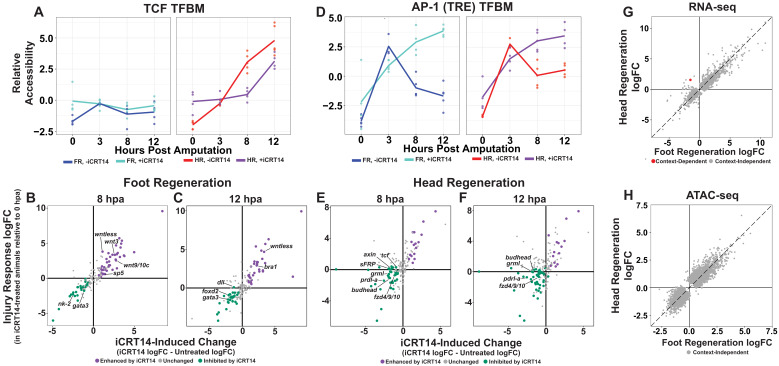
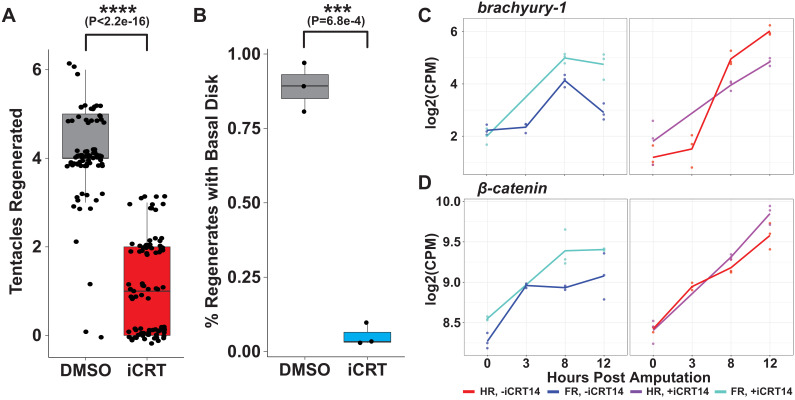
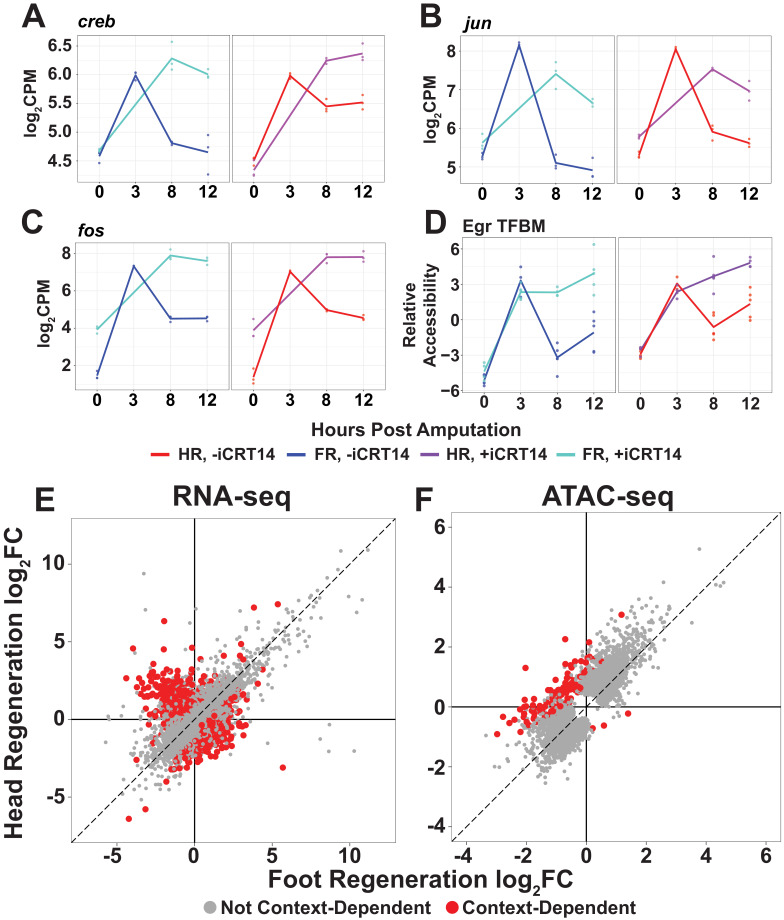
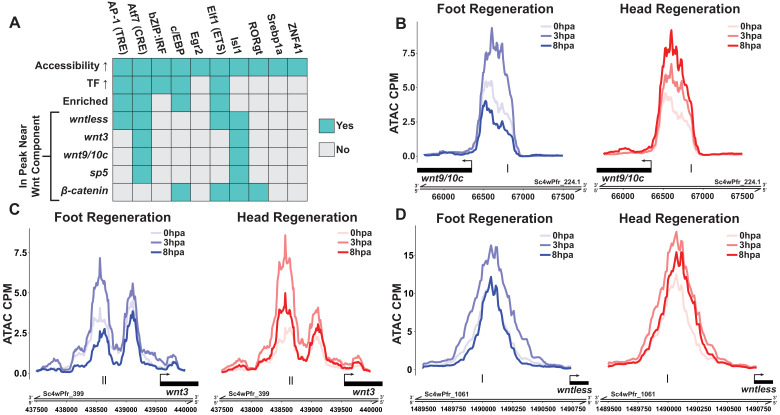
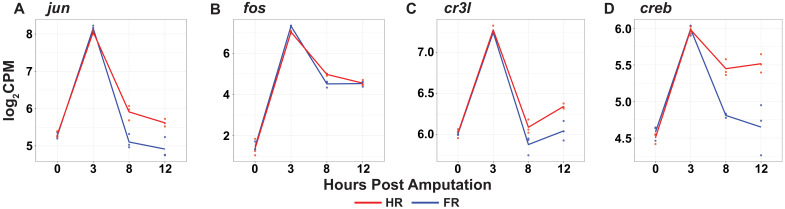
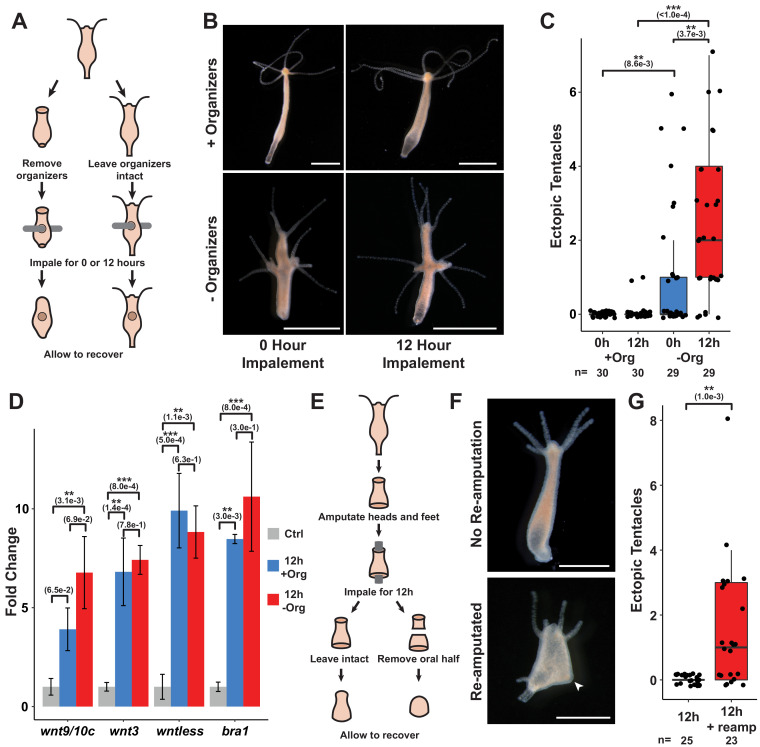
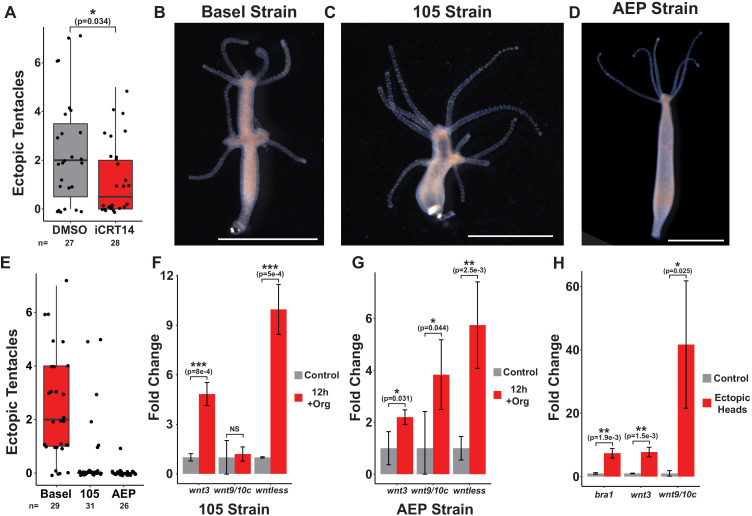
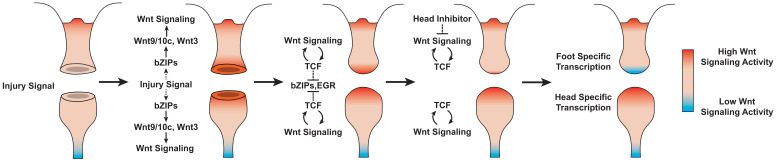
During whole-body regeneration, a bisection injury can trigger two different types of regeneration. To understand the transcriptional regulation underlying this adaptive response, we characterized transcript abundance and chromatin accessibility during oral and aboral regeneration in the cnidarian . We found that the initial response to amputation at both wound sites is identical and includes widespread apoptosis and the activation of the oral-specifying Wnt signaling pathway. By 8 hr post amputation, Wnt signaling became restricted to oral regeneration. Wnt pathway genes were also upregulated in puncture wounds, and these wounds induced the formation of ectopic oral structures if pre-existing organizers were simultaneously amputated. Our work suggests that oral patterning is activated as part of a generic injury response in , and that alternative injury outcomes are dependent on signals from the surrounding tissue. Furthermore, Wnt signaling is likely part of a conserved wound response predating the split of cnidarians and bilaterians.
在全身再生过程中,二分损伤可以触发两种不同类型的再生。为了理解这种适应性反应的转录调控机制,我们对刺胞动物的口面和肛面再生过程中的转录物丰度和染色质可及性进行了描述。我们发现,在两个伤口部位的截肢初始反应是相同的,包括广泛的细胞凋亡和口腔特异性 Wnt 信号通路的激活。在截肢后 8 小时,Wnt 信号通路被限制在口面再生中。Wnt 途径基因在刺伤处也被上调,如果同时切除预先存在的组织者,这些伤口会诱导异位口腔结构的形成。我们的工作表明,口腔模式的形成是作为 的一种通用损伤反应的一部分被激活的,而替代的损伤结果则取决于周围组织的信号。此外,Wnt 信号通路可能是一种保守的伤口反应的一部分,这种反应可以追溯到刺胞动物和两侧对称动物的分化之前。