Department of Cell Biology and Genetics, Chongqing Medical University, Chongqing 400016, China.
Department of Bioinformatics, Chongqing Medical University, Chongqing 400016, China.
Biosci Rep. 2021 Apr 30;41(4). doi: 10.1042/BSR20203005.
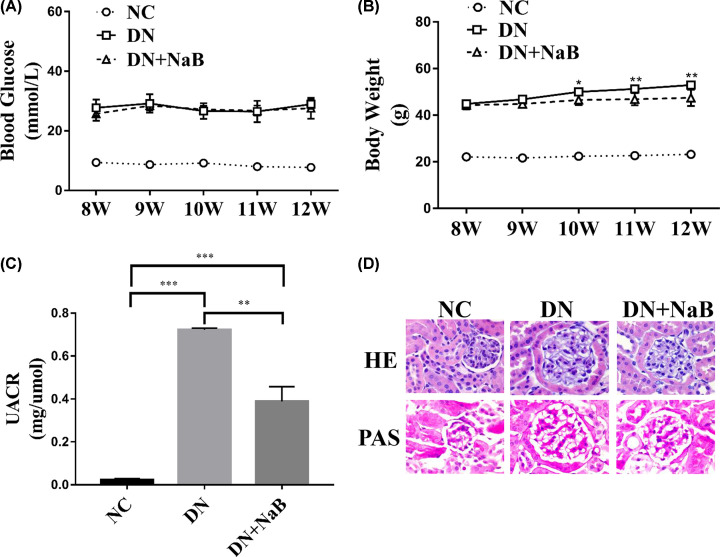
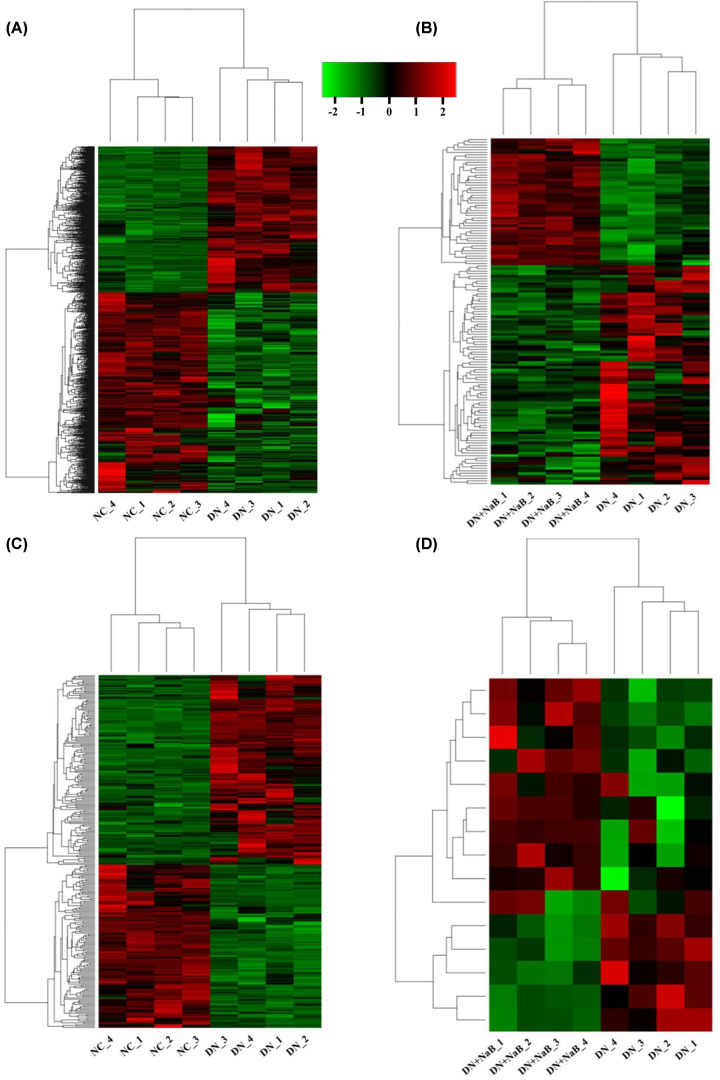
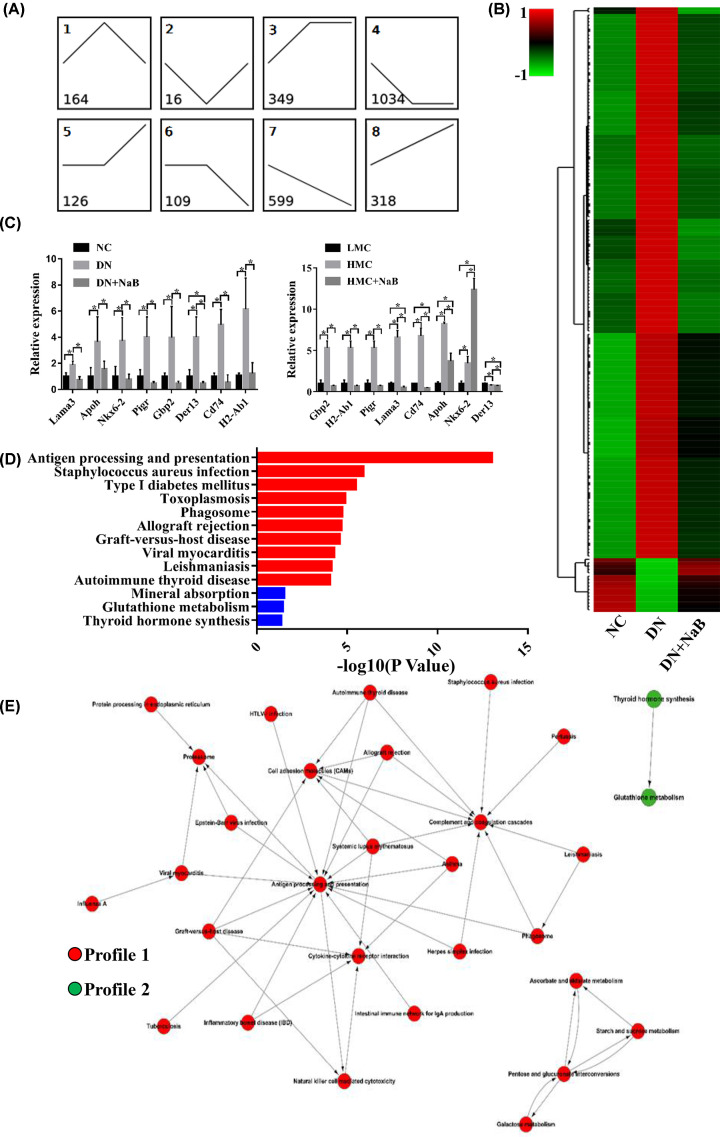
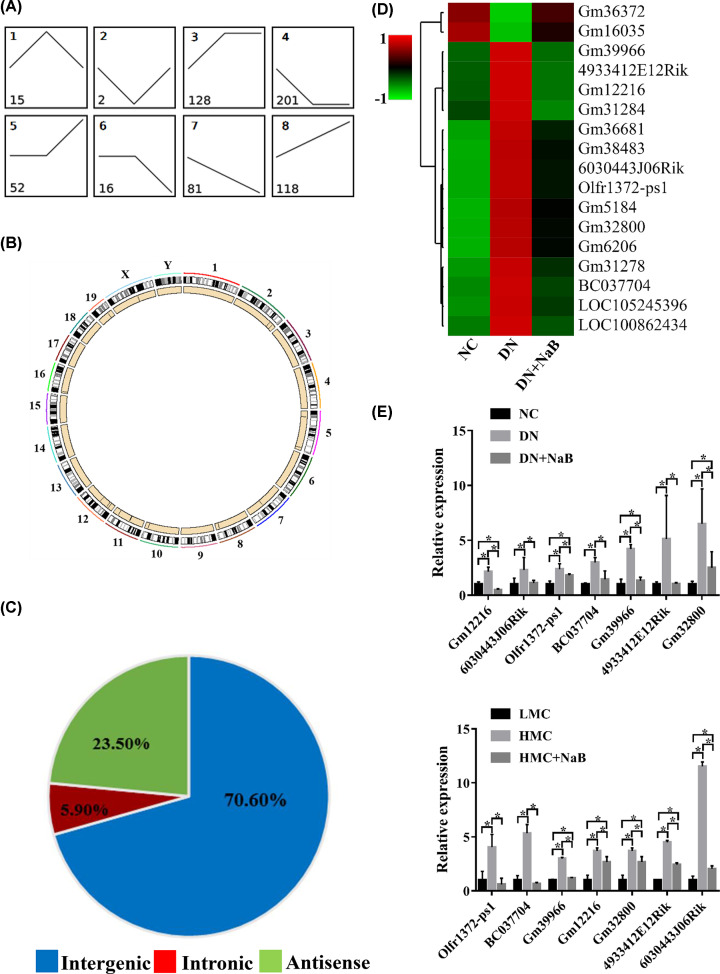
Diabetic nephropathy (DN)-a common complication of diabetes-is the primary cause of end-stage renal disease. Sodium butyrate (NaB) is a short-chain fatty acid (SCFA) that is a metabolic product of intestinal bacterium, and its protective effect on the kidney has been reported in cases of DN. However, its underlying mechanism remains unclear. The aim of the present study was to investigate the effect of NaB on globe transcriptome changes in DN. In our study, 8-week-old male db/db mice suffering from DN were randomly divided into two groups: the DN+NaB group (DN mice treated with NaB, 5 g/kg/day) and the DN group (DN mice treated with saline). Further, normal db/m mice were used as the normal control (NC) group. The blood glucose, body weight, urinary microalbumin and urinary creatinine of mice were measured for all three groups. Whole-transcriptome analysis was performed by RNA sequencing (RNA-Seq) to evaluate the profiling of long non-coding RNAs (lncRNAs) and messenger RNAs (mRNAs). Bioinformatics analysis was performed to predict the potential NaB-related lncRNAs and genes in DN. The expressions of lncRNAs and mRNAs were tested using the quantitative real-time polymerase chain reactions (qRT-PCRs) in renal tissues and mesangial cells treated with NaB. The results of the present study demonstrated that NaB ameliorated renal dysfunction in DN mice. Moreover, RNA-Seq results identified that some lncRNAs and mRNAs were reversely changed in the DN+NaB group in comparison to those in the DN group. Additionally, the integrated co-expression networks of NaB-related lncRNAs revealed that these lncRNAs interacted with 155 key mRNAs. Furthermore, the co-expression network of inflammation-related lncRNAs and mRNAs demonstrated that those reversed lncRNAs and mRNAs also play essential roles in the inflammatory response. In summary, the present study suggests that NaB ameliorates diabetes-induced renal dysfunction and regulates transcriptome changes in DN.
糖尿病肾病(DN)是糖尿病的一种常见并发症,是终末期肾病的主要原因。丁酸钠(NaB)是一种短链脂肪酸(SCFA),是肠道细菌的代谢产物,其在 DN 中的肾脏保护作用已有报道。然而,其潜在机制尚不清楚。本研究旨在探讨 NaB 对 DN 中肾小球转录组变化的影响。在本研究中,8 周龄雄性 db/db 患有 DN 的小鼠被随机分为两组:DN+NaB 组(DN 小鼠用 NaB 治疗,5g/kg/天)和 DN 组(DN 小鼠用生理盐水治疗)。此外,正常 db/m 小鼠作为正常对照组(NC 组)。测量三组小鼠的血糖、体重、尿微量白蛋白和尿肌酐。通过 RNA 测序(RNA-Seq)进行全转录组分析,评估长非编码 RNA(lncRNA)和信使 RNA(mRNA)的谱图。生物信息学分析用于预测 DN 中潜在的 NaB 相关 lncRNA 和基因。使用定量实时聚合酶链反应(qRT-PCR)检测 lncRNA 和 mRNA 在 NaB 处理的肾组织和系膜细胞中的表达。本研究结果表明,NaB 改善了 DN 小鼠的肾功能障碍。此外,RNA-Seq 结果表明,与 DN 组相比,DN+NaB 组中的一些 lncRNA 和 mRNA 呈反向变化。此外,NaB 相关 lncRNA 的综合共表达网络表明,这些 lncRNA 与 155 个关键 mRNA 相互作用。此外,炎症相关 lncRNA 和 mRNA 的共表达网络表明,这些反向 lncRNA 和 mRNA 也在炎症反应中发挥重要作用。总之,本研究表明,NaB 改善了糖尿病引起的肾功能障碍,并调节了 DN 中的转录组变化。