Africa Health Research Institute, Durban, South Africa.
School of Laboratory Medicine and Medical Sciences, University of KwaZulu-Natal, Durban, South Africa.
Nature. 2021 May;593(7857):142-146. doi: 10.1038/s41586-021-03471-w. Epub 2021 Mar 29.
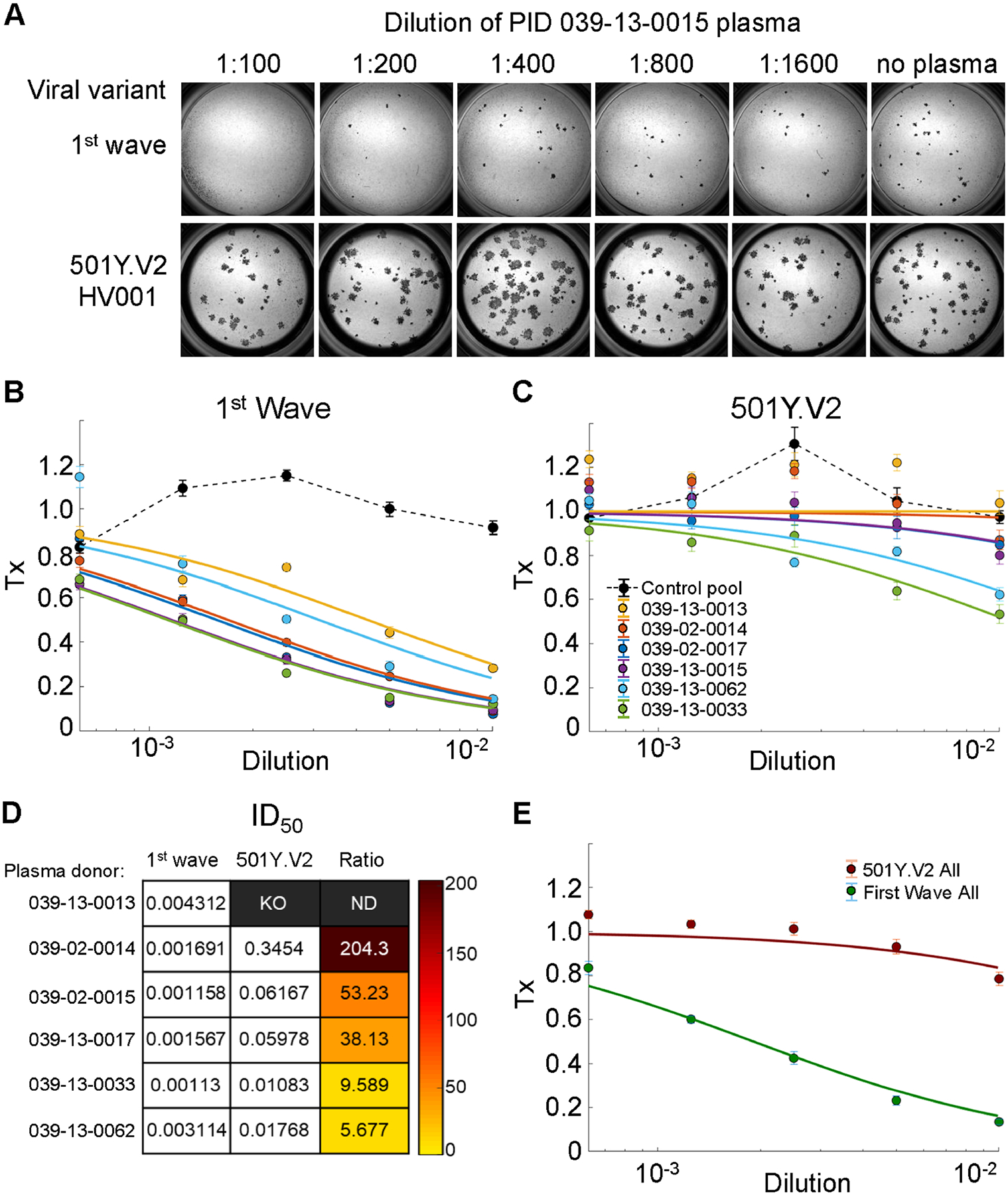
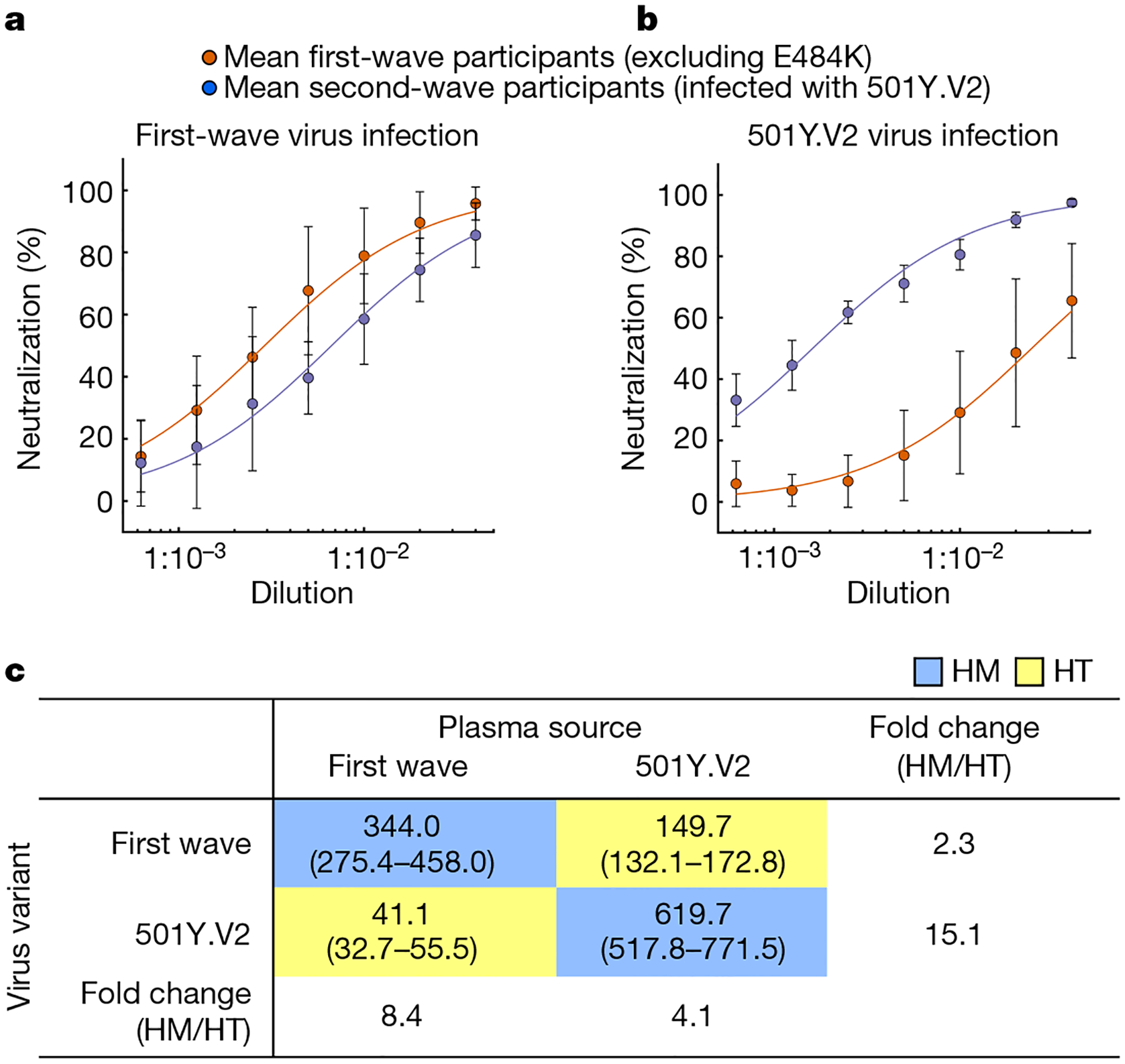
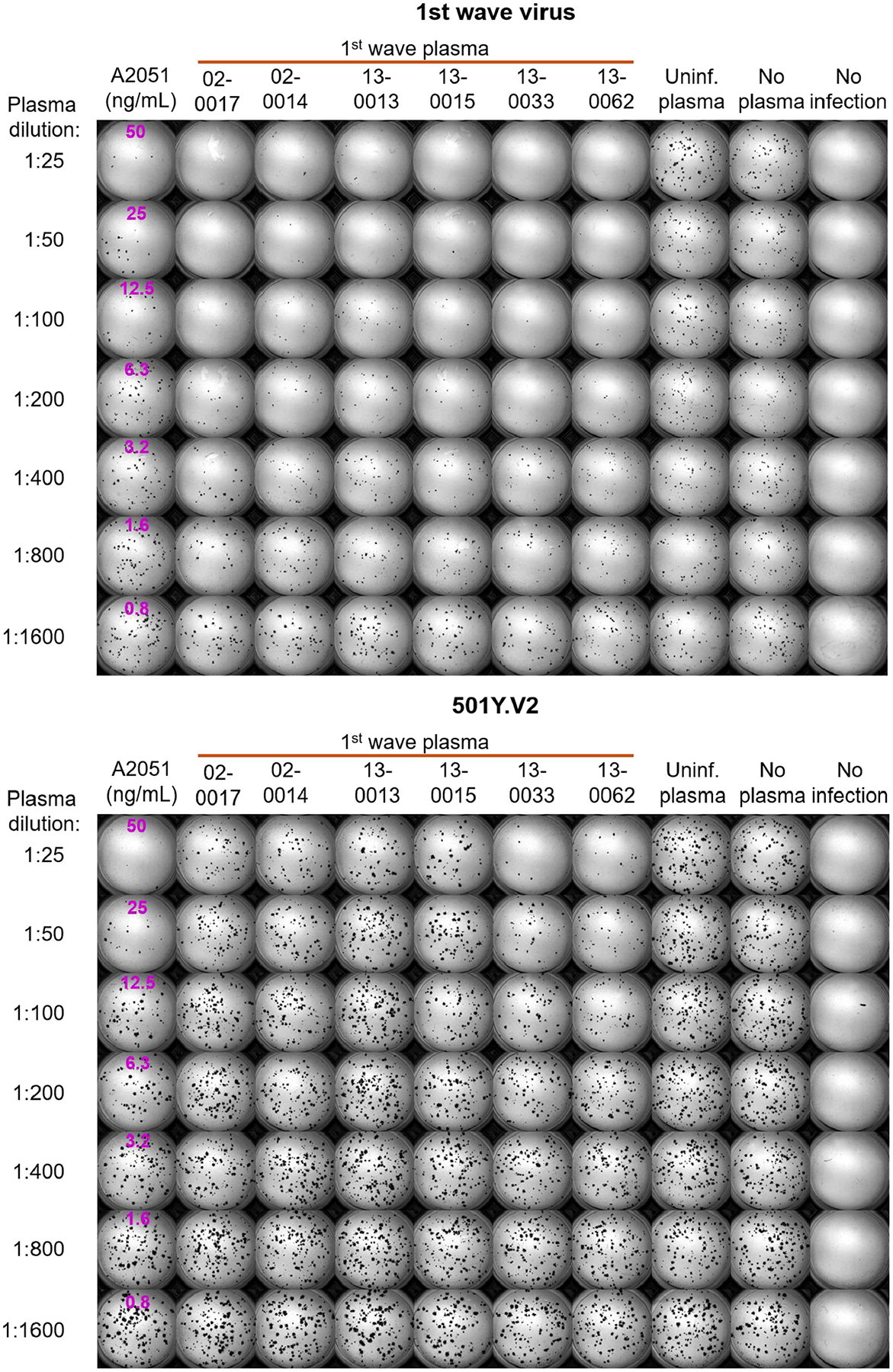
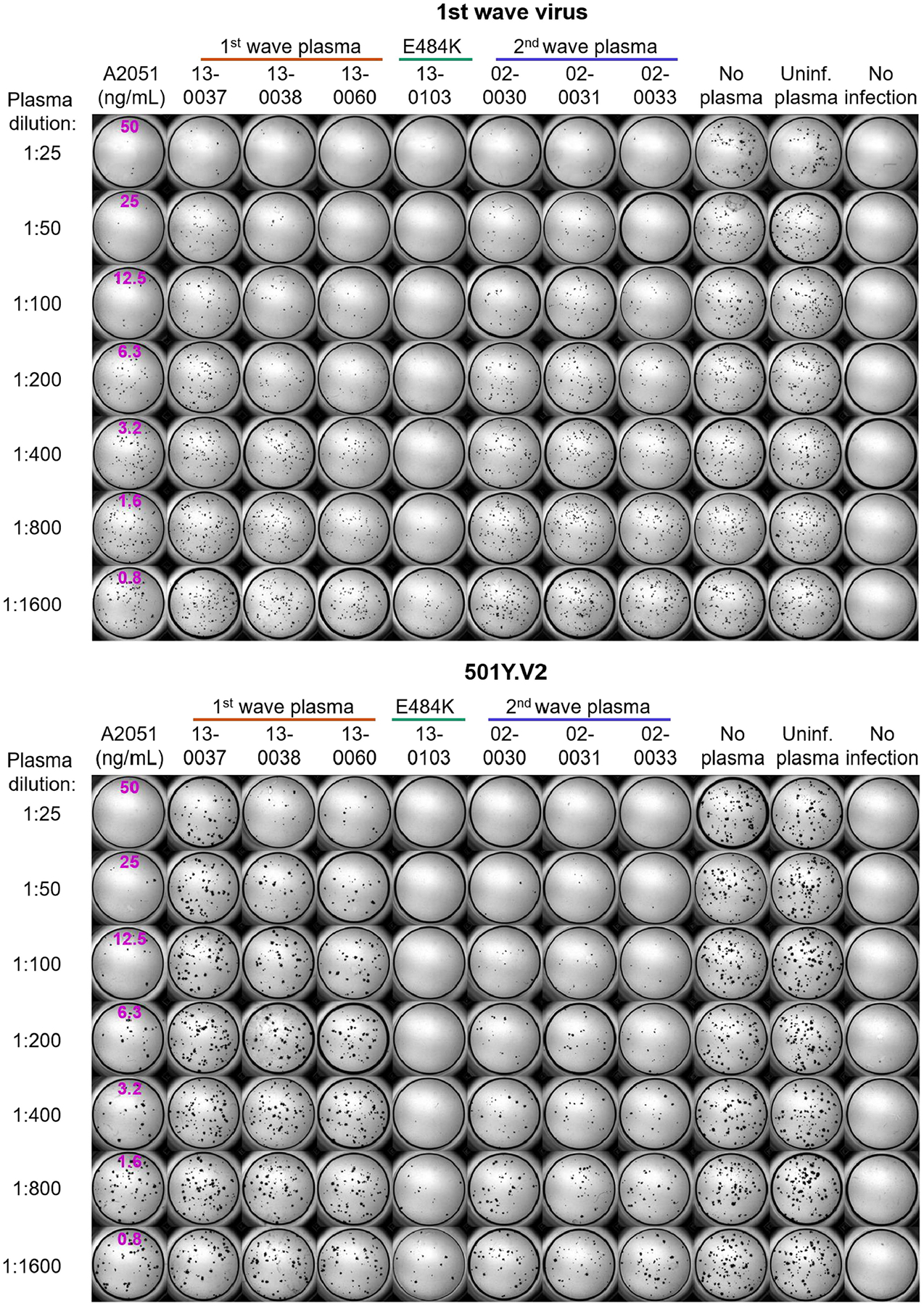
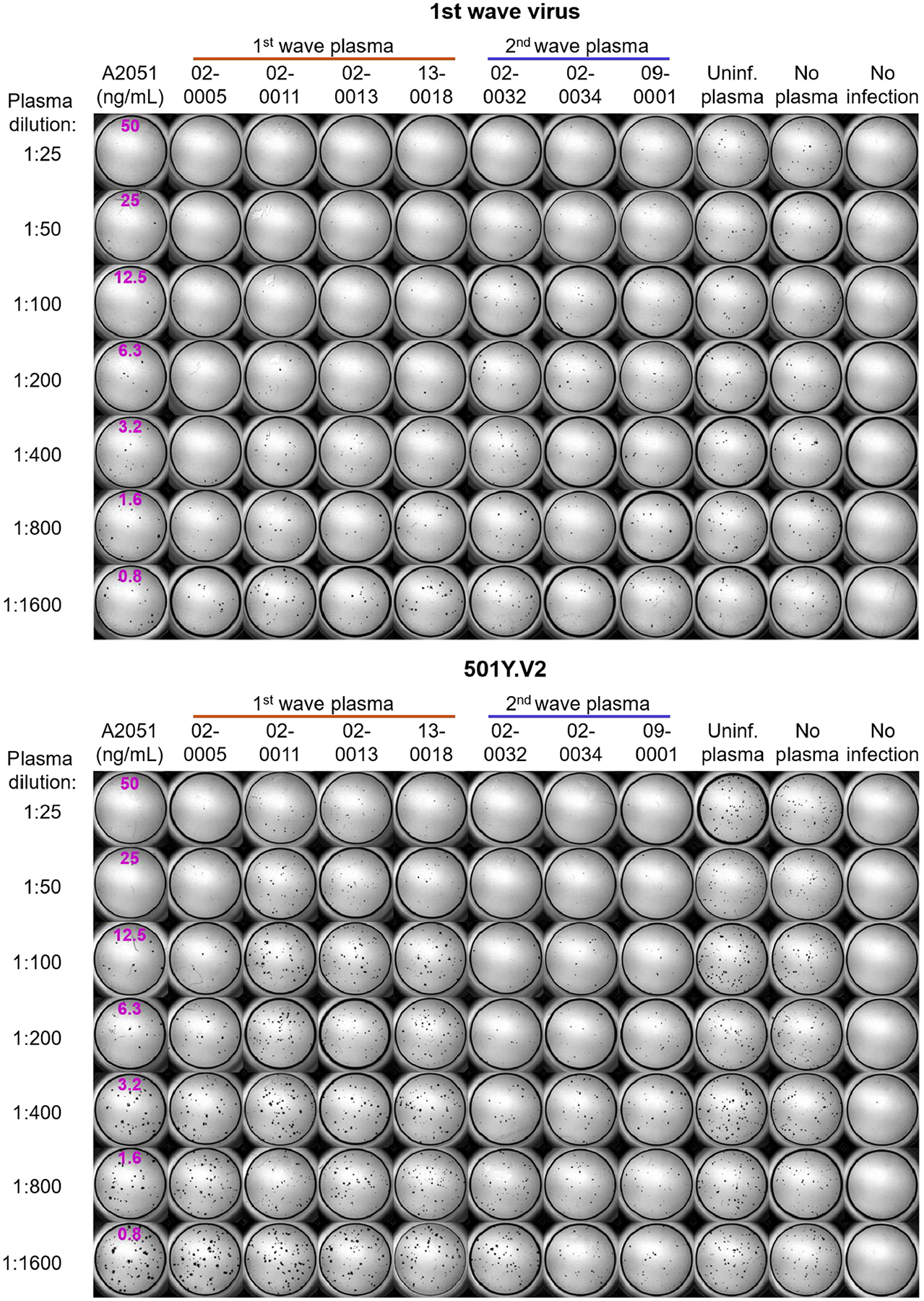
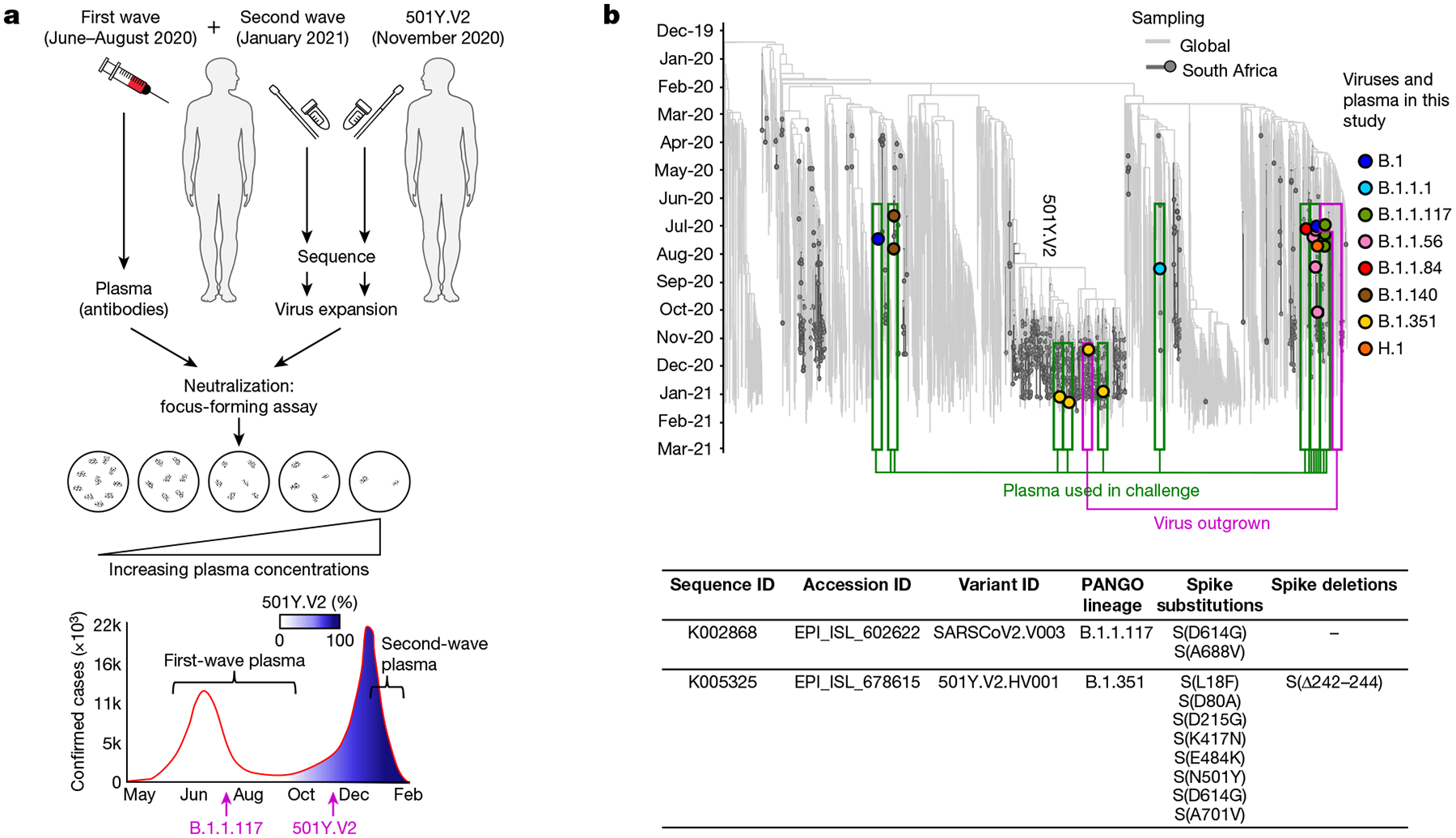
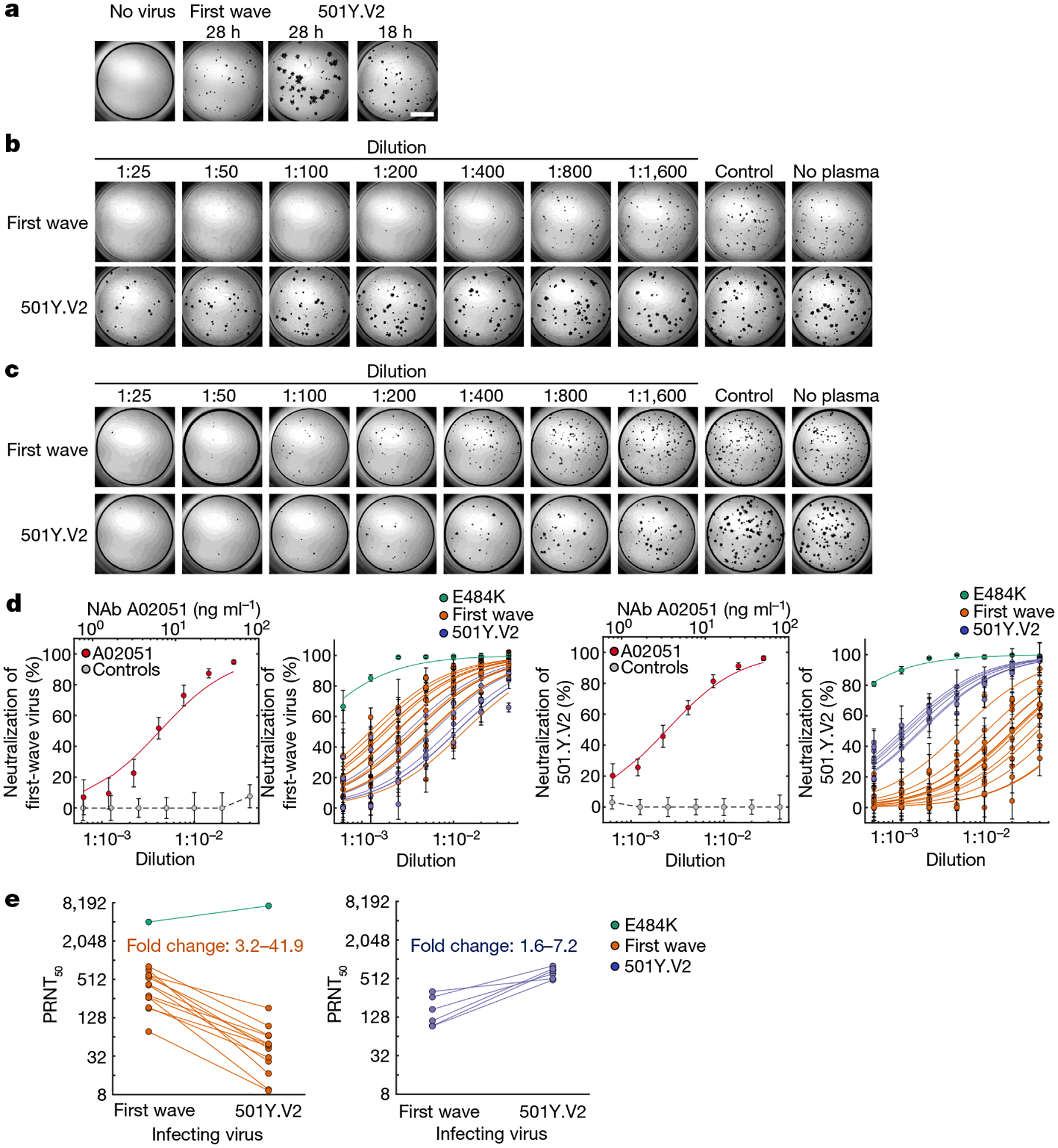
SARS-CoV-2 variants of concern (VOC) have arisen independently at multiple locations and may reduce the efficacy of current vaccines that target the spike glycoprotein of SARS-CoV-2. Here, using a live-virus neutralization assay, we compared the neutralization of a non-VOC variant with the 501Y.V2 VOC (also known as B.1.351) using plasma collected from adults who were hospitalized with COVID-19 during the two waves of infection in South Africa, the second wave of which was dominated by infections with the 501Y.V2 variant. Sequencing demonstrated that infections of plasma donors from the first wave were with viruses that did not contain the mutations associated with 501Y.V2, except for one infection that contained the E484K substitution in the receptor-binding domain. The 501Y.V2 virus variant was effectively neutralized by plasma from individuals who were infected during the second wave. The first-wave virus variant was effectively neutralized by plasma from first-wave infections. However, the 501Y.V2 variant was poorly cross-neutralized by plasma from individuals with first-wave infections; the efficacy was reduced by 15.1-fold relative to neutralization of 501Y.V2 by plasma from individuals infected in the second wave. By contrast, cross-neutralization of first-wave virus variants using plasma from individuals with second-wave infections was more effective, showing only a 2.3-fold decrease relative to neutralization of first-wave virus variants by plasma from individuals infected in the first wave. Although we tested only one plasma sample from an individual infected with a SARS-CoV-2 variant with only the E484K substitution, this plasma sample potently neutralized both variants. The observed effective neutralization of first-wave virus by plasma from individuals infected with 501Y.V2 provides preliminary evidence that vaccines based on VOC sequences could retain activity against other circulating SARS-CoV-2 lineages.
关注的 SARS-CoV-2 变体(VOC)已经在多个地方独立出现,可能会降低针对 SARS-CoV-2 刺突糖蛋白的现有疫苗的功效。在这里,我们使用活病毒中和测定法,比较了非 VOC 变体与 501Y.V2 VOC(也称为 B.1.351)的中和作用,使用了在南非两次 COVID-19 感染浪潮期间住院的成年人的血浆,第二次浪潮主要由 501Y.V2 变体感染引起。测序表明,来自第一波感染的血浆供体的感染没有包含与 501Y.V2 相关的突变,除了一次感染含有受体结合域中的 E484K 取代。来自第二波感染的个体的血浆有效中和了 501Y.V2 病毒变体。第一波病毒变体被来自第一波感染的个体的血浆有效中和。然而,501Y.V2 变体被来自第一波感染的个体的血浆交叉中和效果较差,与第二波感染个体的血浆中和 501Y.V2 的效力相比,效力降低了 15.1 倍。相比之下,使用来自第二波感染个体的血浆对第一波病毒变体进行交叉中和更为有效,仅相对于第一波感染个体的血浆中和第一波病毒变体的效力降低了 2.3 倍。尽管我们仅测试了来自仅具有 E484K 取代的 SARS-CoV-2 变体感染的个体的一个血浆样本,但该血浆样本能够有效地中和这两种变体。来自感染 501Y.V2 的个体的血浆对第一波病毒的有效中和作用提供了初步证据,表明基于 VOC 序列的疫苗可能保留对其他循环 SARS-CoV-2 谱系的活性。