, Virginia Tech 900 N. Glebe Rd., Arlington, VA, 220-3-1822, USA.
Johns Hopkins Bloomberg School of Public Health and Paul H. Nitze School of Advanced International Studies, 615 N. Wolfe Street, Baltimore, MD, 21205, USA.
Global Health. 2021 Mar 29;17(1):33. doi: 10.1186/s12992-021-00691-7.
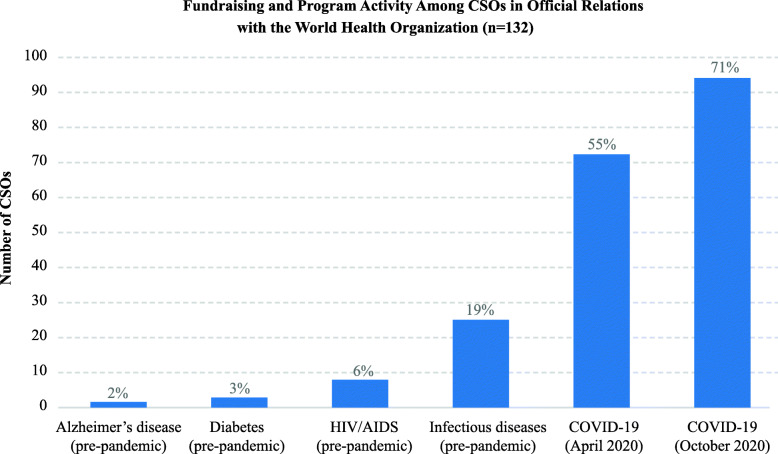
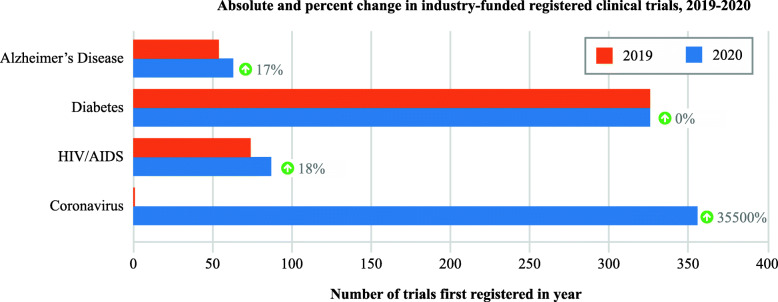
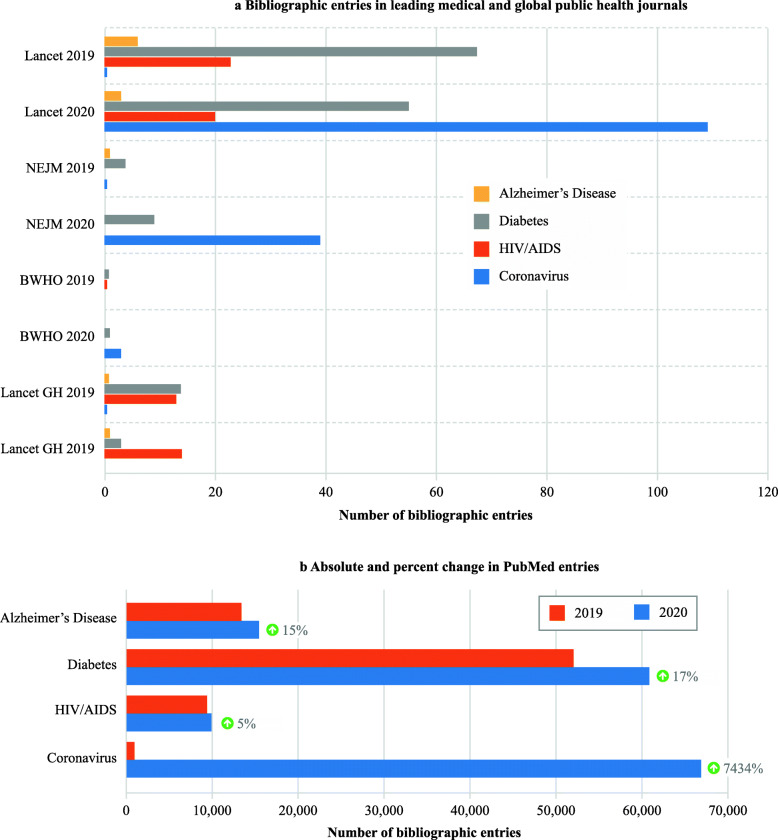
The global health agenda is ill-defined as an analytical construct, complicating attempts by scholars and proponents to make claims about the agenda status of issues. We draw on Kingdon's definition of the agenda and Hilgartner and Bosk's public arenas model to conceptualize the global health agenda as those subjects or problems to which collectivities of actors operating nationally and globally are paying serious attention at any given time. We propose an arenas model for global health agenda setting and illustrate its potential utility by assessing priority indicators in five arenas, including international aid, pharmaceutical industry, scientific research, news media and civil society. We then apply the model to illustrate how the status of established (HIV/AIDS), emergent (diabetes) and rising (Alzheimer's disease) issues might be measured, compared and change in light of a pandemic shock (COVID-19).
Coronavirus priority indicators rose precipitously in all five arenas in 2020, reflecting the kind of punctuation often caused by focusing events. The magnitude of change varied somewhat by arena, with the most pronounced shift in the global news media arena. Priority indicators for the other issues showed decreases of up to 21% and increases of up to 41% between 2019 and 2020, with increases suggesting that the agenda for global health issues expanded in some arenas in 2020- COVID-19 did not consistently displace priority for HIV/AIDS, diabetes or Alzheimer's disease, though it might have for other issues.
We advance an arenas model as a novel means of addressing conceptual and measurement challenges that often undermine the validity of claims concerning the global health agenda status of problems and contributing causal factors. Our presentation of the model and illustrative analysis lays the groundwork for more systematic investigation of trends in global health agenda setting. Further specification of the model is needed to ensure accurate representation of vital national and transnational arenas and their interactions, applicability to a range of disease-specific, health systems, governance and policy issues, and sensitivity to subtler influences on global health agenda setting than pandemic shocks.
全球卫生议程在分析构建方面定义不明确,这使得学者和支持者在对问题的议程地位提出主张时变得复杂。我们借鉴了金登的议程定义和希尔加特纳和博斯克的公共领域模型,将全球卫生议程概念化为那些在任何特定时间,国家和全球范围内的行动者群体正在认真关注的主题或问题。我们提出了一个全球卫生议程设置的领域模型,并通过评估五个领域中的优先指标(包括国际援助、制药业、科学研究、新闻媒体和民间社会)来说明其潜在效用。然后,我们应用该模型来说明如何根据大流行冲击(COVID-19)来衡量、比较和改变既定(艾滋病毒/艾滋病)、新兴(糖尿病)和上升(阿尔茨海默病)问题的地位。
2020 年,冠状病毒的优先指标在所有五个领域都急剧上升,反映了聚焦事件经常引起的那种标点符号。变化的幅度因领域而异,全球新闻媒体领域的变化最为明显。2019 年至 2020 年期间,其他问题的优先指标下降了 21%至 41%不等,上升表明全球卫生问题的议程在某些领域扩大了。2020 年 COVID-19 并没有始终取代艾滋病毒/艾滋病、糖尿病或阿尔茨海默病的优先地位,尽管它可能会对其他问题产生影响。
我们提出了一个领域模型,作为解决概念和测量挑战的一种新方法,这些挑战经常破坏对全球卫生议程中问题地位和促成因素的主张的有效性。我们对该模型的介绍和说明性分析为更系统地研究全球卫生议程设置趋势奠定了基础。需要进一步规范该模型,以确保准确代表重要的国家和跨国领域及其相互作用,适用于一系列特定于疾病的、卫生系统的、治理和政策问题,并对全球卫生议程设置产生影响,而不仅仅是大流行冲击。