School of Public and International Affairs, Virginia Tech, 900 N. Glebe Rd, Arlington, VA 22203, USA.
Global Business School for Health, University College London, UCL East Marshgate, 7 Sidings Street, London E20 2EA, United Kingdom.
Health Policy Plan. 2024 Sep 10;39(8):805-818. doi: 10.1093/heapol/czae035.
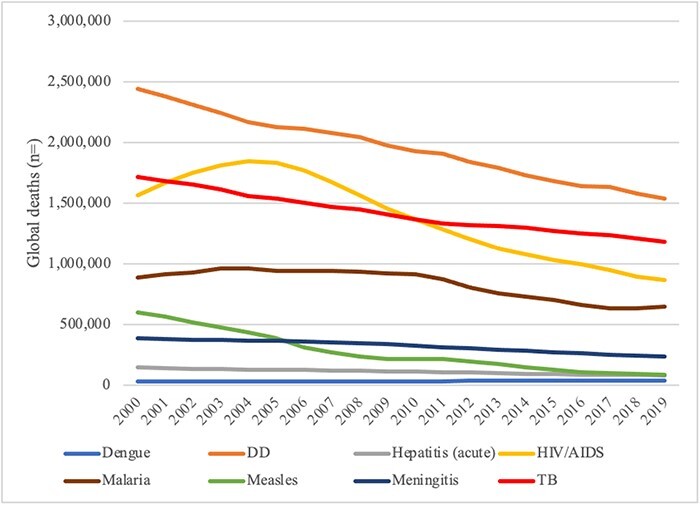
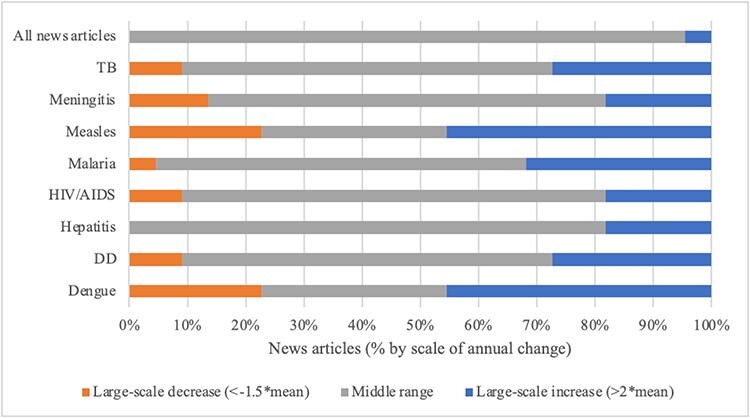
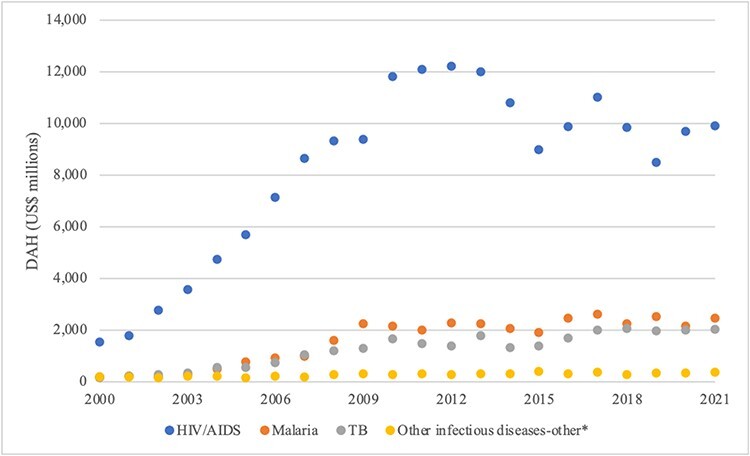
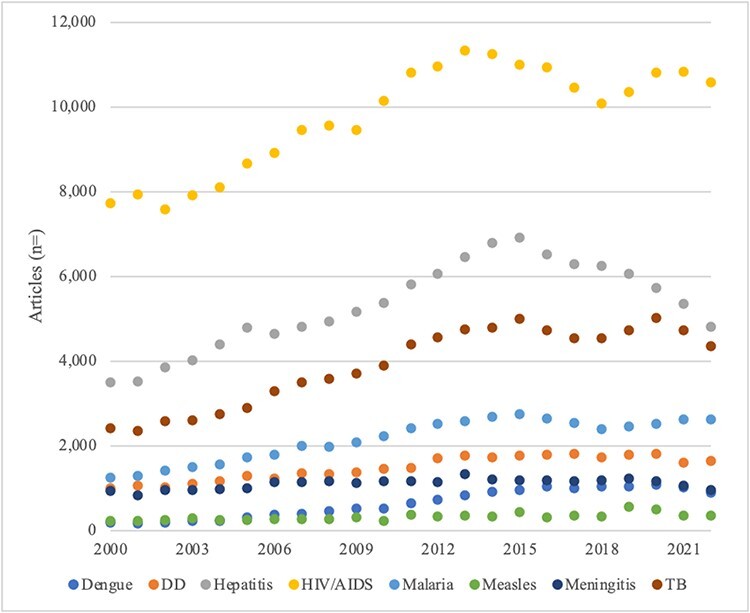
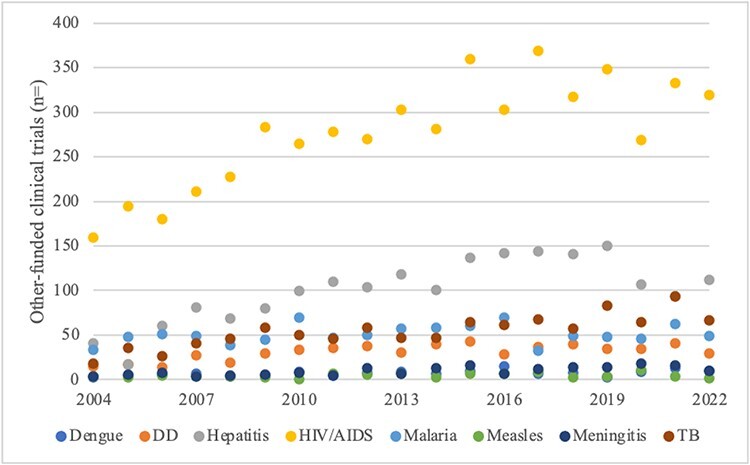
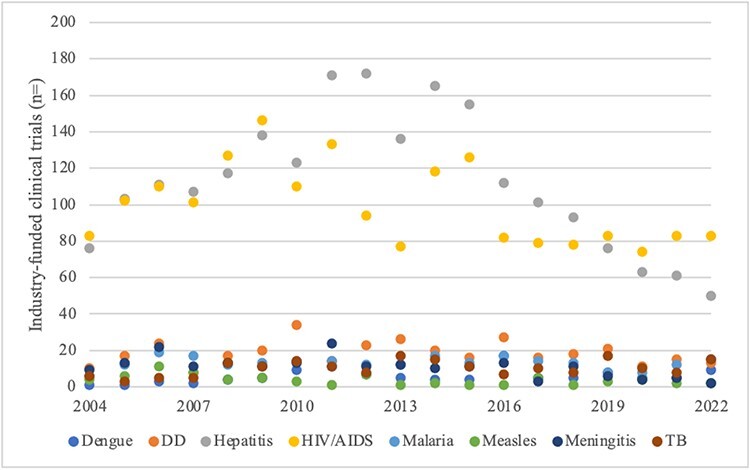
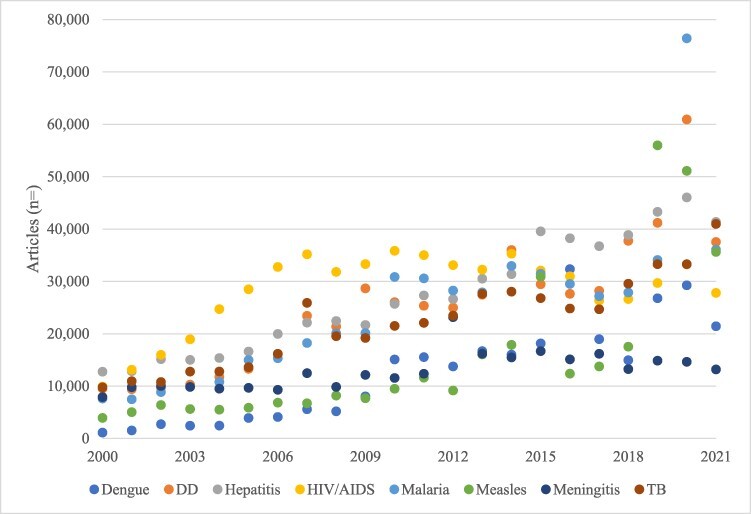
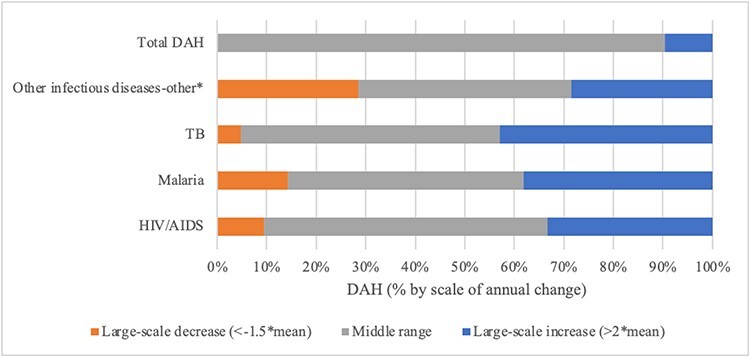
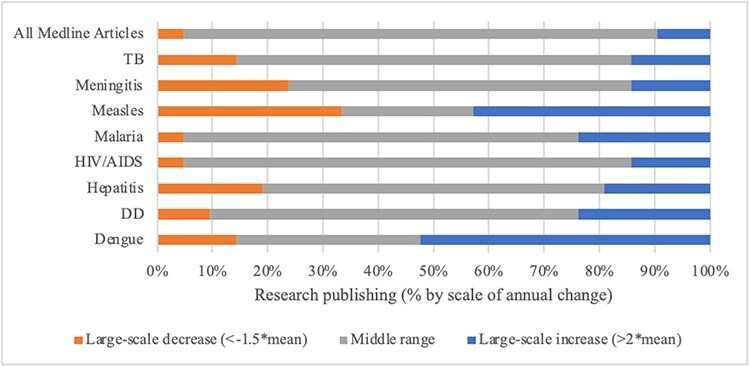
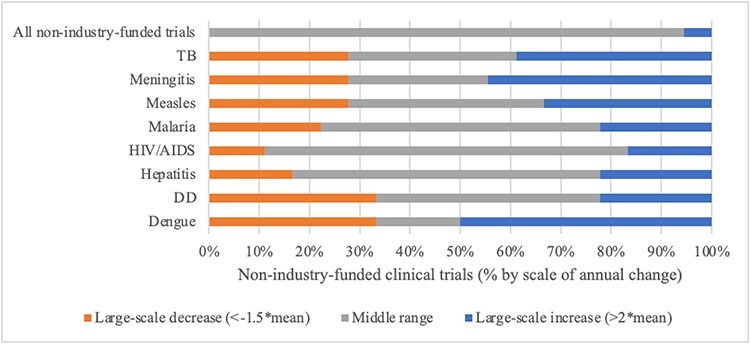
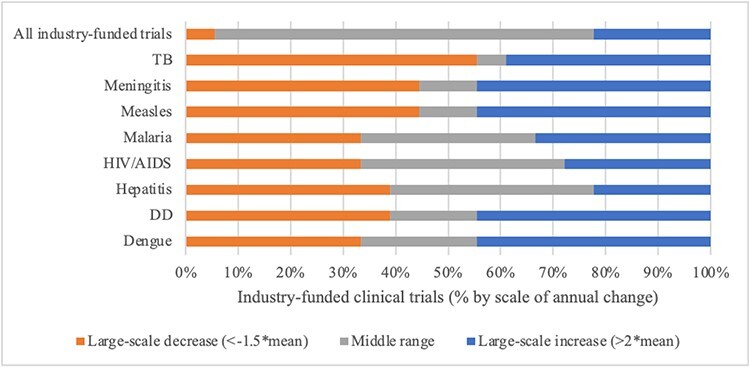
The highly decentralized nature of global health governance presents significant challenges to conceptualizing and systematically measuring the agenda status of diseases, injuries, risks and other conditions contributing to the collective disease burden. An arenas model for global health agenda setting was recently proposed to help address these challenges. Further developing the model, this study aims to advance more robust inquiry into how and why priority levels may vary among the array of stakeholder arenas in which global health agenda setting occurs. We analyse order and the magnitude of changes in priority for eight infectious diseases in four arenas (international aid, scientific research, pharmaceutical industry and news media) over a period of more than two decades in relation to five propositions from scholarship. The diseases vary on burden and prominence in United Nations Sustainable Development Goal 3 for health and well-being, including four with specific indicators for monitoring and evaluation (HIV/AIDS, tuberculosis, malaria, hepatitis) and four without (dengue, diarrhoeal diseases, measles, meningitis). The order of priority did not consistently align with the disease burden or international development goals in any arena. Additionally, using new methods to measure the scale of annual change in resource allocations that are indicative of priority reveals volatility at the disease level in all arenas amidst broader patterns of stability. Insights around long-term patterns of priority within and among arenas are integral to strengthening analyses that aim to identify pivotal causal mechanisms, to clarify how arenas interact, and to measure the effects they produce.
全球卫生治理高度分散,这给疾病、伤害、风险和其他导致集体疾病负担的状况的议程设定概念化和系统衡量带来了重大挑战。最近提出了一个用于全球卫生议程设定的领域模型,以帮助应对这些挑战。本研究旨在进一步发展该模型,更深入地研究在全球卫生议程设定发生的一系列利益相关者领域中,优先级的高低和变化的原因。我们分析了在 20 多年的时间里,四个领域(国际援助、科学研究、制药业和新闻媒体)中八项传染病的优先级变化顺序和幅度,以及与五项学术研究相关的五个命题。这些疾病在联合国可持续发展目标 3 中对健康和福祉的负担和突出程度不同,包括四个具有监测和评估具体指标的疾病(艾滋病毒/艾滋病、结核病、疟疾、肝炎)和四个没有具体指标的疾病(登革热、腹泻病、麻疹、脑膜炎)。在任何一个领域,优先级的顺序都不一致与疾病负担或国际发展目标一致。此外,使用新方法衡量资源分配的年度变化规模,这些变化规模是优先级的指标,揭示了所有领域中疾病层面的波动性,而整体模式则保持稳定。了解各领域内部和之间的长期优先事项模式,对于加强旨在确定关键因果机制、澄清各领域如何相互作用以及衡量其产生的影响的分析至关重要。