Department of Psychology, UC Davis, United States; Center for Mind and Brain, UC Davis, United States.
Center for Mind and Brain, UC Davis, United States.
Neuropsychologia. 2021 Jun 18;156:107837. doi: 10.1016/j.neuropsychologia.2021.107837. Epub 2021 Mar 26.
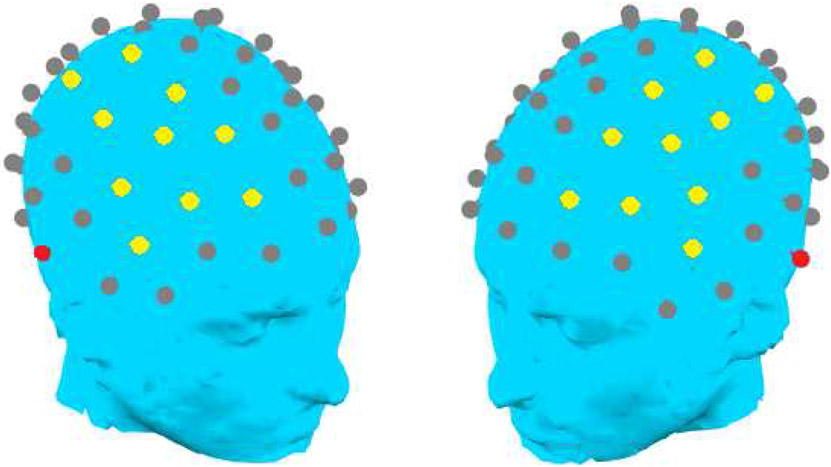
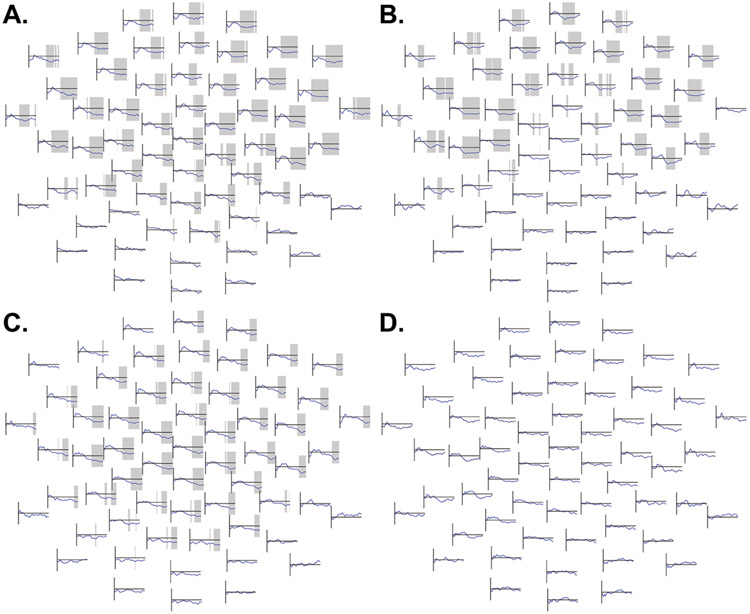
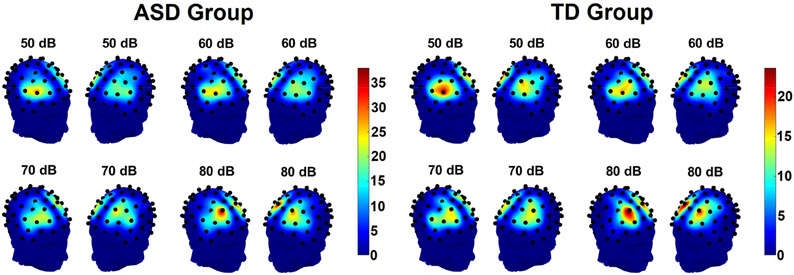
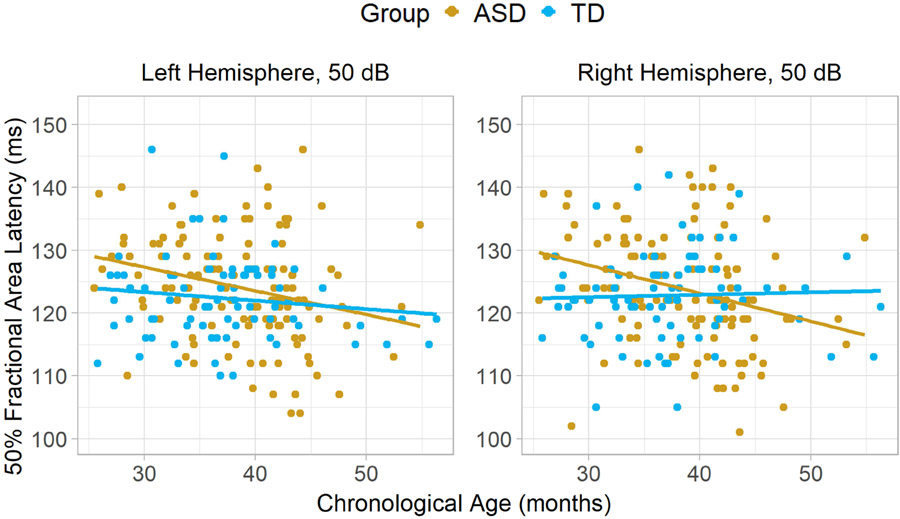
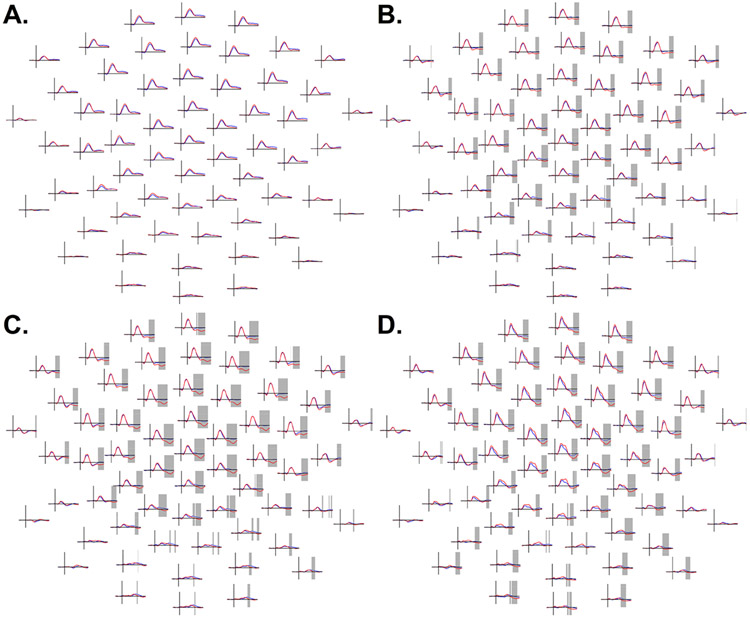
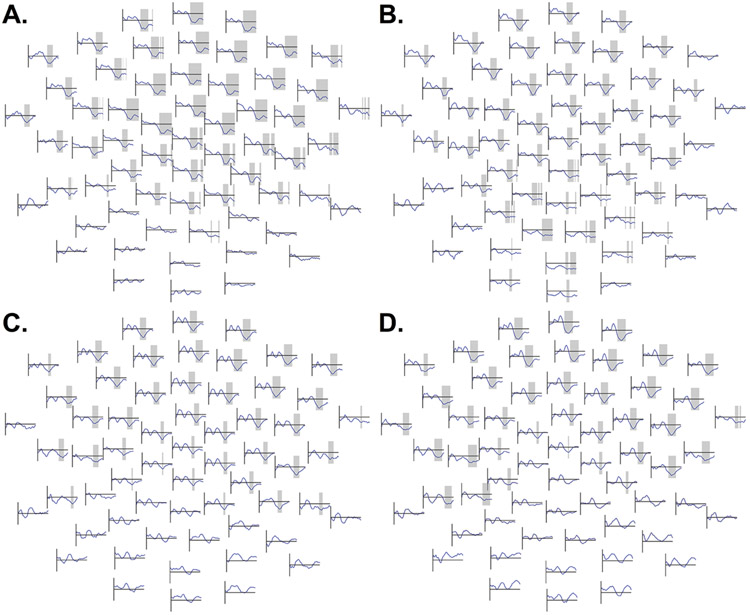
Limited research has investigated the development of auditory ERPs in young children, and particularly how stimulus intensity may affect these auditory ERPs. Previous research has also yielded inconsistent findings regarding differences in the development of auditory ERPs in autism and typical development. Furthermore, stimulus intensity may be of particular interest in autism insofar as autistic people may have atypical experiences of sound intensity (e.g., hyperacusis). Therefore, the present study examined associations between age and ERPs evoked by tones of differing intensities (50, 60, 70, and 80 dB SPL) in a large sample of young children (2-5 years) with and without an autism diagnosis. Correlations between age and P1 latencies were examined, while cluster-based permutation testing was used to examine associations between age and neural response amplitudes, as well as group differences in amplitude, over all electrode sites in the longer time window of 1-350 ms. Older autistic participants had faster P1 latencies, but these effects only attained significance over the right hemisphere in response to soft 50 dB sounds. Autistic participants had slower P1 responses to 80 dB sounds over the right hemisphere. Over the scalp regions associated with the later N2 response, more negative response amplitudes (that is, larger N2 responses) were observed in typically-developing than autistic participants. Furthermore, continuous associations between response amplitudes and age suggested that older typically-developing participants exhibited stronger N2 responses to all intensities, though this effect may have at least in part reflected the absence of small positive voltage deflections in the N2 latency window. Age was associated with amplitudes of responses to 50 dB through 70 dB sounds in autism, but in contrast to Typical Development (TD), little evidence of relationships between age and amplitudes in the N2 latency window was found in autism in the 80 dB condition. Although caution should be exercised in interpretation due to the cross-sectional nature of this study, these findings suggest that developmental changes in auditory responses may differ across diagnostic groups in a manner that depends on perceived loudness and/or stimulus intensity.
目前关于听觉事件相关电位(ERP)在幼儿中的发展情况,特别是刺激强度如何影响这些听觉 ERP 的研究较少。先前的研究也得出了不一致的发现,即自闭症和典型发育中听觉 ERP 的发展存在差异。此外,刺激强度在自闭症中可能特别重要,因为自闭症患者可能对声音强度有异常的体验(例如,听觉过敏)。因此,本研究在一个大样本的幼儿(2-5 岁)中,检查了年龄与不同强度(50、60、70 和 80dB SPL)的音调诱发的 ERP 之间的关联,这些幼儿中既有自闭症患者也有非自闭症患者。检查了年龄与 P1 潜伏期之间的相关性,同时使用基于聚类的置换检验来检查年龄与神经反应幅度之间的关联,以及在 1-350ms 的较长时间窗口中所有电极位置上的振幅的组间差异。较年长的自闭症参与者的 P1 潜伏期较快,但这些影响仅在右半球对软 50dB 声音的反应中具有统计学意义。自闭症参与者对右半球的 80dB 声音的 P1 反应较慢。在与较晚的 N2 反应相关的头皮区域,与自闭症参与者相比,典型发育的参与者观察到更负的反应幅度(即更大的 N2 反应)。此外,反应幅度与年龄之间的连续关联表明,年龄较大的典型发育参与者对所有强度的 N2 反应更强,尽管这种效应至少部分反映了 N2 潜伏期窗口中没有小的正电压偏移。在自闭症中,年龄与 50dB 至 70dB 声音的反应幅度相关,但与典型发育(TD)不同,在 80dB 条件下,自闭症中几乎没有发现年龄与 N2 潜伏期窗口中幅度之间的关系的证据。尽管由于本研究的横断面性质,在解释时应谨慎行事,但这些发现表明,听觉反应的发育变化可能在不同的诊断组中存在差异,这种差异取决于感知的响度和/或刺激强度。