Zhang Jinhua, Chen Yuxian, Chen Tufeng, Miao Bin, Tang Zuofu, Hu Xiao, Luo You, Zheng Tong, Na Ning
Department of Kidney Transplantation, The Third Affiliated Hospital of Sun Yat-sen University, Guangzhou, China.
Department of Joint Surgery, The Third Affiliated Hospital of Sun Yat-sen University, Guangzhou, China.
Clin Transl Med. 2021 Mar;11(3):e321. doi: 10.1002/ctm2.321.
The contributions of various types of cell populations in dialysis-related peritoneal fibrosis are poorly understood. Single-cell RNA sequencing brings single-cell level resolution to the analysis of cellular transcriptomics, which provides a new way to further characterize the distinct roles and functional states of each cell population during peritoneal fibrosis.
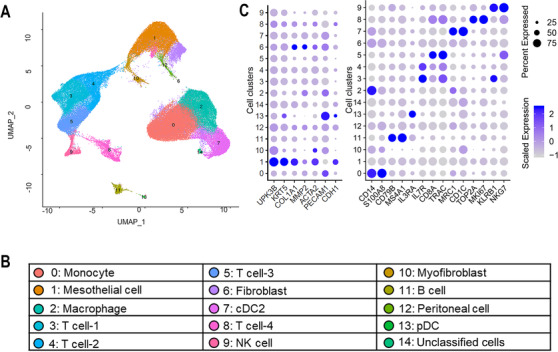
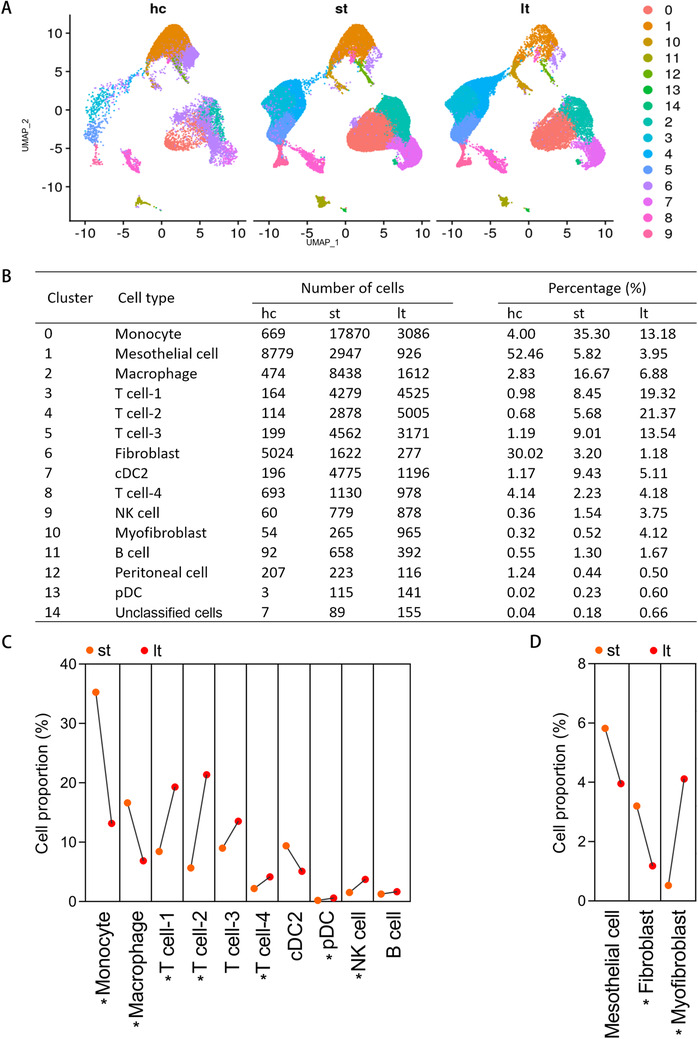
Single-cell transcriptomics from normal peritoneal tissues of six patients, from effluent of patients with short-term peritoneal dialysis (less than 2 weeks, n = 6), and from long-term peritoneal dialysis patients (more than 6 years, n = 4) were analyzed.
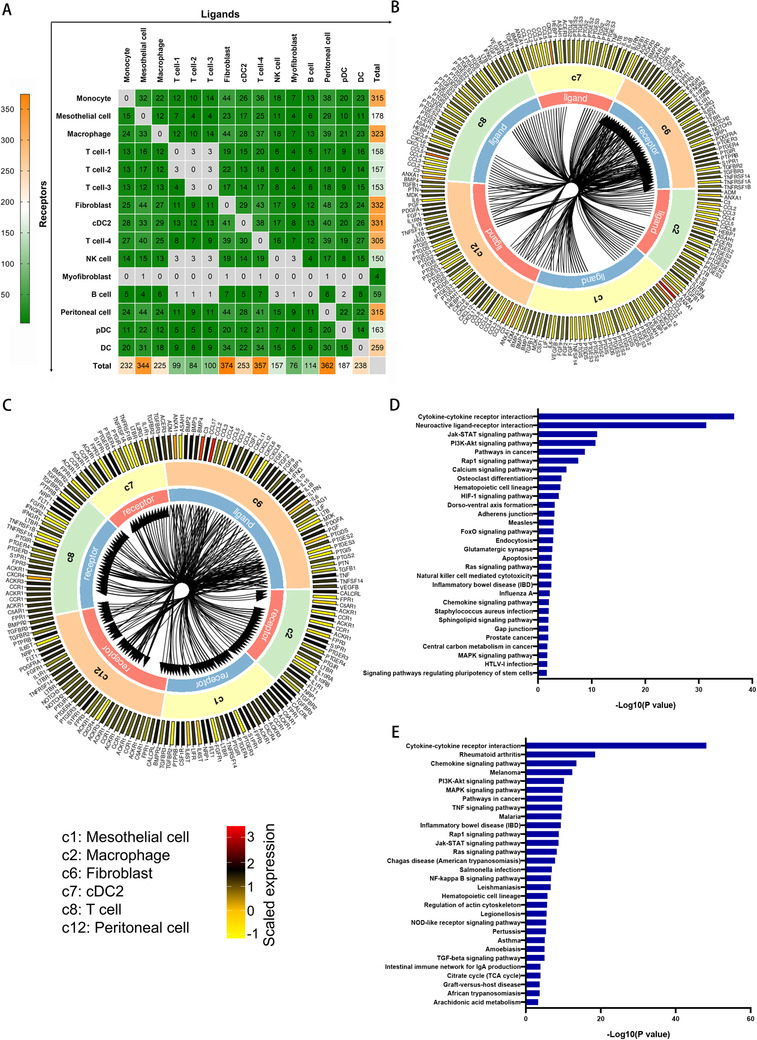
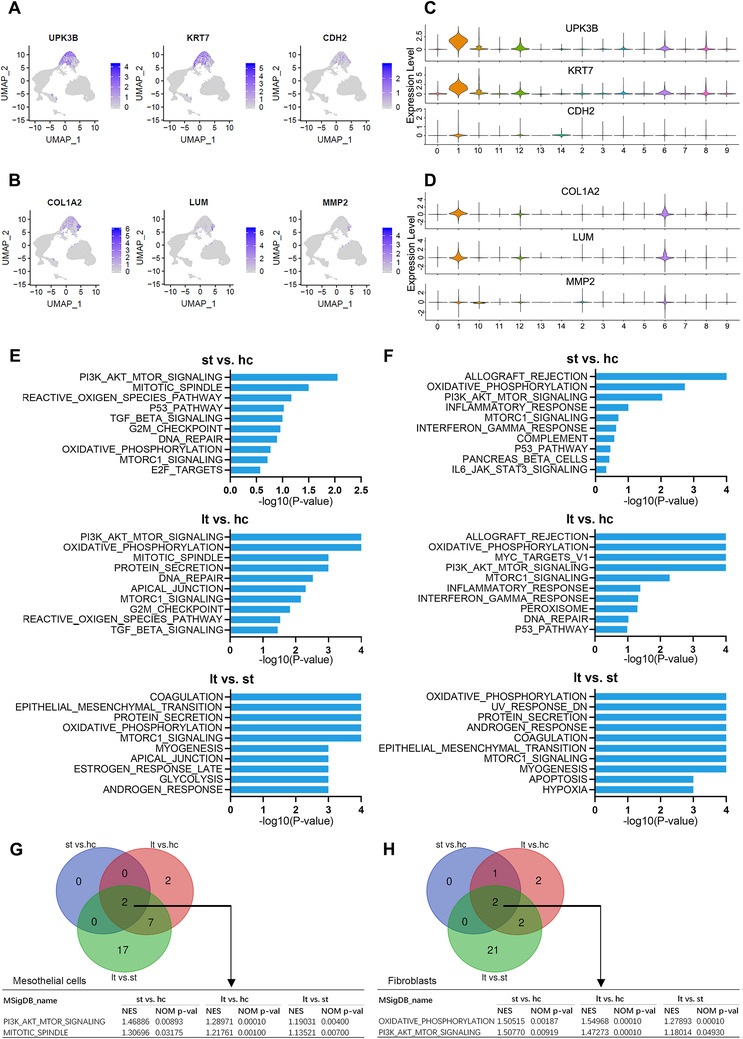
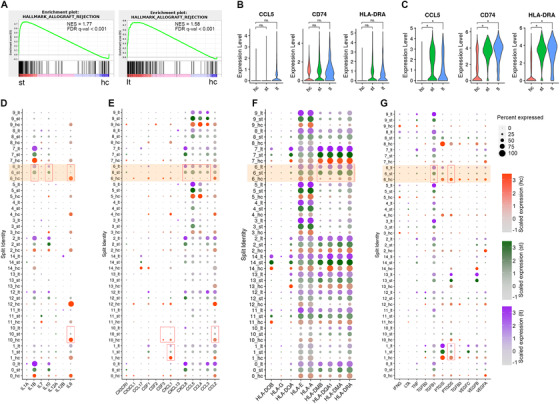
We identified a distinct cell component between samples among different groups. Functional analysis of the differentially expressed genes identified cell type specific biological processes relevant to different fibrosis stages. Well-known key molecular mechanisms participating in the pathophysiology of peritoneal fibrosis were vitrified, and some of them were found to be restricted to specific cell types. Gradually growing enrichment of PI3K/AKT/mTOR pathway and impairment of oxidative phosphorylation in mesothelial cells and fibroblasts were found from healthy control, short-term dialysis, to long-term dialysis, respectively. The fibroblasts' population obtained from the patients, who received peritoneal dialysis, showed a functional characteristic of immune-chemotaxis and immune response, which was characterized by broadly significant increase in the expression of interleukins, chemokines, cytokines, and human leukocyte antigens. Furthermore, we described the intercellular crosstalk networks based on receptor-ligand interactions, and highlighted a central role of fibroblasts in regulating the key mechanisms of peritoneal fibrosis through crosstalk with other cells.
In summary, despite describing information for fibrogenic molecular mechanisms in the resolution level of individual cell populations, this work identifies the significant functional evolution of fibroblasts during peritoneal fibrosis. This study also reveals the intercellular receptor-ligand interactions in which the fibroblasts serve as a major node, eventually providing new insights into the role of fibroblasts during disease pathogenesis.
目前对透析相关腹膜纤维化中各类细胞群的作用了解甚少。单细胞RNA测序为细胞转录组学分析带来了单细胞水平的分辨率,为进一步明确腹膜纤维化过程中每个细胞群的独特作用和功能状态提供了新途径。
对6例患者正常腹膜组织、短期腹膜透析患者(少于2周,n = 6)腹透液以及长期腹膜透析患者(超过6年,n = 4)的单细胞转录组进行分析。
我们在不同组的样本间鉴定出了不同的细胞成分。对差异表达基因的功能分析确定了与不同纤维化阶段相关的细胞类型特异性生物学过程。参与腹膜纤维化病理生理学的一些知名关键分子机制得到了验证,其中一些机制被发现局限于特定细胞类型。从健康对照到短期透析再到长期透析,分别发现间皮细胞和成纤维细胞中PI3K/AKT/mTOR通路逐渐富集以及氧化磷酸化受损。接受腹膜透析患者的成纤维细胞群表现出免疫趋化和免疫反应的功能特征,其特征是白细胞介素、趋化因子、细胞因子和人类白细胞抗原的表达普遍显著增加。此外,我们基于受体-配体相互作用描述了细胞间串扰网络,并强调了成纤维细胞在通过与其他细胞串扰来调节腹膜纤维化关键机制中的核心作用。
总之,尽管本研究在单个细胞群水平描述了纤维化分子机制的信息,但确定了腹膜纤维化过程中成纤维细胞的显著功能演变。本研究还揭示了以成纤维细胞为主要节点的细胞间受体-配体相互作用,最终为成纤维细胞在疾病发病机制中的作用提供了新见解。