Department of Cardiothoracic Surgery, Royal Prince Alfred Hospital, 50 Missenden Road, Camperdown, NSW 2050, Australia.
Department of Cardiothoracic Surgery, Royal Prince Alfred Hospital, Sydney, NSW, Australia.
Ther Adv Cardiovasc Dis. 2021 Jan-Dec;15:17539447211002687. doi: 10.1177/17539447211002687.
All major international guidelines for the management of infective endocarditis (IE) have undergone major revisions, recommending antibiotic prophylaxis (AP) restriction to high-risk patients or foregoing AP completely. We performed a systematic review to investigate the effect of these guideline changes on the global incidence of IE.
Electronic database searches were performed using Ovid Medline, EMBASE and Web of Science. Studies were included if they compared the incidence of IE prior to and following any change in international guideline recommendations. Relevant studies fulfilling the predefined search criteria were categorized according to their inclusion of either adult or pediatric patients. Incidence of IE, causative microorganisms and AP prescription rates were compared following international guideline updates.
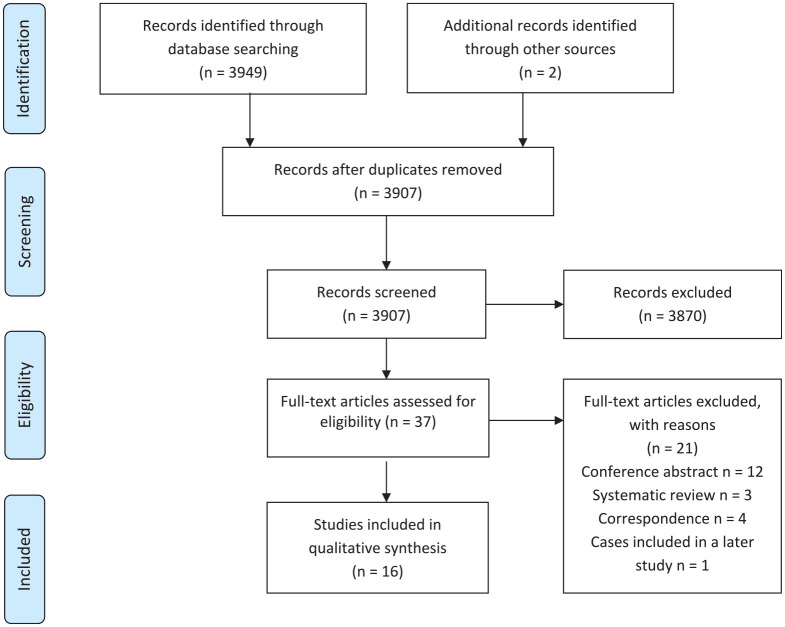
Sixteen studies were included, reporting over 1.3 million cases of IE. The crude incidence of IE following guideline updates has increased globally. Adjusted incidence increased in one study after European guideline updates, while North American rates did not increase. Cases of IE with a causative pathogen identified ranged from 62% to 91%. Rates of streptococcal IE varied across adult and pediatric populations, while the relative proportion of staphylococcal IE increased (range pre-guidelines 16-24.8%, range post-guidelines 26-43%). AP prescription trends were reduced in both moderate and high-risk patients following guideline updates.
The restriction of AP to only high-risk patients has not resulted in an increase in the incidence of streptococcal IE in North American populations. The evidence of the impact of AP restriction on IE incidence is still unclear for other populations. Future population-based studies with adjusted incidence of IE, AP prescription rates and accurate pathogen identification are required to delineate findings further in these other regions.
所有主要的国际感染性心内膜炎(IE)管理指南都进行了重大修订,建议将抗生素预防(AP)限制在高危患者或完全不使用 AP。我们进行了一项系统评价,以调查这些指南变化对全球 IE 发病率的影响。
使用 Ovid Medline、EMBASE 和 Web of Science 进行电子数据库搜索。如果研究比较了在国际指南建议发生任何变化前后 IE 的发病率,则将其纳入研究。符合预定义搜索标准的相关研究根据纳入成人或儿科患者的情况进行分类。比较了国际指南更新后 IE 的发病率、病原体和 AP 处方率。
共纳入 16 项研究,报告了超过 130 万例 IE。全球范围内,指南更新后 IE 的粗发病率有所增加。在一项欧洲指南更新后,调整后的发病率增加,而北美发病率没有增加。确定病原体的 IE 病例比例从 62%到 91%不等。成人和儿科人群中链球菌 IE 的发生率不同,而葡萄球菌 IE 的相对比例增加(指南前范围 16-24.8%,指南后范围 26-43%)。指南更新后,中度和高危患者的 AP 处方趋势减少。
仅将 AP 限制用于高危患者并未导致北美人群中链球菌 IE 发病率的增加。AP 限制对 IE 发病率的影响证据在其他人群中仍不清楚。需要进一步在这些其他地区进行基于人群的研究,调整 IE 发病率、AP 处方率和准确的病原体鉴定,以进一步阐明这些发现。