Department of Microbiology, Immunology & Molecular Genetics, University of California, Los Angeles, Los Angeles, California, USA.
California NanoSystems Institute, University of California, Los Angeles, Los Angeles, California, USA.
mBio. 2021 Mar 30;12(2):e02924-20. doi: 10.1128/mBio.02924-20.
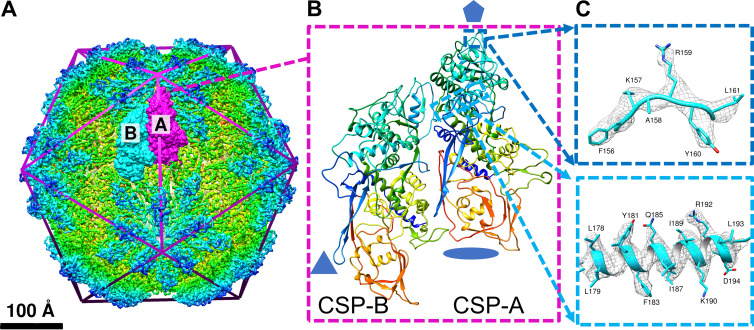
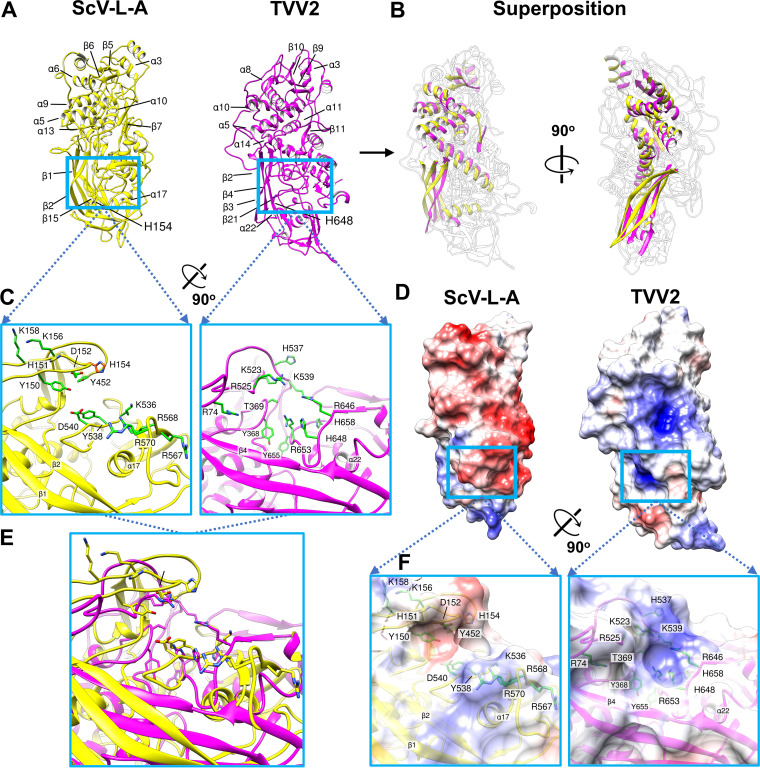
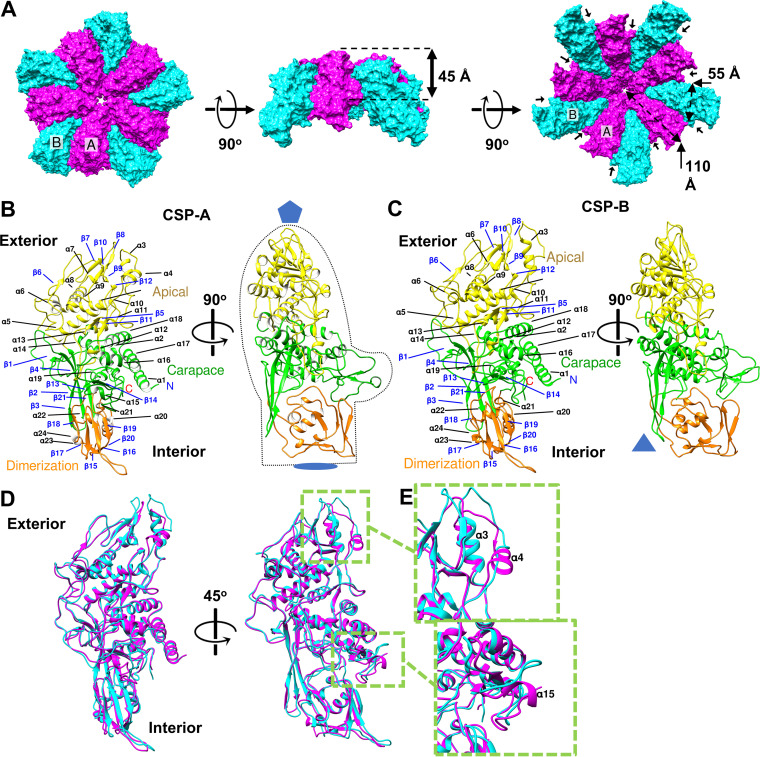
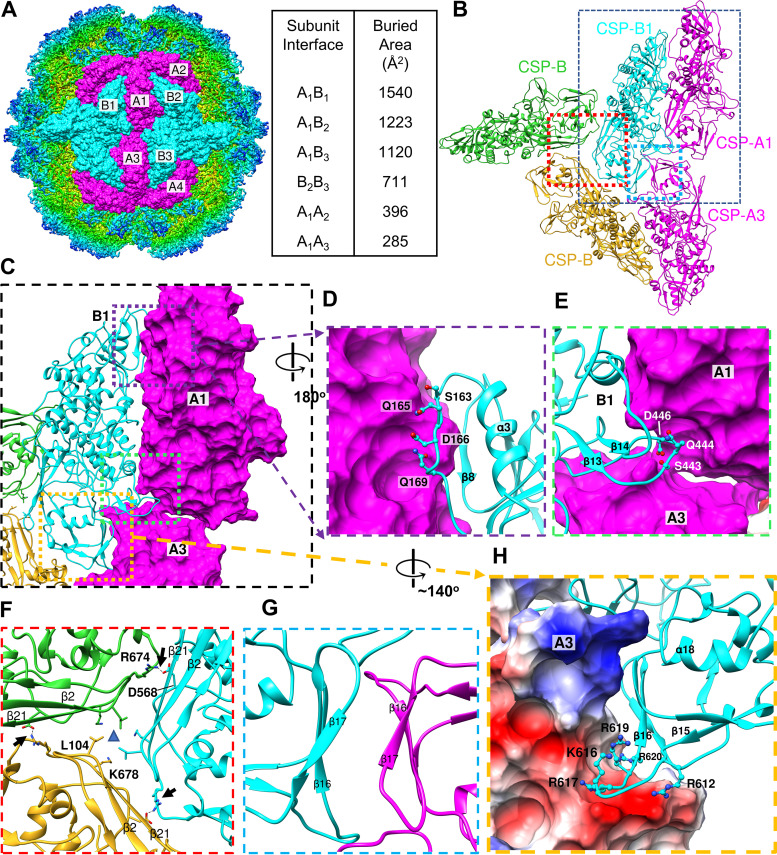
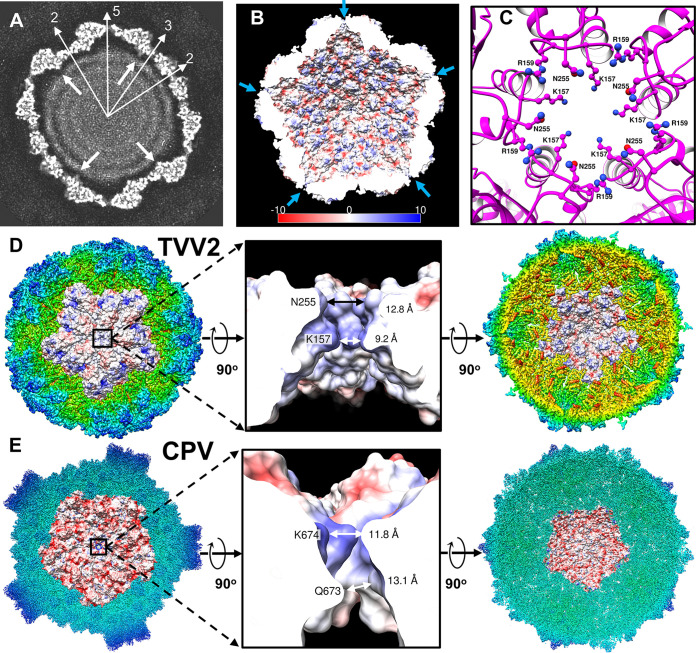
, the causative pathogen for the most common nonviral sexually transmitted infection worldwide, is itself frequently infected with one or more of the four types of small double-stranded RNA (dsRNA) viruses (TVV1 to 4, genus , family ). Each TVV encloses a nonsegmented genome within a single-layered capsid and replicates entirely intracellularly, like many dsRNA viruses, and unlike those in the family. Here, we have determined the structure of TVV2 by cryo-electron microscopy (cryoEM) at 3.6 Å resolution and derived an atomic model of its capsid. TVV2 has an icosahedral, T = 2*, capsid comprised of 60 copies of the icosahedral asymmetric unit (a dimer of the two capsid shell protein [CSP] conformers, CSP-A and CSP-B), typical of icosahedral dsRNA virus capsids. However, unlike the robust CSP-interlocking interactions such as the use of auxiliary "clamping" proteins among , only lateral CSP interactions are observed in TVV2, consistent with an assembly strategy optimized for TVVs' intracellular-only replication cycles within their protozoan host. The atomic model reveals both a mostly negatively charged capsid interior, which is conducive to movement of the loosely packed genome, and channels at the 5-fold vertices, which we suggest as routes of mRNA release during transcription. Structural comparison of TVV2 to the L-A virus reveals a conserved helix-rich fold within the CSP and putative guanylyltransferase domain along the capsid exterior, suggesting conserved mRNA maintenance strategies among This first atomic structure of a TVV provides a framework to guide future biochemical investigations into the interplay between and its viruses. viruses (TVVs) are double-stranded RNA (dsRNA) viruses that cohabitate in , the causative pathogen of trichomoniasis, the most common nonviral sexually transmitted disease worldwide. Featuring an unsegmented dsRNA genome encoding a single capsid shell protein (CSP), TVVs contrast with multisegmented dsRNA viruses, such as the diarrhea-causing rotavirus, whose larger genome is split into 10 dsRNA segments encoding 5 unique capsid proteins. To determine how TVVs incorporate the requisite functionalities for viral replication into their limited proteome, we derived the atomic model of TVV2, a first for TVVs. Our results reveal the intersubunit interactions driving CSP association for capsid assembly and the properties that govern organization and maintenance of the viral genome. Structural comparison between TVV2 capsids and those of distantly related dsRNA viruses indicates conserved strategies of nascent RNA release and a putative viral guanylyltransferase domain implicated in the cytoplasmic maintenance of viral messenger and genomic RNA.
,引起全球最常见的非病毒性性传播感染的病原体,本身也经常感染四种类型的小双链 RNA(dsRNA)病毒(TVV1 到 4,属,科)之一或多种。每个 TVV 在单层衣壳内封闭一个非分段基因组,并像许多 dsRNA 病毒一样在细胞内完全复制,而不像科中的病毒那样。在这里,我们通过冷冻电子显微镜(cryoEM)在 3.6Å分辨率下确定了 TVV2 的结构,并推导出了其衣壳的原子模型。TVV2 具有二十面体,T=2*,衣壳由 60 个二十面体不对称单位(两个衣壳壳蛋白 [CSP] 构象的二聚体,CSP-A 和 CSP-B)组成,这是典型的二十面体 dsRNA 病毒衣壳。然而,与科中使用辅助“夹紧”蛋白等坚固的 CSP 互锁相互作用不同,TVV2 中只观察到侧 CSP 相互作用,这与 TVV 仅在其原生动物宿主内的细胞内复制周期中优化的组装策略一致。原子模型揭示了衣壳内部主要带负电荷的环境,有利于松散包装的基因组的运动,以及 5 倍顶点处的通道,我们认为这是转录过程中 mRNA 释放的途径。TVV2 与 L-A 病毒的结构比较揭示了 CSP 内富含螺旋的折叠和衣壳外假定的鸟苷转移酶结构域,表明科中的病毒之间存在保守的 mRNA 维持策略。这是第一个 TVV 的原子结构,为指导未来关于和其病毒之间相互作用的生化研究提供了框架。