Programa de Pos-Graduacao em Cardiologia e Ciencias Cardiovasculares, Hospital de Clinicas de Porto Alegre, Universidade Federal do Rio Grande do Sul, Porto Alegre, RS, BR.
Hospital de Clinicas de Porto Alegre, Porto Alegre, RS, BR.
Clinics (Sao Paulo). 2021 Mar 24;76:e2518. doi: 10.6061/clinics/2021/e2518. eCollection 2021.
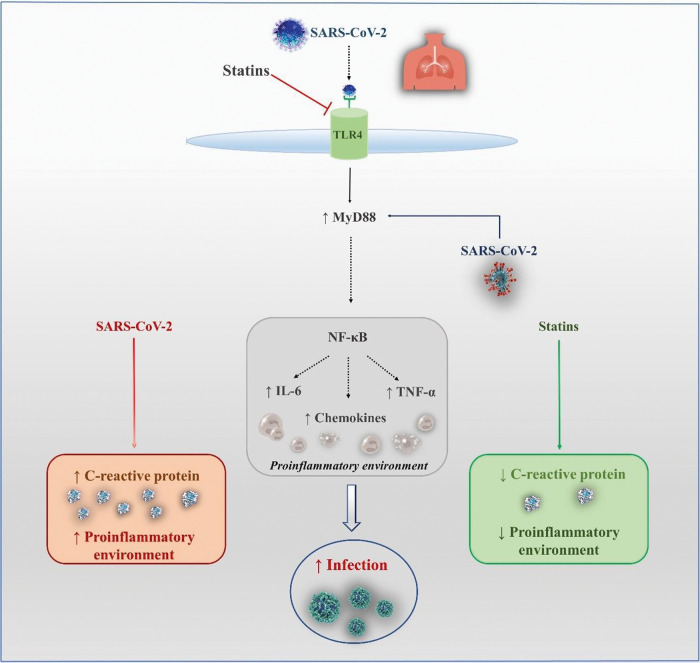
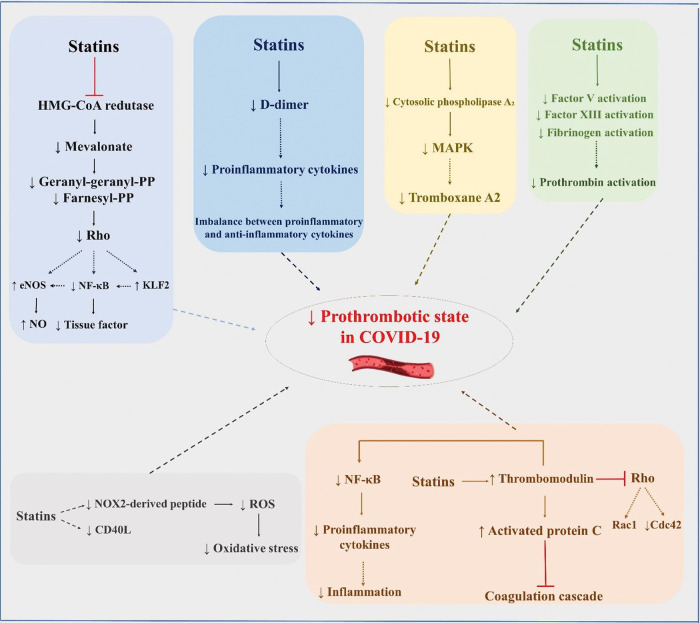
The novel coronavirus disease (COVID-19) showed increased morbidity and mortality rates and worse prognosis in individuals with underlying chronic diseases, especially cardiovascular disease and its risk factors, such as hypertension, diabetes, and obesity. There is also evidence of possible links among COVID-19, myocardial infarction, and stroke. Emerging evidence suggests a pro-inflammatory milieu and hypercoagulable state in patients with this infection. Despite anticoagulation, a large proportion of patients requiring intensive care may develop life-threatening thrombotic complications. Indeed, the levels of some markers of hemostatic activation, such as D-dimer, are commonly elevated in COVID-19, indicating potential risk of deep vein thrombosis and pulmonary thromboembolism. In this review, we critically examine and discuss aspects of hypercoagulability and inflammation in COVID-19 and the possible benefits of statins in this scenario, with emphasis on their underlying molecular mechanisms. Moreover, we present recommendations on the use of antiviral drugs in combination with statins.
新型冠状病毒病(COVID-19)在患有基础慢性病的个体中表现出更高的发病率和死亡率,以及更差的预后,尤其是心血管疾病及其危险因素,如高血压、糖尿病和肥胖症。也有证据表明 COVID-19、心肌梗死和中风之间可能存在关联。新出现的证据表明,感染这种病毒的患者体内存在促炎环境和高凝状态。尽管进行了抗凝治疗,但仍有很大一部分需要重症监护的患者可能会发生危及生命的血栓并发症。事实上,COVID-19 患者的一些止血激活标志物(如 D-二聚体)水平通常升高,表明深静脉血栓形成和肺血栓栓塞的潜在风险。在这篇综述中,我们批判性地检查和讨论了 COVID-19 中的高凝和炎症方面,以及他汀类药物在这种情况下的可能益处,重点是它们的潜在分子机制。此外,我们还就联合使用抗病毒药物和他汀类药物提出了建议。