Department of Chemistry, Indiana University, Bloomington, IN, United States.
Department of Otolaryngology and Head and Neck Surgery, Faculty of Medicine, The University of Tokyo, Tokyo, Japan.
J Med Internet Res. 2021 Apr 22;23(4):e26459. doi: 10.2196/26459.
The year 2020 was the year of the global COVID-19 pandemic. The severity of the situation has become so substantial that many or even most of the patients with mild to moderate symptoms had to self-isolate without specific medical treatments or even without being tested for COVID-19. Many patients joined internet membership groups to exchange information and support each other.
Our goal is to determine the benefits and limits of using social media to understand the symptoms of patients with suspected COVID-19 with mild to moderate symptoms and, in particular, their symptoms of anosmia (loss of the sense of smell) and ageusia (loss of the sense of taste). The voluntary reports on an internet website of a membership group will be the platform of the analyses.
Posts and comments of members of an internet group known as COVID-19 Smell and Taste Loss, founded on March 24, 2020, to support patients with suspected COVID-19 were collected and analyzed daily. Demographic data were collected using the software mechanism called Group Insights on the membership group website.
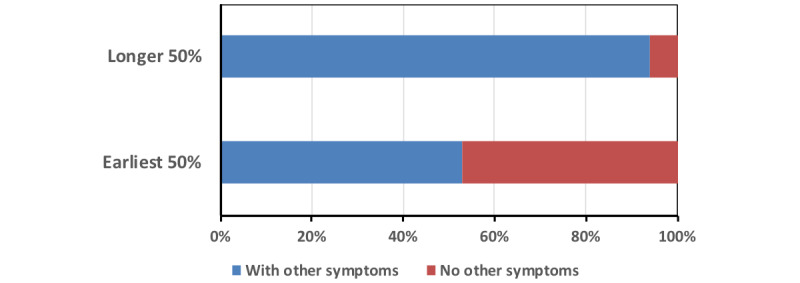
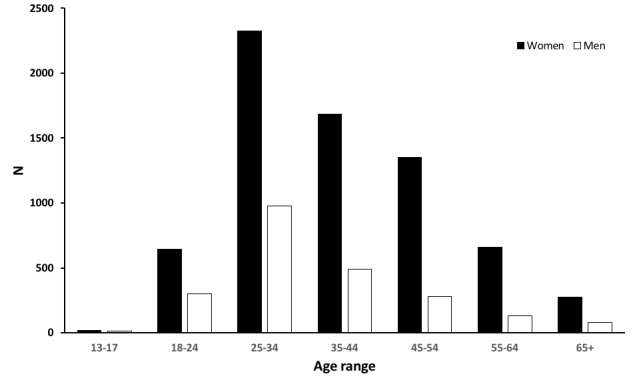
Membership groups on social media have become rare sources of support for patients with suspected COVID-19 with mild to moderate symptoms. These groups provided mental support to their members and became resources for information on COVID-19 tests and medicines or supplements. However, the membership was voluntary, and often the members leave without notification. It is hard to be precise from the free voluntary reports. The number of women in the group (6995/9227, 75.38% as of October 12, 2020) was about three times more than men (2272/9227, 24.62% as of October 12, 2020), and the peak age of members was between 20-40 years in both men and women. Patients who were asymptomatic other than the senses comprised 14.93% (53/355) of the total patients. Recovery of the senses was higher in the patients who were asymptomatic besides having anosmia and ageusia. Most (112/123, 91.06%) patients experienced other symptoms first and then lost their senses, on average, 4.2 days later. Patients without other symptoms tended to recover earlier (P=.02). Patients with anosmia and ageusia occasionally reported distorted smell and taste (parosmia and dysgeusia) as well as experiencing or perceiving the smell and taste without the sources of the smell or taste (phantosmia and phantogeusia).
Our analysis of the social media database of suspected COVID-19 patients' voices demonstrated that, although accurate diagnosis of patients is not always obtained with social media-based analyses, it may be a useful tool to collect a large amount of data on symptoms and the clinical course of worldwide rapidly growing infectious diseases.
2020 年是全球 COVID-19 大流行的一年。情况的严重程度变得如此严重,以至于许多甚至大多数有轻度至中度症状的患者不得不自我隔离,而没有特定的医疗治疗,甚至没有接受 COVID-19 的检测。许多患者加入了互联网会员群组以交流信息并相互支持。
我们的目标是确定使用社交媒体来了解有轻度至中度症状的疑似 COVID-19 患者的症状,特别是他们的嗅觉丧失(嗅觉丧失)和味觉丧失(味觉丧失)的症状的益处和局限性。互联网会员群组网站上的自愿报告将是分析的平台。
每天收集并分析 2020 年 3 月 24 日成立的一个名为 COVID-19 嗅觉和味觉丧失的互联网群组的成员的帖子和评论,以支持疑似 COVID-19 的患者。使用会员群组网站上名为 Group Insights 的软件机制收集人口统计学数据。
社交媒体上的会员群组已成为有轻度至中度症状的疑似 COVID-19 患者的罕见支持来源。这些群组为其成员提供了精神支持,并成为 COVID-19 测试和药物或补品信息的资源。但是,会员资格是自愿的,并且成员经常在没有通知的情况下离开。从免费的自愿报告中很难准确判断。群组中女性(截至 2020 年 10 月 12 日,6995/9227,75.38%)的数量约为男性(2272/9227,24.62%,截至 2020 年 10 月 12 日)的三倍,成员的高峰年龄在男性和女性中均在 20-40 岁之间。除了嗅觉丧失之外,没有其他症状的患者占总患者的 14.93%(53/355)。在没有嗅觉丧失和味觉丧失的情况下无症状的患者康复率更高。大多数(112/123,91.06%)患者先出现其他症状,然后平均在 4.2 天后失去嗅觉。没有其他症状的患者往往恢复得更早(P=.02)。嗅觉丧失和味觉丧失的患者偶尔会报告嗅觉和味觉扭曲(嗅觉异常和味觉障碍),以及在没有嗅觉或味觉来源的情况下体验或感知到嗅觉和味觉(幻嗅和幻味)。
我们对疑似 COVID-19 患者声音的社交媒体数据库的分析表明,尽管基于社交媒体的分析并不总是能够准确诊断患者,但它可能是收集大量有关症状和全球快速增长的传染病临床过程的有用工具。