• 文献检索
  • 文档翻译
  • 深度研究
  • 学术资讯
  • Suppr Zotero 插件Zotero 插件
  • 邀请有礼
  • 套餐&价格
  • 历史记录
应用&插件
Suppr Zotero 插件Zotero 插件浏览器插件Mac 客户端Windows 客户端微信小程序
定价
高级版会员购买积分包购买API积分包
服务
文献检索文档翻译深度研究API 文档MCP 服务
关于我们
关于 Suppr公司介绍联系我们用户协议隐私条款
关注我们

Suppr 超能文献

核心技术专利:CN118964589B侵权必究
粤ICP备2023148730 号-1Suppr @ 2026

文献检索

告别复杂PubMed语法,用中文像聊天一样搜索,搜遍4000万医学文献。AI智能推荐,让科研检索更轻松。

立即免费搜索

文件翻译

保留排版,准确专业,支持PDF/Word/PPT等文件格式,支持 12+语言互译。

免费翻译文档

深度研究

AI帮你快速写综述,25分钟生成高质量综述,智能提取关键信息,辅助科研写作。

立即免费体验

嗅觉丧失和味觉丧失作为2019冠状病毒病(COVID-19)的唯一指标

Anosmia and Ageusia as the Only Indicators of Coronavirus Disease 2019 (COVID-19).

作者信息

Zhang Qian, Shan Khine S, Abdollahi Shahrzad, Nace Travis

机构信息

Internal Medicine, Abington Hospital-Jefferson Health, Abington, USA.

Internal Medicine, University of Maryland Medical Center, Baltimore, USA.

出版信息

Cureus. 2020 May 1;12(5):e7918. doi: 10.7759/cureus.7918.

DOI:10.7759/cureus.7918
PMID:32494532
原文链接:https://pmc.ncbi.nlm.nih.gov/articles/PMC7263711/
Abstract

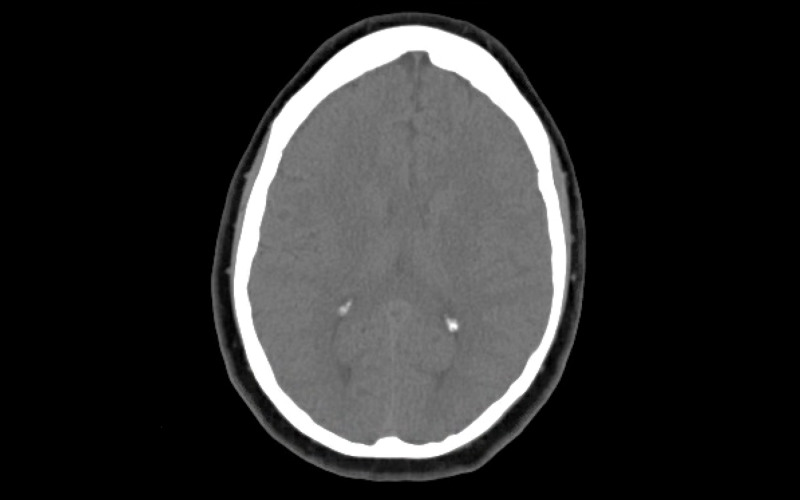
The patient is a 60-year-old woman with a history of vertigo and seasonal allergies who presented to the hospital with the chief complaint of headache. Radiological findings were negative for intracranial abnormalities. The headache was due to trigeminal neuralgia. She had concurrent complaints of anosmia and ageusia without fever, respiratory symptoms, or obvious risk factors. However, it was determined to test the patient for coronavirus disease 2019 (COVID-19) infection despite extremely low clinical suspicion. Unfortunately, she was found to be COVID-19 positive after she was discharged from the hospital while she remained asymptomatic. There is currently a lack of published case reports describing COVID-19 patients with the sole symptoms of anosmia and ageusia in the United States of America.

摘要

患者为一名60岁女性,有眩晕和季节性过敏史,因头痛为主诉入院。影像学检查结果显示颅内无异常。头痛是由三叉神经痛引起的。她同时伴有嗅觉丧失和味觉丧失的症状,无发热、呼吸道症状或明显危险因素。然而,尽管临床怀疑极低,仍决定对该患者进行2019冠状病毒病(COVID-19)感染检测。不幸的是,她出院后被发现COVID-19呈阳性,而她仍无症状。目前在美国缺乏描述仅以嗅觉丧失和味觉丧失为唯一症状的COVID-19患者的已发表病例报告。
https://cdn.ncbi.nlm.nih.gov/pmc/blobs/4dd4/7263711/166ea21204ba/cureus-0012-00000007918-i02.jpg
https://cdn.ncbi.nlm.nih.gov/pmc/blobs/4dd4/7263711/2bb2b5f4af42/cureus-0012-00000007918-i01.jpg
https://cdn.ncbi.nlm.nih.gov/pmc/blobs/4dd4/7263711/166ea21204ba/cureus-0012-00000007918-i02.jpg
https://cdn.ncbi.nlm.nih.gov/pmc/blobs/4dd4/7263711/2bb2b5f4af42/cureus-0012-00000007918-i01.jpg
https://cdn.ncbi.nlm.nih.gov/pmc/blobs/4dd4/7263711/166ea21204ba/cureus-0012-00000007918-i02.jpg

相似文献

1
Anosmia and Ageusia as the Only Indicators of Coronavirus Disease 2019 (COVID-19).嗅觉丧失和味觉丧失作为2019冠状病毒病(COVID-19)的唯一指标
Cureus. 2020 May 1;12(5):e7918. doi: 10.7759/cureus.7918.
2
Signs and symptoms to determine if a patient presenting in primary care or hospital outpatient settings has COVID-19.在基层医疗或医院门诊环境中,出现症状和体征来确定患者是否患有 COVID-19。
Cochrane Database Syst Rev. 2021 Feb 23;2(2):CD013665. doi: 10.1002/14651858.CD013665.pub2.
3
Case Report: COVID-19 Patient With Chief Complaint of Anosmia and Ageusia; a Unique Perspective on Atypical Symptomatology and Management in the Military.病例报告:以嗅觉丧失和味觉丧失为主诉的 COVID-19 患者;对军事人员非典型症状和管理的独特视角。
Mil Med. 2020 Dec 30;185(11-12):e2176-e2179. doi: 10.1093/milmed/usaa196.
4
Loss of Smell and Taste in Patients With Suspected COVID-19: Analyses of Patients' Reports on Social Media.嗅觉和味觉丧失的疑似 COVID-19 患者:社交媒体上患者报告的分析。
J Med Internet Res. 2021 Apr 22;23(4):e26459. doi: 10.2196/26459.
5
Headache, anosmia, ageusia and other neurological symptoms in COVID-19: a cross-sectional study.COVID-19 患者的头痛、嗅觉丧失、味觉丧失和其他神经系统症状:一项横断面研究。
J Headache Pain. 2022 Jan 3;23(1):2. doi: 10.1186/s10194-021-01367-8.
6
Loss of Taste and Smell are Common Clinical Characteristics of Patients with COVID-19 in Somalia: A Retrospective Double Centre Study.味觉和嗅觉丧失是索马里新冠肺炎患者的常见临床特征:一项回顾性双中心研究
Infect Drug Resist. 2020 Jul 29;13:2631-2635. doi: 10.2147/IDR.S263632. eCollection 2020.
7
Prevalence of Anosmia and Ageusia in Patients with COVID-19 at a Primary Health Center, Doha, Qatar.卡塔尔多哈一家初级卫生保健中心新冠肺炎患者嗅觉丧失和味觉丧失的患病率
Indian J Otolaryngol Head Neck Surg. 2022 Oct;74(Suppl 2):2703-2709. doi: 10.1007/s12070-020-02064-9. Epub 2020 Aug 19.
8
COVID-19, anosmia, and ageusia in atopic children.特应性儿童的 COVID-19、嗅觉丧失和味觉丧失。
Pediatr Allergy Immunol. 2022 Jan;33 Suppl 27(Suppl 27):99-101. doi: 10.1111/pai.13644.
9
Prevalence and Recovery from Newly Onset Anosmia and Ageusia in Covid 19 Patients at our Teritary Care Centre.我们三级护理中心新冠肺炎患者新发嗅觉丧失和味觉丧失的患病率及恢复情况
Indian J Otolaryngol Head Neck Surg. 2022 Oct;74(Suppl 2):3399-3406. doi: 10.1007/s12070-021-02540-w. Epub 2021 Apr 10.
10
Anosmia and Ageusia: Not an Uncommon Presentation of COVID-19 Infection in Children and Adolescents.嗅觉丧失和味觉丧失:儿童和青少年 COVID-19 感染的常见表现。
Pediatr Infect Dis J. 2020 Aug;39(8):e199-e200. doi: 10.1097/INF.0000000000002718.

引用本文的文献

1
Frequency and Severity of Ear-Nose-Throat (ENT) Symptoms during COVID-19 Infection.新冠病毒感染期间耳鼻喉(ENT)症状的频率和严重程度。
Medicina (Kaunas). 2022 Apr 29;58(5):623. doi: 10.3390/medicina58050623.
2
Magnetic Resonance Imaging Confirmed Olfactory Bulb Reduction in Long COVID-19: Literature Review and Case Series.磁共振成像证实长期新冠病毒感染患者嗅球缩小:文献综述与病例系列
Brain Sci. 2022 Mar 24;12(4):430. doi: 10.3390/brainsci12040430.
3
AI-driven quantification of ground glass opacities in lungs of COVID-19 patients using 3D computed tomography imaging.

本文引用的文献

1
Non-neuronal expression of SARS-CoV-2 entry genes in the olfactory system suggests mechanisms underlying COVID-19-associated anosmia.SARS-CoV-2 进入基因在嗅觉系统中的非神经元表达提示了 COVID-19 相关嗅觉丧失的潜在机制。
Sci Adv. 2020 Jul 31;6(31). doi: 10.1126/sciadv.abc5801. Epub 2020 Jul 24.
2
Olfactory and gustatory dysfunctions as a clinical presentation of mild-to-moderate forms of the coronavirus disease (COVID-19): a multicenter European study.嗅觉和味觉障碍作为冠状病毒病(COVID-19)轻至中度形式的临床特征:一项多中心欧洲研究。
Eur Arch Otorhinolaryngol. 2020 Aug;277(8):2251-2261. doi: 10.1007/s00405-020-05965-1. Epub 2020 Apr 6.
3
使用 3D 计算机断层扫描成像技术对 COVID-19 患者肺部磨玻璃影进行 AI 驱动的定量分析。
PLoS One. 2022 Mar 14;17(3):e0263916. doi: 10.1371/journal.pone.0263916. eCollection 2022.
4
Olfactory and gustatory disorders caused by COVID-19: How to regain the pleasure of eating?新冠病毒引发的嗅觉和味觉障碍:如何重拾进食的乐趣?
Trends Food Sci Technol. 2022 Apr;122:104-109. doi: 10.1016/j.tifs.2022.01.022. Epub 2022 Jan 13.
5
Pattern of serum protein capillary electrophoretogram in SARS- CoV-2 infection.新型冠状病毒感染患者血清蛋白毛细管电泳图谱。
Clin Chim Acta. 2022 Feb 15;527:11-16. doi: 10.1016/j.cca.2022.01.003. Epub 2022 Jan 7.
6
The microvascular hypothesis underlying neurologic manifestations of long COVID-19 and possible therapeutic strategies.新冠长期症状神经表现背后的微血管假说及可能的治疗策略。
Cardiovasc Endocrinol Metab. 2021 Aug 19;10(4):193-203. doi: 10.1097/XCE.0000000000000253. eCollection 2021 Dec.
7
Olfactory and Taste Dysfunction in Coronavirus Disease 2019 Pandemic.2019年冠状病毒病大流行中的嗅觉和味觉功能障碍
Indian J Otolaryngol Head Neck Surg. 2022 Oct;74(Suppl 2):3159-3166. doi: 10.1007/s12070-021-02871-8. Epub 2021 Oct 2.
8
A Systematic Review of Imaging Studies in Olfactory Dysfunction Secondary to COVID-19.COVID-19 继发嗅觉功能障碍的影像学研究系统评价。
Acad Radiol. 2021 Nov;28(11):1530-1540. doi: 10.1016/j.acra.2021.08.010. Epub 2021 Aug 30.
9
The incidence of anosmia in patients with laboratory-confirmed COVID 19 infection in India: An observational study.印度实验室确诊的新冠病毒感染患者中嗅觉丧失的发生率:一项观察性研究。
J Anaesthesiol Clin Pharmacol. 2021 Jan-Mar;37(1):51-56. doi: 10.4103/joacp.JOACP_653_20. Epub 2021 Apr 10.
10
Clinical and Pathophysiologic Spectrum of Neuro-COVID.神经新冠的临床和病理生理谱。
Mol Neurobiol. 2021 Aug;58(8):3787-3791. doi: 10.1007/s12035-021-02383-0. Epub 2021 Apr 8.
Isolated sudden onset anosmia in COVID-19 infection. A novel syndrome?
COVID-19 感染中的孤立性突发性嗅觉丧失。一种新综合征?
Rhinology. 2020 Jun 1;58(3):299-301. doi: 10.4193/Rhin20.114.
4
Anosmia and Ageusia: Common Findings in COVID-19 Patients.嗅觉丧失和味觉丧失:COVID-19 患者的常见症状。
Laryngoscope. 2020 Jul;130(7):1787. doi: 10.1002/lary.28692. Epub 2020 Apr 15.
5
A New Symptom of COVID-19: Loss of Taste and Smell.新冠病毒病的一种新症状:味觉和嗅觉丧失。
Obesity (Silver Spring). 2020 May;28(5):848. doi: 10.1002/oby.22809. Epub 2020 Apr 1.
6
Sixty seconds on . . . anosmia.六十秒后……嗅觉丧失。
BMJ. 2020 Mar 24;368:m1202. doi: 10.1136/bmj.m1202.
7
Clinical Characteristics of Coronavirus Disease 2019 in China.《中国 2019 年冠状病毒病临床特征》
N Engl J Med. 2020 Apr 30;382(18):1708-1720. doi: 10.1056/NEJMoa2002032. Epub 2020 Feb 28.