National Heart Research Institute Singapore, National Heart Centre Singapore, 5 Hospital Drive, 169609, Singapore, Singapore.
Duke-NUS Medical School, National University of Singapore, Singapore, Singapore.
J Cardiovasc Magn Reson. 2021 Apr 1;23(1):38. doi: 10.1186/s12968-021-00724-5.
Parameters of myocardial deformation may provide improved insights into right ventricular (RV) dysfunction. We quantified RV longitudinal myocardial function using a fast, semi-automated method and investigated its diagnostic and prognostic values in patients with repaired tetralogy of Fallot (rTOF) and pulmonary arterial hypertension (PAH), who respectively exemplify patients with RV volume and pressure overload conditions.
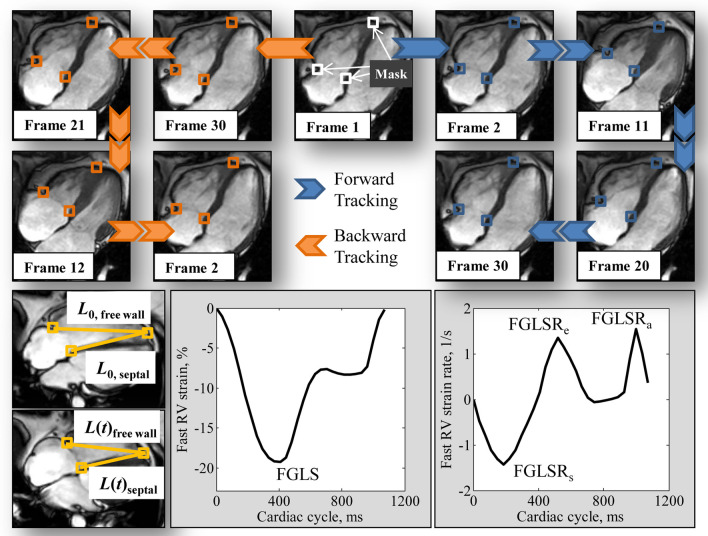
The study enrolled 150 patients (rTOF, n = 75; PAH, n = 75) and 75 healthy controls. RV parameters of interest were fast global longitudinal strain (GLS) and strain rates during systole (GLSR), early diastole (GLSR) and late diastole (GLSR), obtained by tracking the distance from the medial and lateral tricuspid valve insertions to the RV epicardial apex on cine cardiovascular magnetic resonance (CMR).
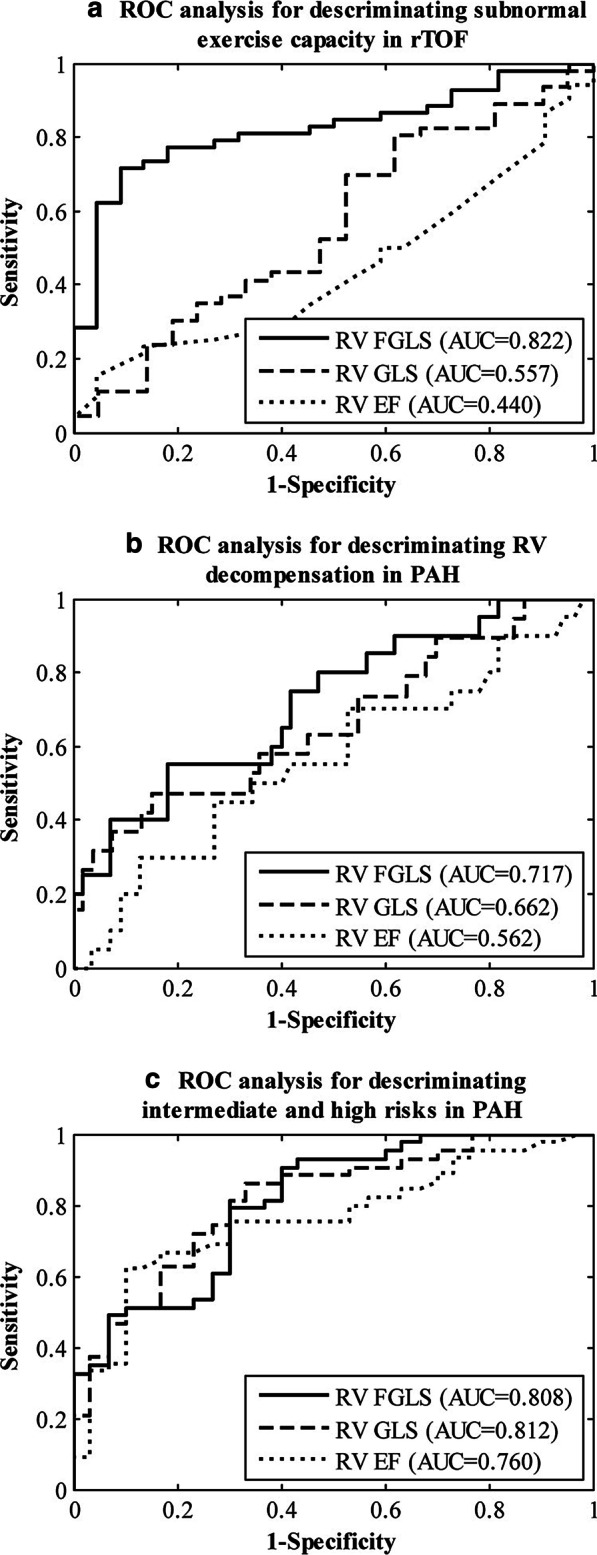
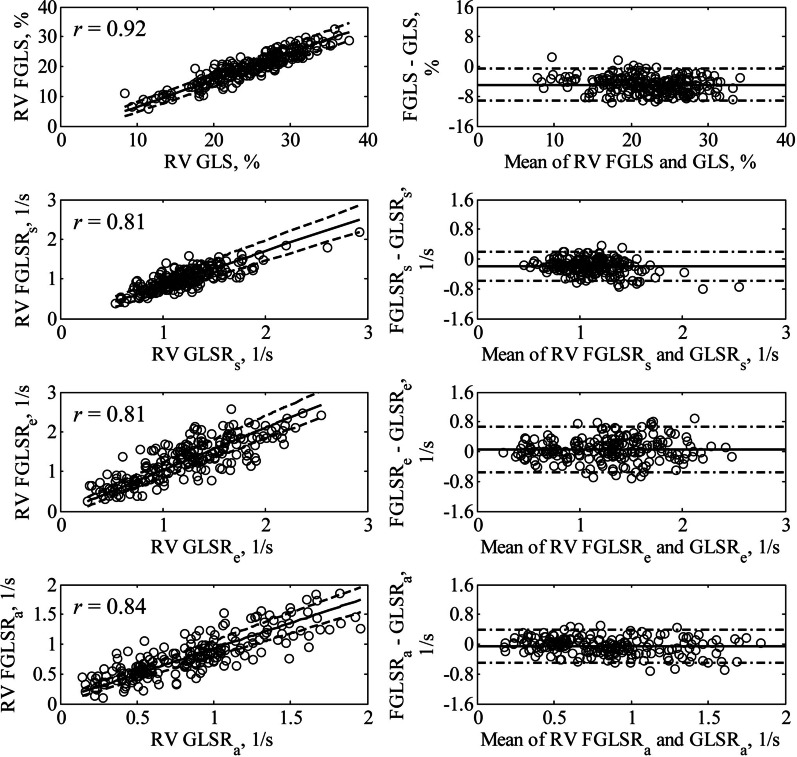
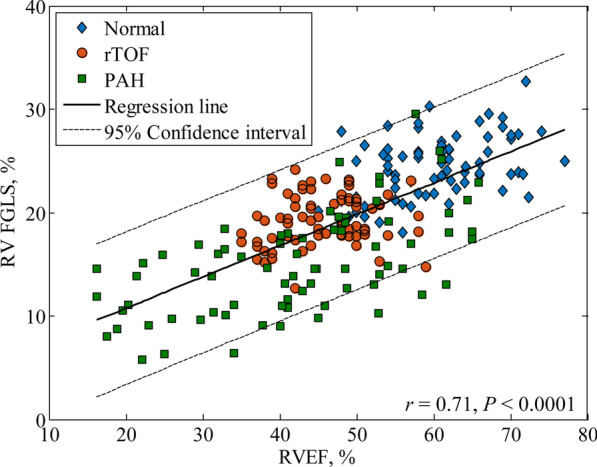
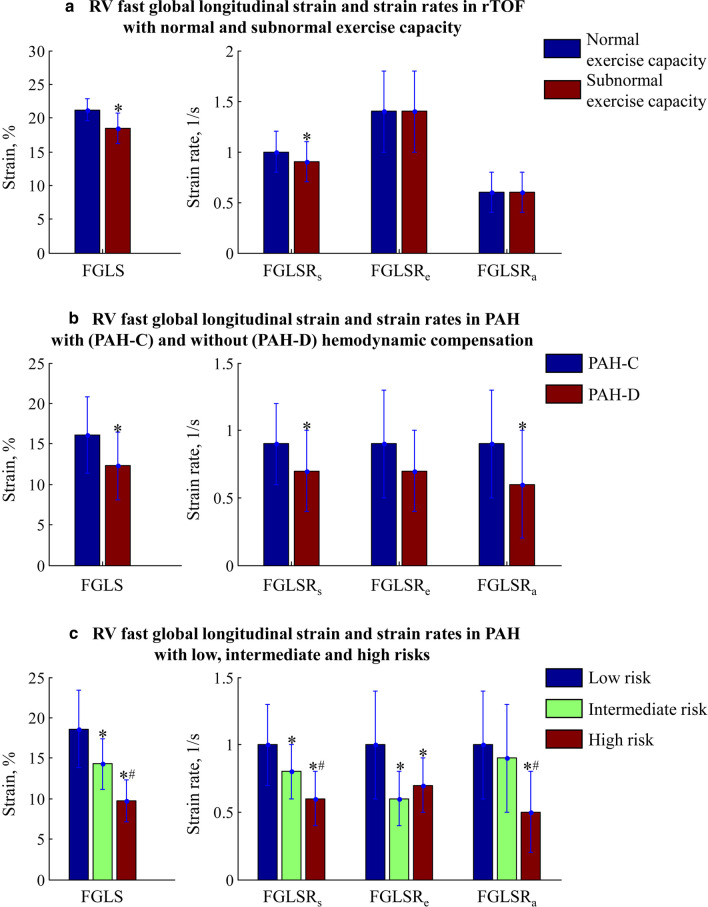
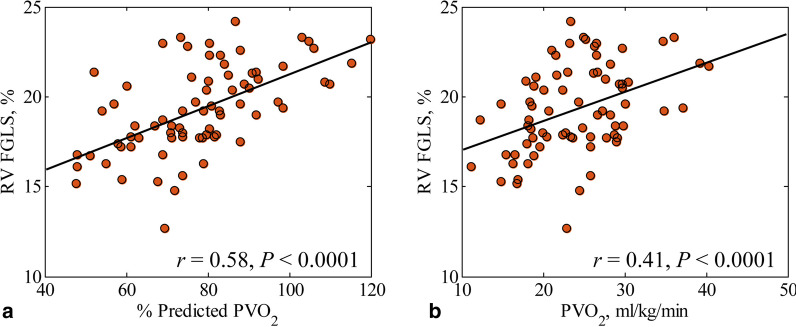
The RV fast GLS exhibited good agreement with strain values obtained by conventional feature tracking approach (bias - 4.9%, error limits (± 2·standard deviation) ± 4.3%) with fast GLS achieving greater reproducibility and requiring reduced analysis time. Mean RV fast GLS was reduced in PAH and rTOF groups compared to healthy controls (PAH < rTOF < healthy controls: 15.1 ± 4.9 < 19.3 ± 2.4 < 24.4 ± 3.0%, all P < 0.001 in pairwise comparisons). In rTOF patients, RV fast GLS was significantly associated with metabolic equivalents, peak oxygen consumption (PVO) and percentage of predicted PVO achieved during cardiopulmonary exercise testing. Lower RV fast GLS was associated with subnormal exercise capacity in rTOF (area under the curve (AUC) = 0.822, sensitivity = 72%, specificity = 91%, cut-off = 19.3%). In PAH patients, reduced RV fast GLS was associated with RV decompensated hemodynamics (AUC = 0.717, sensitivity = 75%, specificity = 58%, cut-off = 14.6%) and higher risk of clinical worsening (AUC = 0.808, sensitivity = 79%, specificity = 70 %, cut-off = 16.0%).
Quantitative RV fast strain and strain rate parameters assessed from CMR identify abnormalities of RV function in rTOF and PAH and are predictive of exercise capacity, RV decompensation and clinical risks in these patients. Trial registry Clinicaltrials.gov: NCT03217240.
心肌变形参数可能提供对右心室(RV)功能障碍的更深入了解。我们使用快速、半自动方法量化 RV 纵向心肌功能,并研究其在修复性法洛四联症(rTOF)和肺动脉高压(PAH)患者中的诊断和预后价值,这两种疾病分别代表 RV 容量和压力过载患者。
这项研究纳入了 150 名患者(rTOF,n = 75;PAH,n = 75)和 75 名健康对照者。通过在心血管磁共振(CMR)电影上跟踪从三尖瓣中隔和外侧瓣插入物到 RV 心尖的距离,获得 RV 感兴趣的参数,包括快速整体纵向应变(GLS)和收缩期(GLSR)、早期舒张期(GLSR)和晚期舒张期(GLSR)的应变率。
RV 快速 GLS 与传统特征跟踪方法获得的应变值具有良好的一致性(偏差为 4.9%,±2·标准偏差内的误差限值为±4.3%),快速 GLS 具有更高的可重复性,且需要的分析时间更短。与健康对照组相比,PAH 和 rTOF 组的 RV 快速 GLS 降低(PAH<rTOF<健康对照组:15.1±4.9<19.3±2.4<24.4±3.0%,所有 P<0.001,两两比较)。在 rTOF 患者中,RV 快速 GLS 与代谢当量、峰值耗氧量(PVO)和心肺运动试验期间达到的预测 PVO 百分比显著相关。RV 快速 GLS 较低与 rTOF 患者运动能力降低相关(曲线下面积(AUC)=0.822,敏感性=72%,特异性=91%,截断值=19.3%)。在 PAH 患者中,RV 快速 GLS 降低与 RV 失代偿性血流动力学相关(AUC=0.717,敏感性=75%,特异性=58%,截断值=14.6%),并且与临床恶化风险增加相关(AUC=0.808,敏感性=79%,特异性=70%,截断值=16.0%)。
从 CMR 评估的 RV 快速应变和应变率参数可识别 rTOF 和 PAH 中 RV 功能障碍,并可预测这些患者的运动能力、RV 失代偿和临床风险。试验注册 Clinicaltrials.gov:NCT03217240。