Department of Plastic Surgery, The First Affiliated Hospital of Jinan University, Guangzhou, 510630, People's Republic of China.
Innovative Technology Research Institute of Plastic Surgery, Guangzhou, 510630, People's Republic of China.
Stem Cell Res Ther. 2021 Mar 31;12(1):220. doi: 10.1186/s13287-021-02288-8.
Mesenchymal stem cells (MSCs) exert positive effects in chronic wounds. However, critical parameters, such as the most effective administration routes, remain unclear. Accordingly, the purpose of this study was to compare the effects of topical and systemic transplantation MSCs on diabetic ischemic wound healing and explored the underlying mechanisms.
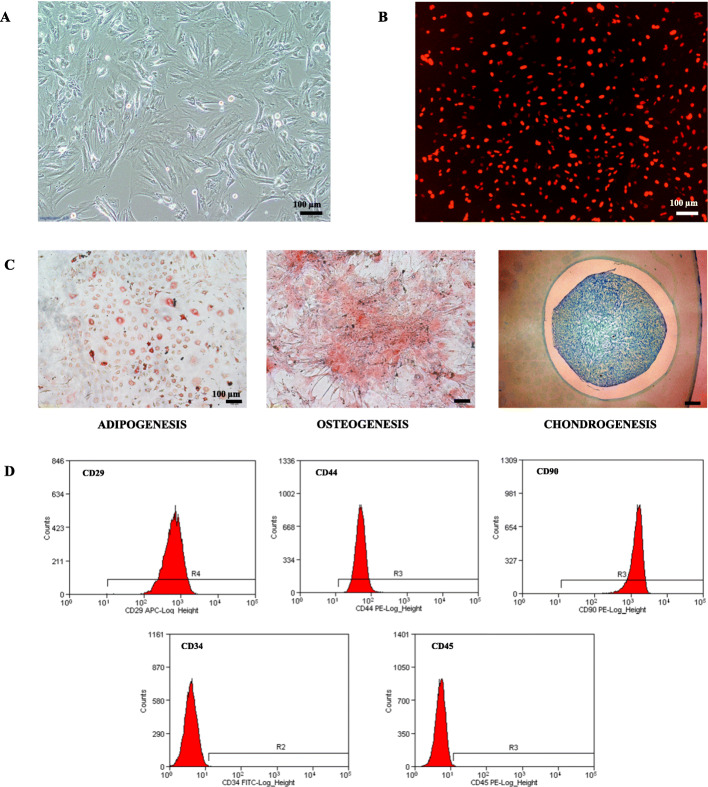
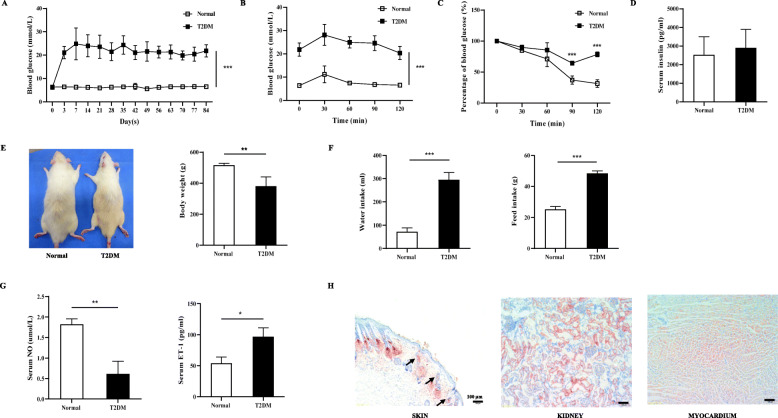
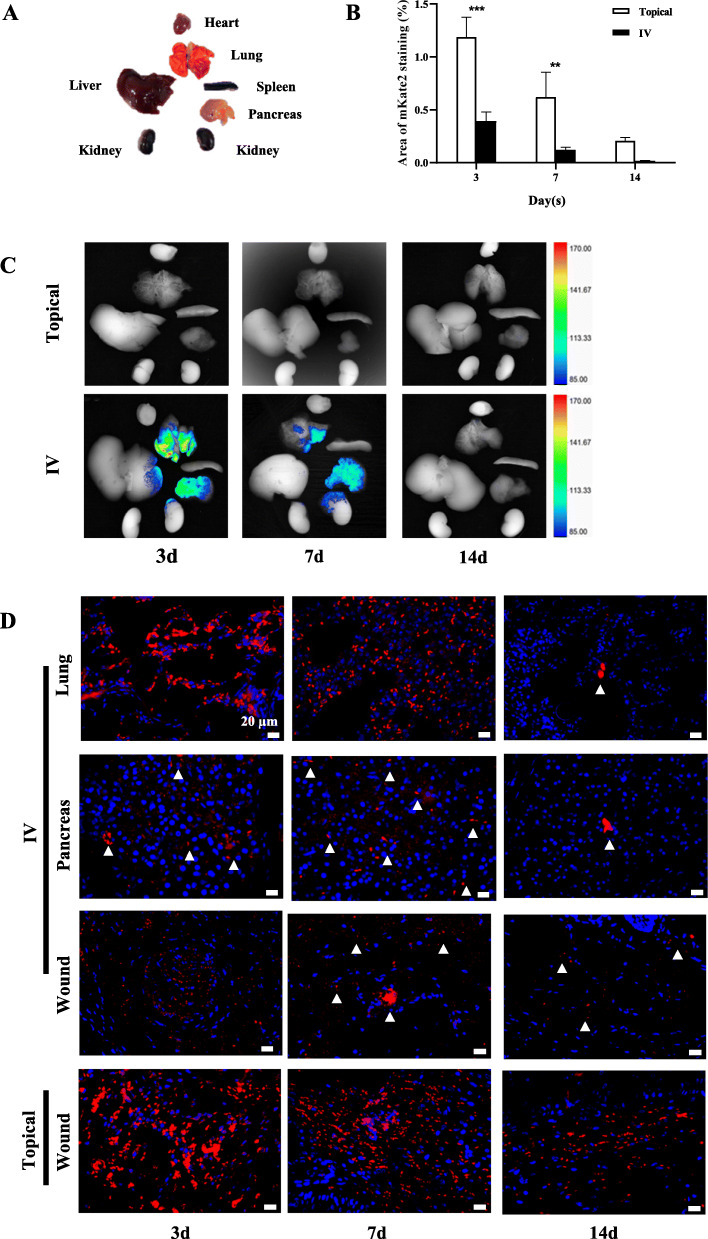
A diabetic ischemic wound model was created on the dorsal foot of type 2 diabetes mellitus (T2DM) rat. Bone marrow-derived mesenchymal stem cells (BM-MSCs) were administered via two routes: topical injection and intravenous (IV) infusion. Wound healing outcomes and blood glucose level were assessed dynamically. Meanwhile, blood flow recovery was evaluated in ischemic gastrocnemius muscles. The homing and transdifferentiation of mKate2-labeled BM-MSCs were assessed by fluorescence imaging and immunohistochemistry (IHC) analysis.
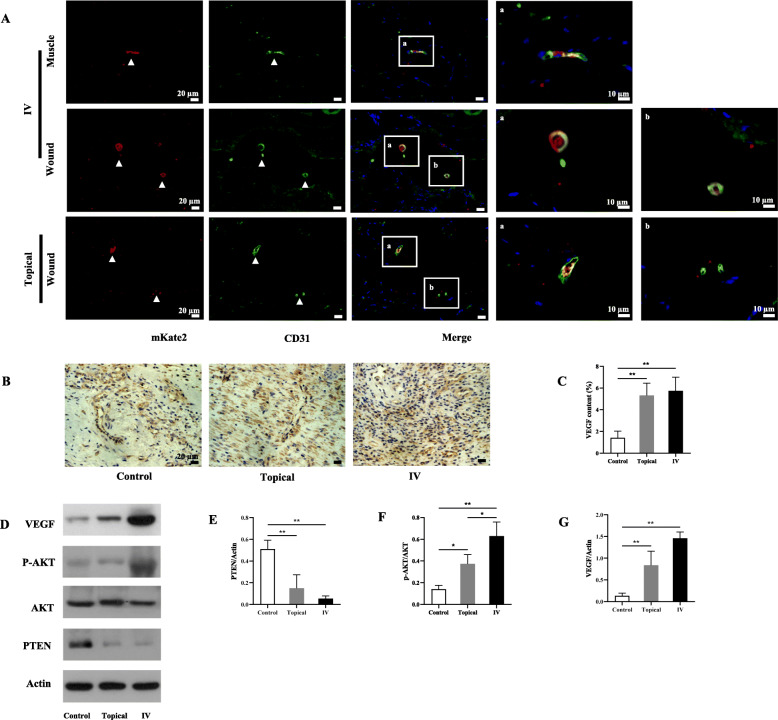
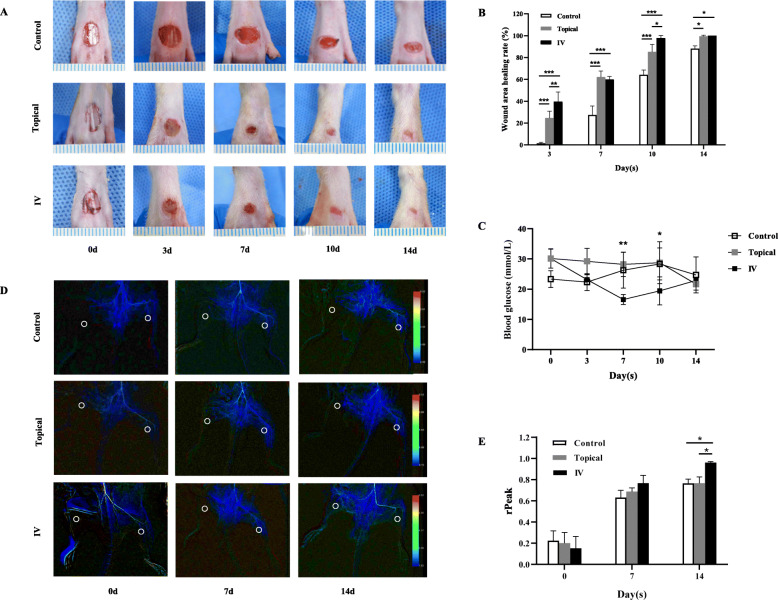
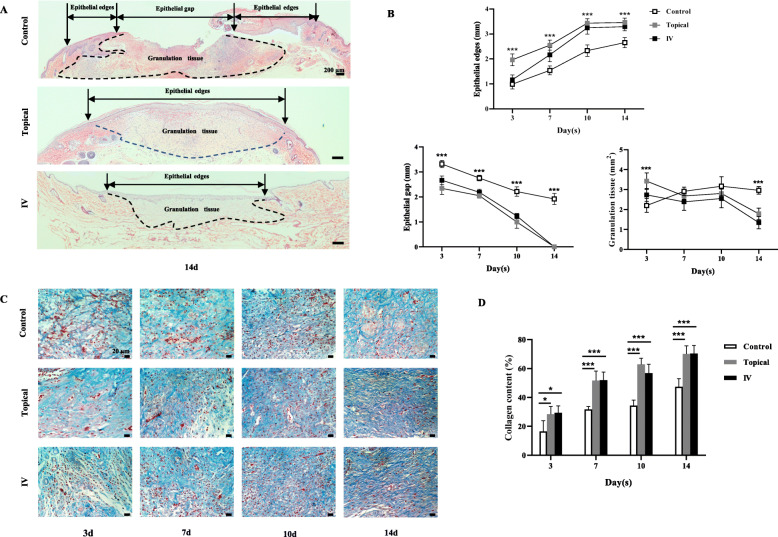
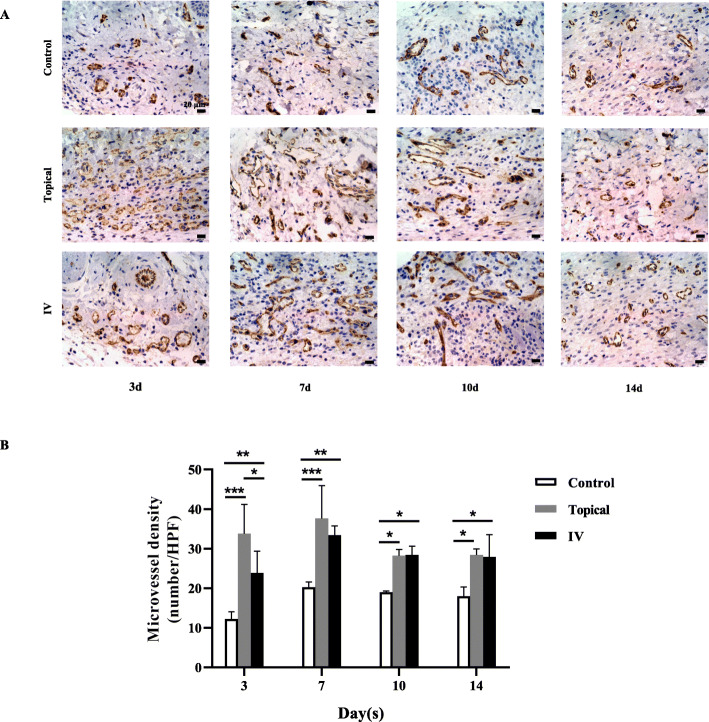
Both topical and systemic treatments had a positive effect on the diabetic ischemic wound showing a significant reduction in wound area at day 14. Histological results showed an increase in the length of epithelial edges, collagen content, microvessel density in the wound bed, and a higher expression of vascular endothelial growth factor (VEGF). Meanwhile, systemic administration can ameliorate hyperglycemia and improve the blood perfusion of the ischemic hindlimb. BM-MSCs administered systemically were found distributed in wounded tissue and transdifferentiated into endothelial cells. Furthermore, BM-MSCs stimulated angiogenesis at wound sites by downregulating phosphatase and tensin homolog (PTEN) and activation of AKT signaling pathway.
The results demonstrated that both transplantation delivery method (topical and systemic) of BM-MSCs accelerated wound healing remarkably under pathological conditions. Nevertheless, systemic administration has the potential to ameliorate hyperglycemia and repair the damaged tissue.
间充质干细胞(MSCs)对慢性创面有积极作用。然而,一些关键参数,如最有效的给药途径,仍不清楚。因此,本研究旨在比较局部和系统移植间充质干细胞对糖尿病缺血性创面愈合的影响,并探讨其潜在机制。
在 2 型糖尿病(T2DM)大鼠的足部背侧建立糖尿病缺血性创面模型。通过两种途径给予骨髓间充质干细胞(BM-MSCs):局部注射和静脉(IV)输注。动态评估创面愈合情况和血糖水平。同时,评估缺血性比目鱼肌的血流恢复情况。通过荧光成像和免疫组织化学(IHC)分析评估 mKate2 标记的 BM-MSCs 的归巢和转分化情况。
局部和全身治疗对糖尿病缺血性创面均有积极作用,第 14 天创面面积明显减小。组织学结果显示上皮边缘长度、胶原含量、创面床微血管密度增加,血管内皮生长因子(VEGF)表达升高。同时,全身给药可改善高血糖并改善缺血后肢的血液灌注。系统给予的 BM-MSCs 分布在受伤组织中,并向内皮细胞分化。此外,BM-MSCs 通过下调磷酸酶和张力蛋白同源物(PTEN)和激活 AKT 信号通路来刺激血管生成。
这些结果表明,在病理条件下,BM-MSCs 的两种移植(局部和全身)均能显著加速创面愈合。然而,全身给药具有改善高血糖和修复受损组织的潜力。