Division of Microbial Ecology, Centre for Microbiology and Environmental Systems Science, University of Vienna, Vienna, Austria.
FFoQSI GmbH, Austrian Competence Centre for Feed and Food Quality Safety & Innovation, Tulln, Austria.
ISME J. 2021 Sep;15(9):2779-2791. doi: 10.1038/s41396-021-00968-0. Epub 2021 Mar 31.
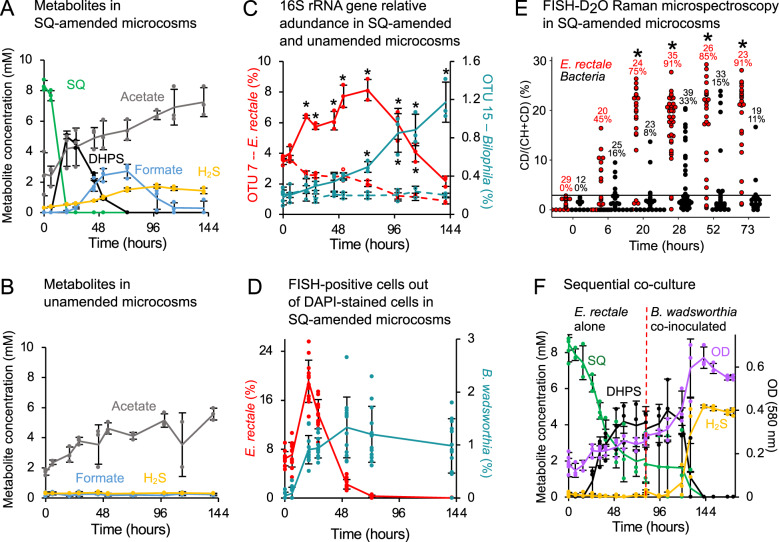
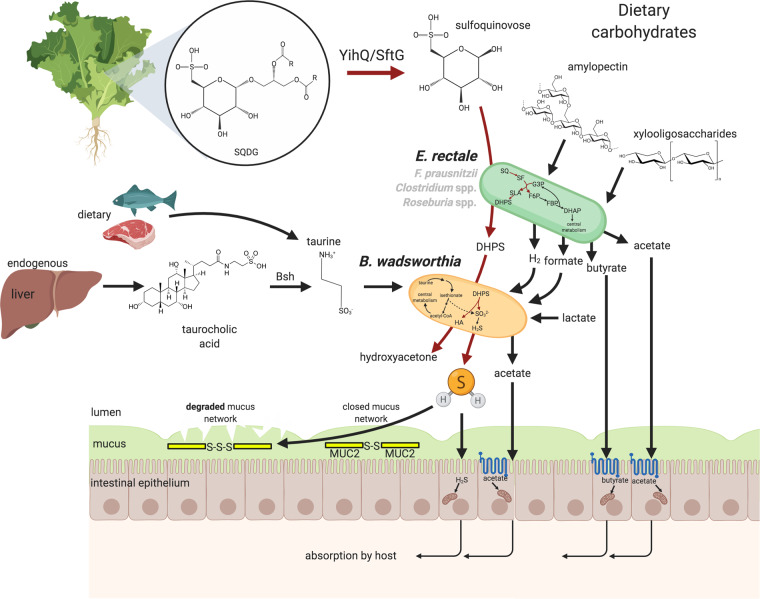
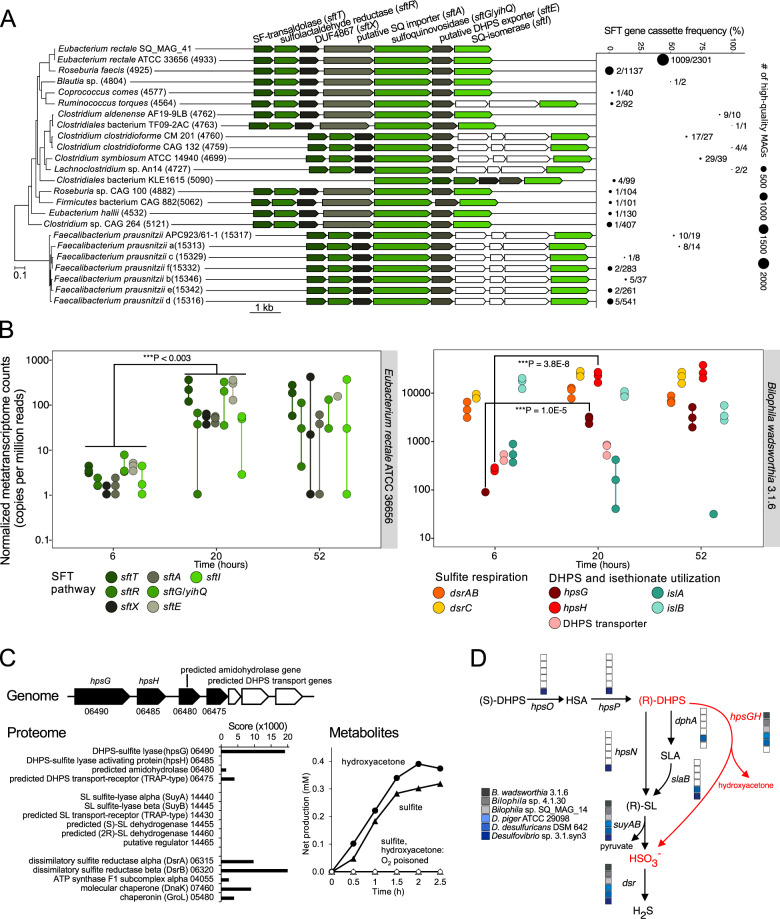
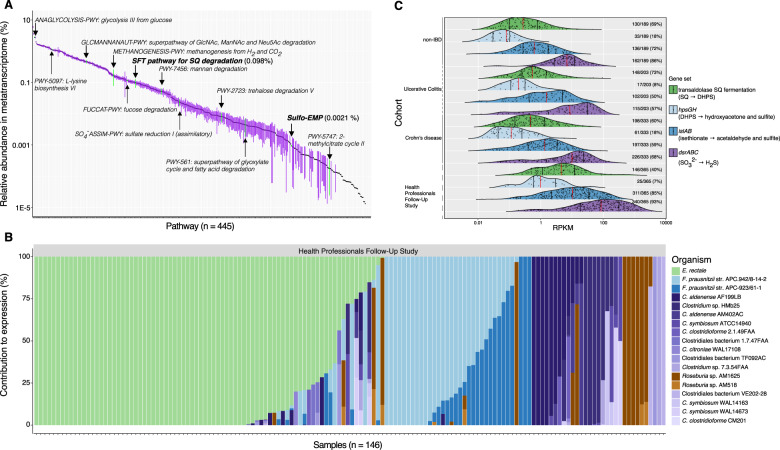
Responses of the microbiota to diet are highly personalized but mechanistically not well understood because many metabolic capabilities and interactions of human gut microorganisms are unknown. Here we show that sulfoquinovose (SQ), a sulfonated monosaccharide omnipresent in green vegetables, is a selective yet relevant substrate for few but ubiquitous bacteria in the human gut. In human feces and in defined co-culture, Eubacterium rectale and Bilophila wadsworthia used recently identified pathways to cooperatively catabolize SQ with 2,3-dihydroxypropane-1-sulfonate as a transient intermediate to hydrogen sulfide (HS), a key intestinal metabolite with disparate effects on host health. SQ-degradation capability is encoded in almost half of E. rectale genomes but otherwise sparsely distributed among microbial species in the human intestine. However, re-analysis of fecal metatranscriptome datasets of four human cohorts showed that SQ degradation (mostly from E. rectale and Faecalibacterium prausnitzii) and HS production (mostly from B. wadsworthia) pathways were expressed abundantly across various health states, demonstrating that these microbial functions are core attributes of the human gut. The discovery of green-diet-derived SQ as an exclusive microbial nutrient and an additional source of HS in the human gut highlights the role of individual dietary compounds and organosulfur metabolism on microbial activity and has implications for precision editing of the gut microbiota by dietary and prebiotic interventions.
微生物群对饮食的反应具有高度的个体性,但由于人类肠道微生物的许多代谢能力和相互作用尚不清楚,因此其机制仍未得到很好的理解。在这里,我们表明,磺基奎诺糖(SQ),一种存在于绿色蔬菜中的磺化单糖,是人类肠道中少数但普遍存在的细菌的选择性但相关的底物。在人类粪便和定义的共培养物中,真细菌和Bilophila wadsworthia 使用最近确定的途径来共同代谢 SQ,以 2,3-二羟基丙烷-1-磺酸作为瞬态中间体生成硫化氢(HS),HS 是一种对宿主健康有不同影响的关键肠道代谢物。SQ 降解能力几乎编码在 E. rectale 基因组的一半中,但在人类肠道中的微生物物种中分布稀疏。然而,对来自四个人类队列的粪便宏转录组数据集的重新分析表明,SQ 降解(主要来自 E. rectale 和 Faecalibacterium prausnitzii)和 HS 产生(主要来自 B. wadsworthia)途径在各种健康状态下都大量表达,这表明这些微生物功能是人类肠道的核心属性。发现源自绿色饮食的 SQ 是一种独特的微生物营养物和人类肠道中 HS 的另一个来源,这突出了个体饮食化合物和有机硫代谢对微生物活性的作用,并暗示通过饮食和益生元干预对肠道微生物群进行精确编辑。