Zhang Junxiu, Mao Ke, Gu Qing, Wu Xingwei
Shanghai Key Laboratory of Ocular Fundus Diseases, Shanghai Engineering Center for Visual Science and Photomedicine, Department of Ophthalmology, Shanghai General Hospital, Shanghai Jiao Tong University School of Medicine, Shanghai, China.
Department of Ophthalmology, Renji Hospital, Shanghai Jiao Tong University School of Medicine, Shanghai, China.
Front Pharmacol. 2021 Mar 15;12:638215. doi: 10.3389/fphar.2021.638215. eCollection 2021.
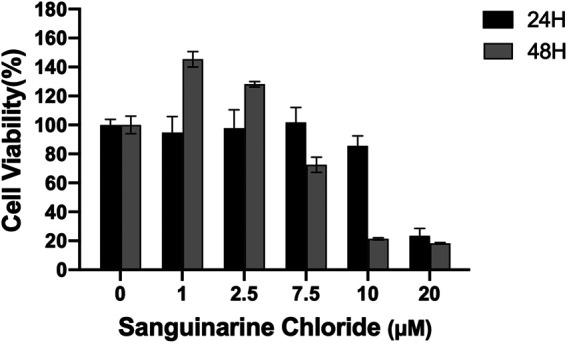
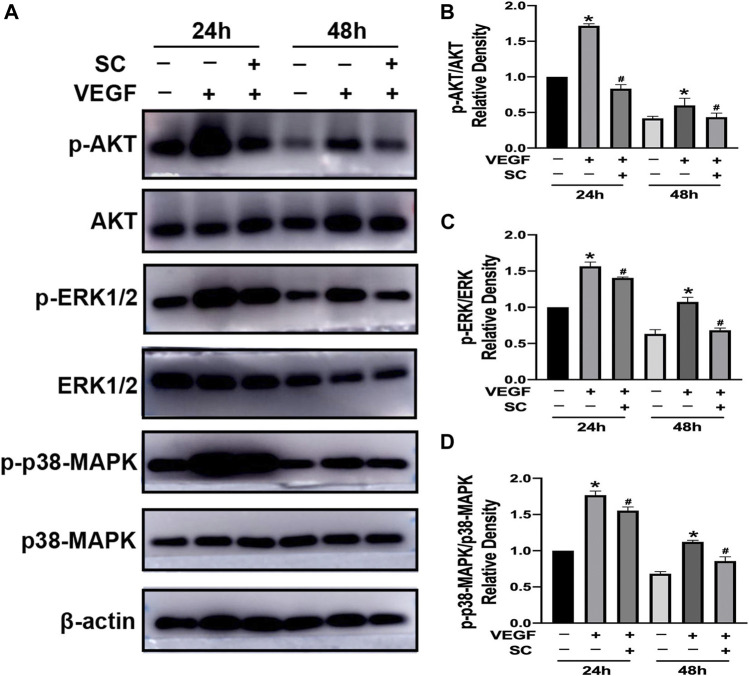
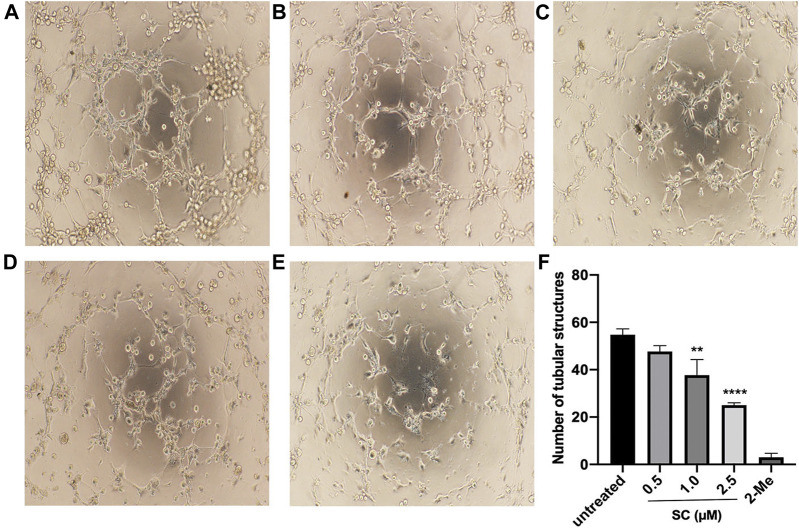
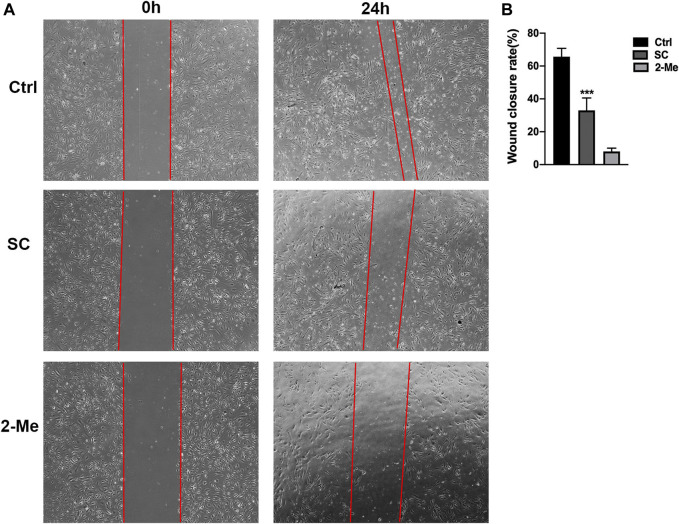
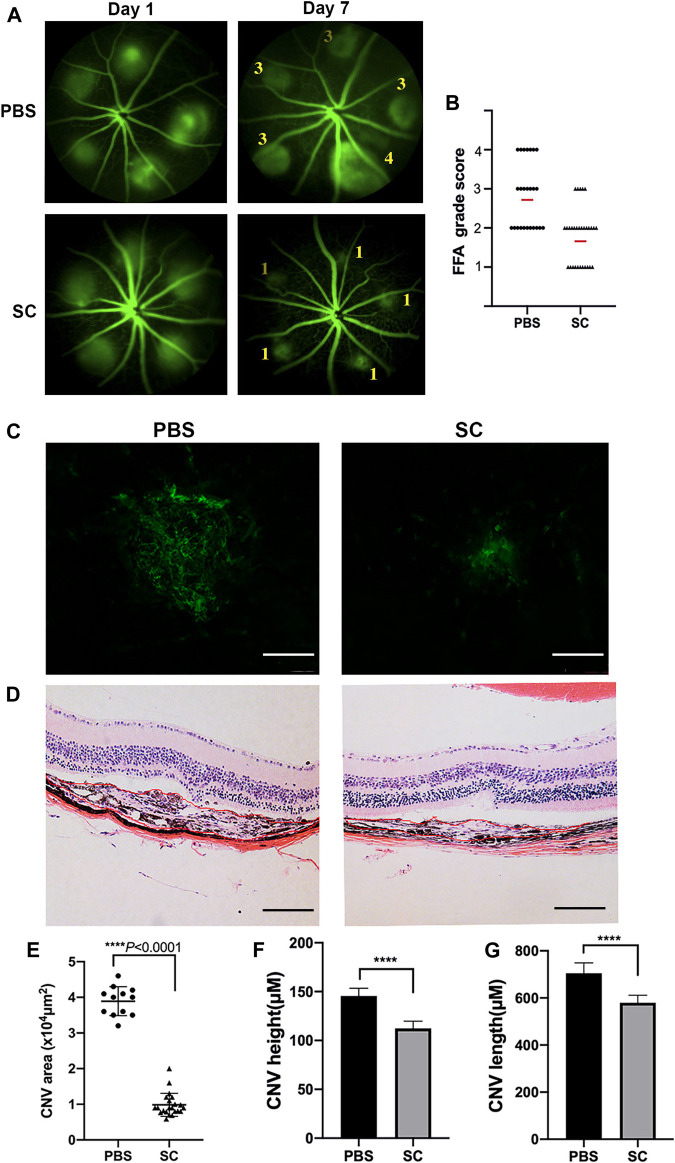
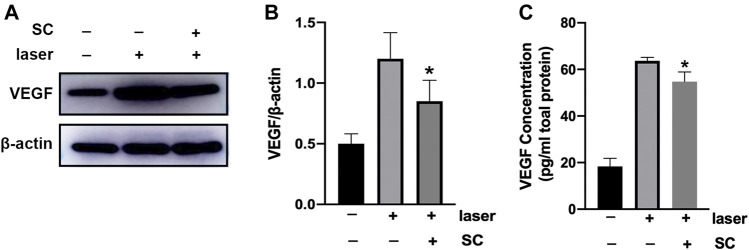
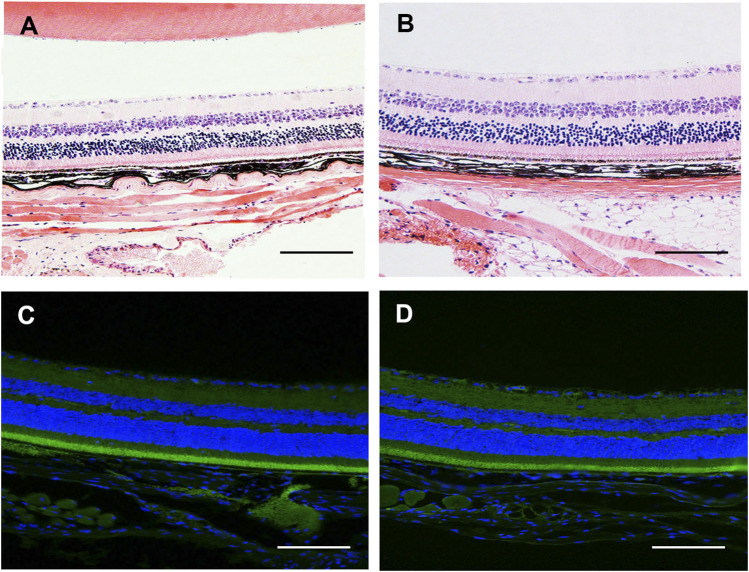
The purpose of this study is to investigate the antiangiogenic effect of Sanguinarine chloride (SC) on models of age-related macular degeneration (AMD) both and . Choroidal neovascularization (CNV) was conducted by laser photocoagulation in C57BL6/J mice. SC (2.5 μM, 2 μl/eye) was intravitreally injected immediately after laser injury. The control group received an equal amount of PBS. 7 days after laser injury, CNV severity was evaluated using fundus fluorescein angiography, hematoxylin and eosin (H&E) staining, and choroid flat-mount staining. Vascular endothelial growth factor (VEGF) expression in the retina/choroid complex was measured by western blot analysis and ELISA kit. , human retinal microvascular endothelial cells (HRMECs) were used to investigate the effects of SC on cell tube formation, migration, and cytotoxicity. The expression of VEGF-induced expression of extracellular signal-regulated kinase (ERK)1/2, protein kinase B (AKT), mitogen-activated protein kinases (p38-MAPK) and laser induced VEGF expression were also analyzed. SC (≤2.5 μM) was safe both and . Intravitreal injection of SC restrained the formation of laser induced CNV in mice and decreased VEGF expression in the laser site of the retina/choroid complex. , SC inhibited VEGF-induced tube formation and endothelial cell migration by decreasing the phosphorylation of AKT, ERK1/2, and p38-MAPK in HRMECs. SC could inhibit laser-induced CNV formation via down-regulating VEGF expression and restrain the VEGF-induced tube formation and endothelial migration. Therefore, SC could be a potential candidate for the treatment of wet AMD.
本研究的目的是研究氯化血根碱(SC)对年龄相关性黄斑变性(AMD)模型的抗血管生成作用。通过对C57BL6/J小鼠进行激光光凝诱导脉络膜新生血管(CNV)。激光损伤后立即玻璃体内注射SC(2.5 μM,2 μl/眼)。对照组注射等量的PBS。激光损伤7天后,使用眼底荧光血管造影、苏木精和伊红(H&E)染色以及脉络膜铺片染色评估CNV严重程度。通过蛋白质印迹分析和ELISA试剂盒检测视网膜/脉络膜复合体中血管内皮生长因子(VEGF)的表达。此外,使用人视网膜微血管内皮细胞(HRMECs)研究SC对细胞管形成、迁移和细胞毒性的影响。还分析了VEGF诱导的细胞外信号调节激酶(ERK)1/2、蛋白激酶B(AKT)、丝裂原活化蛋白激酶(p38-MAPK)的表达以及激光诱导的VEGF表达。SC(≤2.5 μM)在体内和体外都是安全的。玻璃体内注射SC可抑制小鼠激光诱导的CNV形成,并降低视网膜/脉络膜复合体激光部位的VEGF表达。此外,SC通过降低HRMECs中AKT、ERK1/2和p38-MAPK的磷酸化来抑制VEGF诱导的管形成和内皮细胞迁移。SC可通过下调VEGF表达抑制激光诱导的CNV形成,并抑制VEGF诱导的管形成和内皮迁移。因此,SC可能是治疗湿性AMD的潜在候选药物。