Key Laboratory of Immune Mechanism and Intervention on Serious Disease in Hebei Province, Department of Immunology, Hebei Medical University, Shijiazhuang, China.
Center Laboratory, Affiliated Hospital of Hebei University, Baoding, China.
Front Cell Infect Microbiol. 2021 Mar 15;11:628275. doi: 10.3389/fcimb.2021.628275. eCollection 2021.
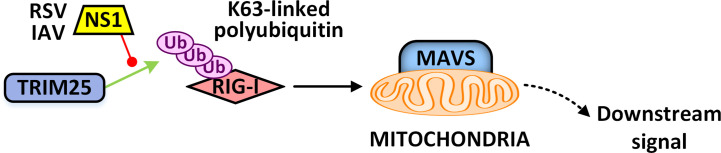
The Tripartite motif (TRIM) protein family, which contains over 80 members in human sapiens, is the largest subfamily of the RING-type E3 ubiquitin ligase family. It is implicated in regulating various cellular functions, including cell cycle process, autophagy, and immune response. The dysfunction of TRIMs may lead to numerous diseases, such as systemic lupus erythematosus (SLE). Lots of studies in recent years have demonstrated that many TRIM proteins exert antiviral roles. TRIM proteins could affect viral replication by regulating the signaling pathways of antiviral innate immune responses. Besides, TRIM proteins can directly target viral components, which can lead to the degradation or functional inhibition of viral protein through degradative or non-degradative mechanisms and consequently interrupt the viral lifecycle. However, new evidence suggests that some viruses may manipulate TRIM proteins for their replication. Here, we summarize the latest discoveries on the interactions between TRIM protein and virus, especially TRIM proteins' role in the signaling pathway of antiviral innate immune response and the direct "game" between them.
三基序蛋白(TRIM)家族是 RING 型 E3 泛素连接酶家族中最大的亚家族,包含超过 80 个人类蛋白。它参与调节多种细胞功能,包括细胞周期过程、自噬和免疫反应。TRIM 功能障碍可能导致许多疾病,如系统性红斑狼疮(SLE)。近年来的大量研究表明,许多 TRIM 蛋白具有抗病毒作用。TRIM 蛋白可以通过调节抗病毒先天免疫反应的信号通路来影响病毒复制。此外,TRIM 蛋白可以直接针对病毒成分,通过降解或非降解机制导致病毒蛋白的降解或功能抑制,从而中断病毒生命周期。然而,新的证据表明,一些病毒可能操纵 TRIM 蛋白进行复制。在这里,我们总结了 TRIM 蛋白与病毒之间相互作用的最新发现,特别是 TRIM 蛋白在抗病毒先天免疫反应信号通路中的作用以及它们之间的直接“博弈”。