Manafzadeh Armita R
Department of Ecology and Evolutionary Biology, Brown University, Providence, RI 02912, USA.
Integr Org Biol. 2020 Nov 12;2(1):obaa041. doi: 10.1093/iob/obaa041. eCollection 2020.
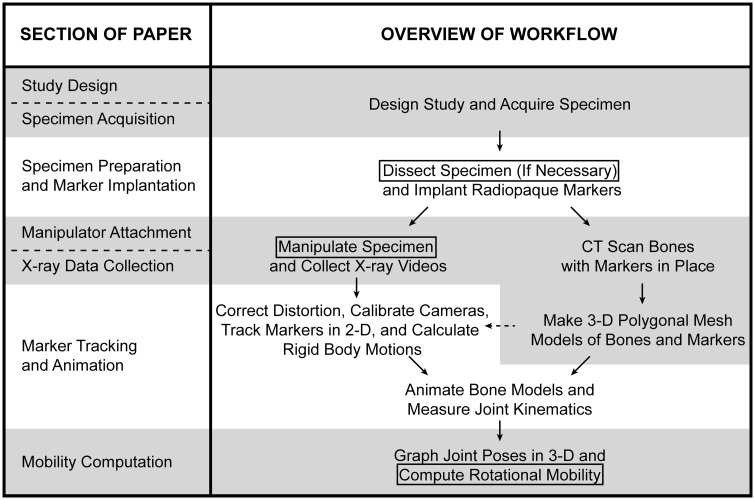
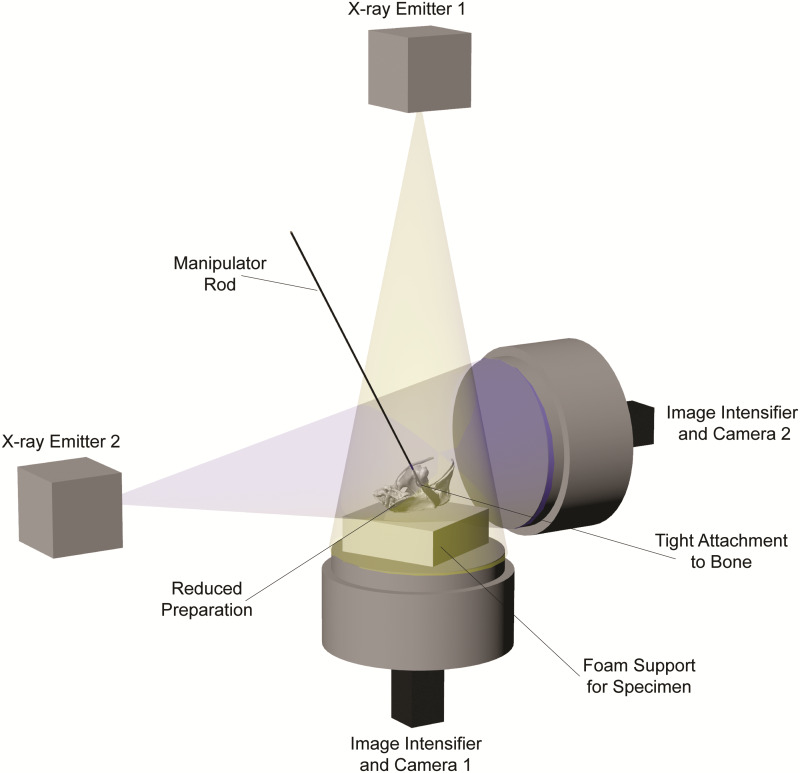
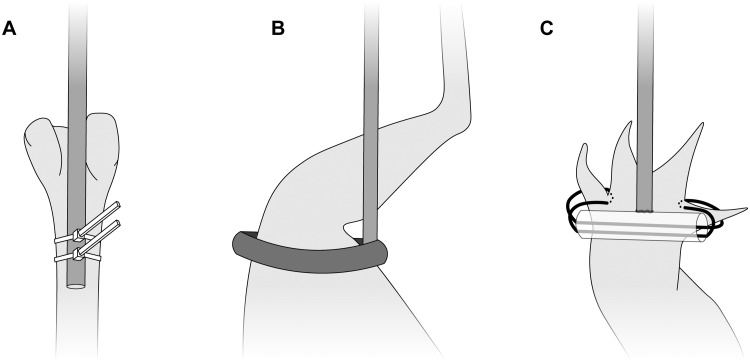
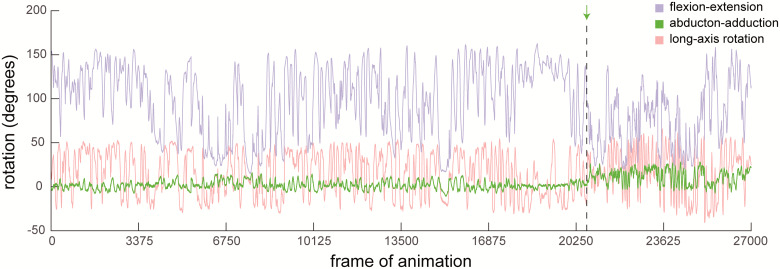
X-Ray Reconstruction of Moving Morphology (XROMM), though traditionally used for studies of skeletal kinematics, can also be used to precisely and accurately measure range of motion from cadaveric manipulations. The workflow for these studies is holistically similar to the XROMM workflow but presents several unique challenges. This paper aims to serve as a practical guide by walking through each step of the XROMM process: how to acquire and prepare cadaveric specimens, how to manipulate specimens to collect X-ray data, and how to use these data to compute joint rotational mobility. Along the way, it offers recommendations for best practices and for avoiding common pitfalls to ensure a successful study.
移动形态X射线重建技术(XROMM),尽管传统上用于骨骼运动学研究,但也可用于精确测量尸体操作的运动范围。这些研究的工作流程与XROMM工作流程总体相似,但也存在一些独特的挑战。本文旨在通过逐步介绍XROMM过程的每个步骤,提供一份实用指南:如何获取和准备尸体标本,如何操作标本以收集X射线数据,以及如何使用这些数据计算关节旋转灵活性。在此过程中,它还提供了最佳实践建议以及避免常见陷阱的方法,以确保研究成功。