Department of Obstetrics and Gynecology, Faculty of Medicine, The University of Tokyo, Tokyo, Japan.
Department of Obstetrics and Gynecology, Tokyo Metropolitan Bokutoh Hospital, Tokyo, Japan.
Cancer Sci. 2021 Jun;112(6):2493-2503. doi: 10.1111/cas.14907. Epub 2021 May 1.
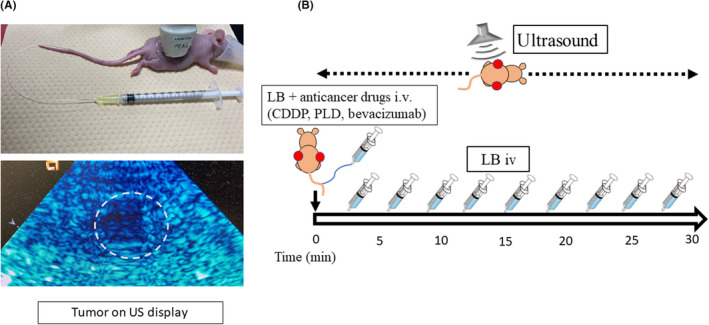
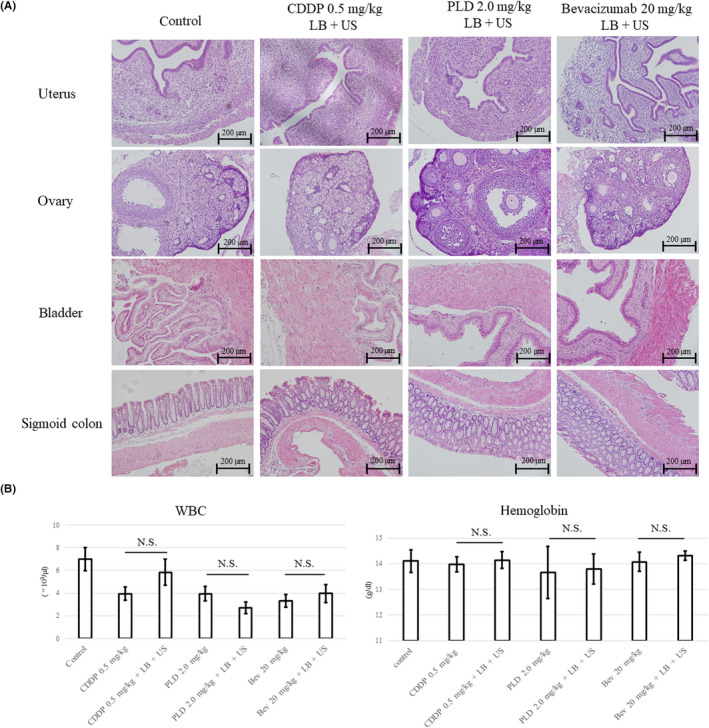
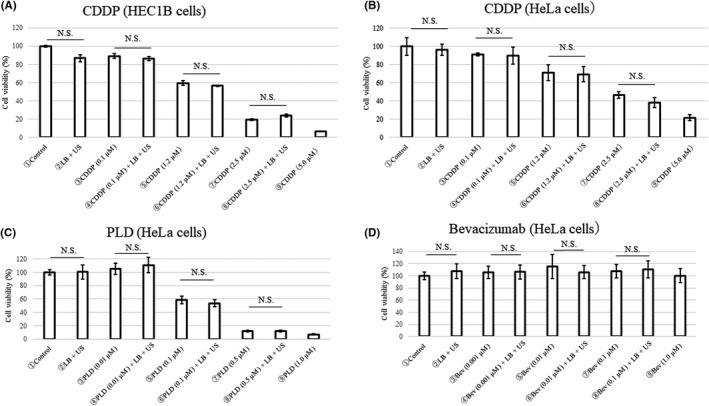
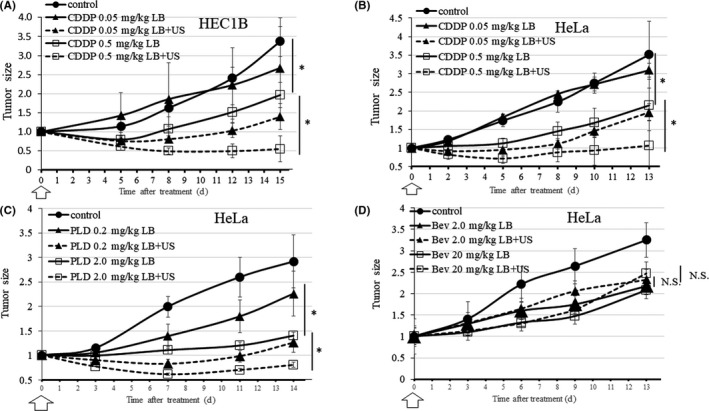
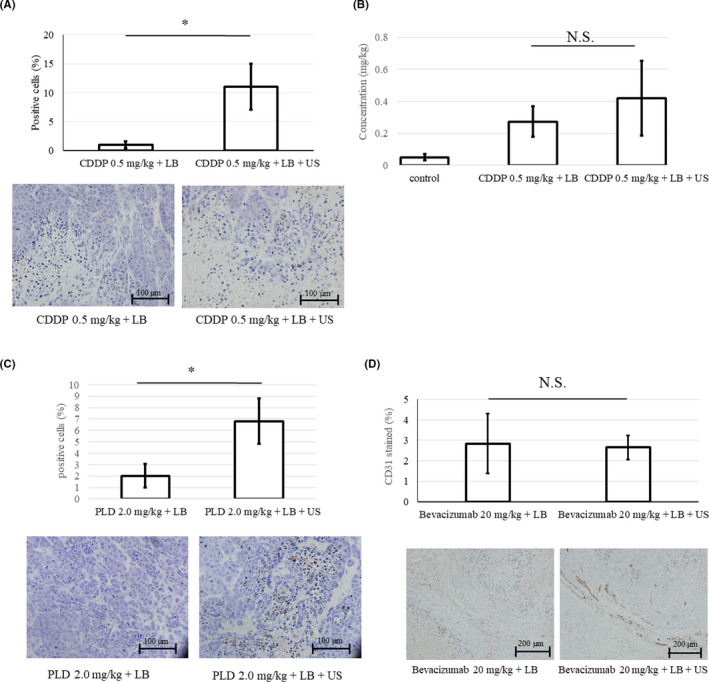
Chemotherapy plays an important role in the treatment of patients with gynecological cancers. Delivering anticancer drugs effectively to tumor cells with just few side effects is key in cancer treatment. Lipid bubbles (LB) are compounds that increase the vascular permeability of the tumor under diagnostic ultrasound (US) exposure and enable the effective transport of drugs to tumor cells. The aim of our study was to establish a novel drug delivery technique for chemotherapy and to identify the most effective anticancer drugs for the bubble US-mediated drug delivery system (BUS-DDS) in gynecological cancer treatments. We constructed xenograft models using cervical cancer (HeLa) and uterine endometrial cancer (HEC1B) cell lines. Lipid bubbles were injected i.v., combined with either cisplatin (CDDP), pegylated liposomal doxorubicin (PLD), or bevacizumab, and US was applied to the tumor. We compared the enhanced chemotherapeutic effects of these drugs and determined the optimal drugs for BUS-DDS. Tumor volume reduction of HeLa and HEC1B xenografts following cisplatin treatment was significantly enhanced by BUS-DDS. Both CDDP and PLD significantly enhanced the antitumor effects of BUS-DDS in HeLa tumors; however, volume reduction by BUS-DDS was insignificant when combined with bevacizumab, a humanized anti-vascular endothelial growth factor mAb. The BUS-DDS did not cause any severe adverse events and significantly enhanced the antitumor effects of cytotoxic drugs. The effects of bevacizumab, which were not as dose-dependent as those of the two drugs used prior, were minimal. Our data suggest that BUS-DDS technology might help achieve "reinforced targeting" in the treatment of gynecological cancers.
化疗在妇科癌症患者的治疗中起着重要作用。将抗癌药物有效地递送到肿瘤细胞,同时副作用较少,是癌症治疗的关键。脂质体(LB)是一种化合物,在诊断超声(US)暴露下可增加肿瘤的血管通透性,并使药物有效地输送到肿瘤细胞。我们的研究目的是建立一种新的化疗药物递送技术,并确定用于妇科癌症治疗的LB-US 介导的药物递送系统(BUS-DDS)中最有效的抗癌药物。我们使用宫颈癌(HeLa)和子宫内膜癌(HEC1B)细胞系构建了异种移植模型。静脉内注射脂质体,与顺铂(CDDP)、聚乙二醇化脂质体阿霉素(PLD)或贝伐单抗联合,并对肿瘤施加 US。我们比较了这些药物增强化疗效果,并确定了 BUS-DDS 的最佳药物。顺铂治疗后,HeLa 和 HEC1B 异种移植瘤的体积减少明显通过 BUS-DDS 增强。CDDP 和 PLD 均显著增强了 BUS-DDS 在 HeLa 肿瘤中的抗肿瘤作用;然而,当与贝伐单抗(一种人源化抗血管内皮生长因子 mAb)联合使用时,BUS-DDS 对肿瘤体积的减少作用不明显。BUS-DDS 未引起任何严重的不良反应,并显著增强了细胞毒性药物的抗肿瘤作用。与之前使用的两种药物相比,贝伐单抗的作用不那么依赖于剂量,其作用最小。我们的数据表明,BUS-DDS 技术可能有助于实现妇科癌症治疗中的“强化靶向”。