Department of Molecular Biology, Princeton University, Princeton, New Jersey, United States of America.
Lewis-Sigler Institute for Integrative Genomics, Princeton University, Princeton, New Jersey, United States of America.
PLoS Genet. 2021 Apr 1;17(4):e1009336. doi: 10.1371/journal.pgen.1009336. eCollection 2021 Apr.
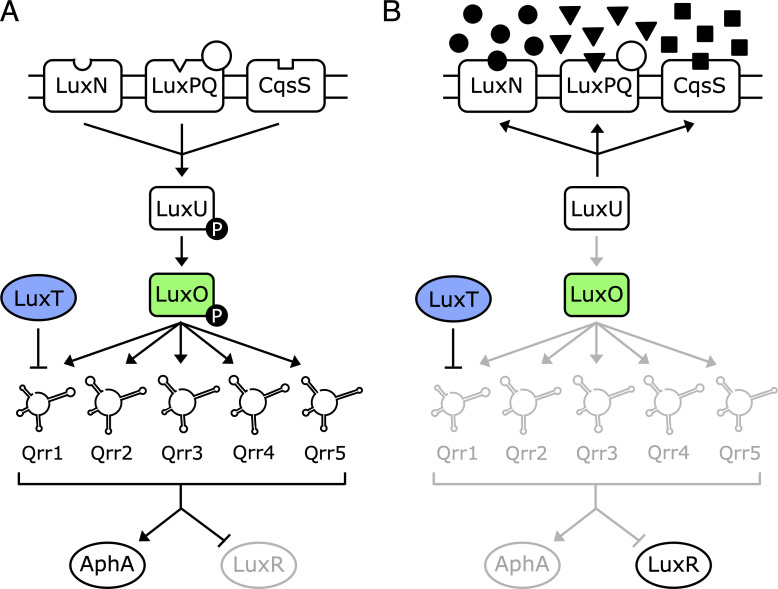
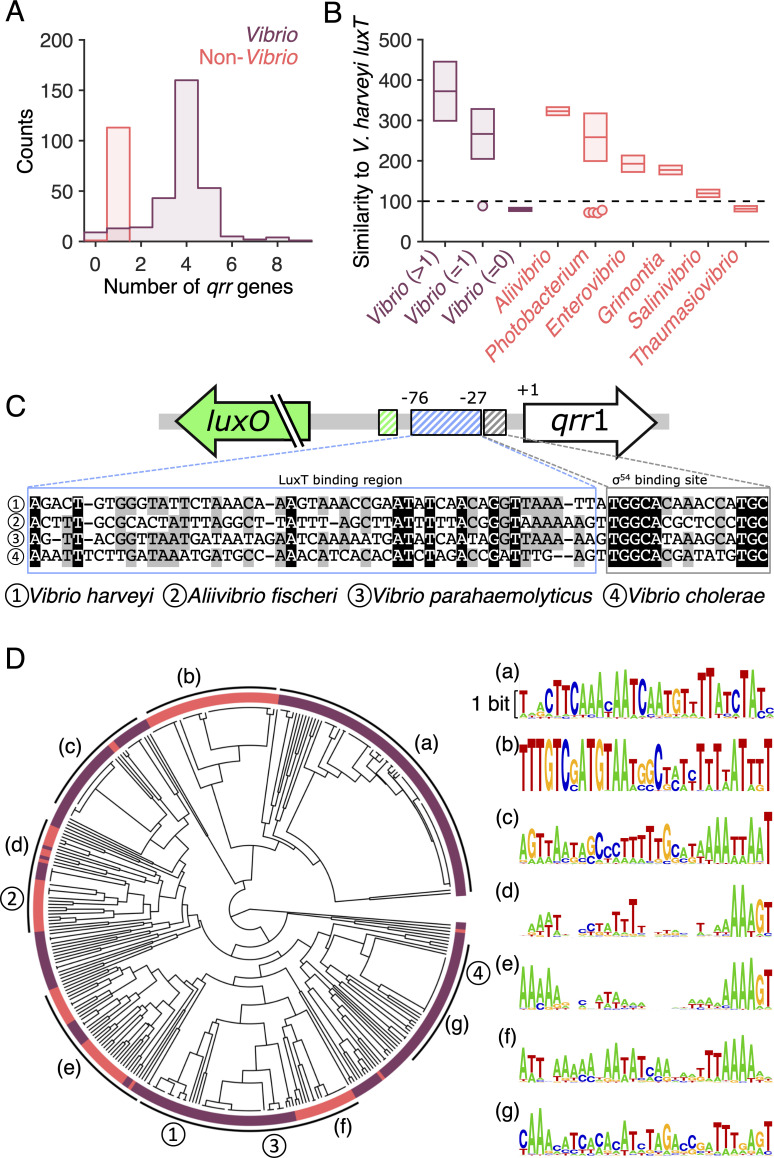
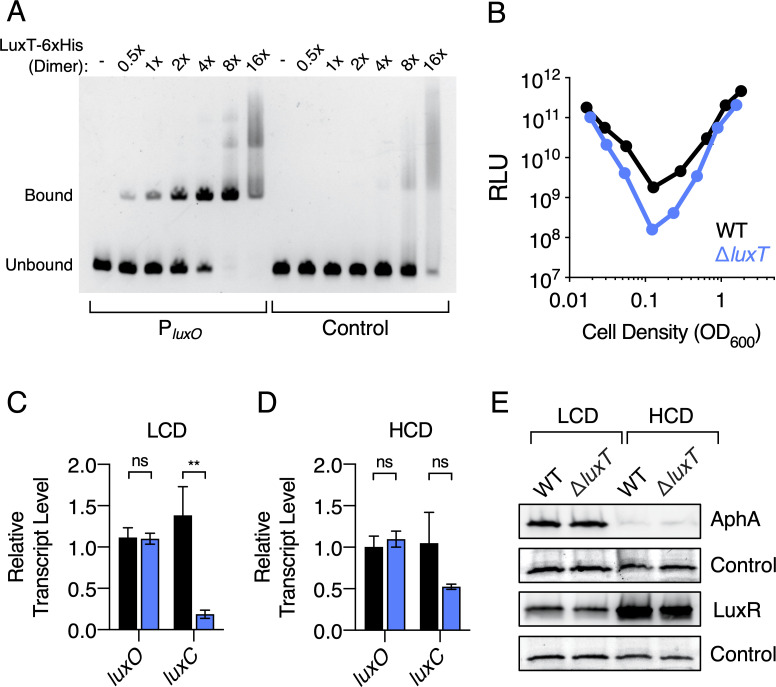
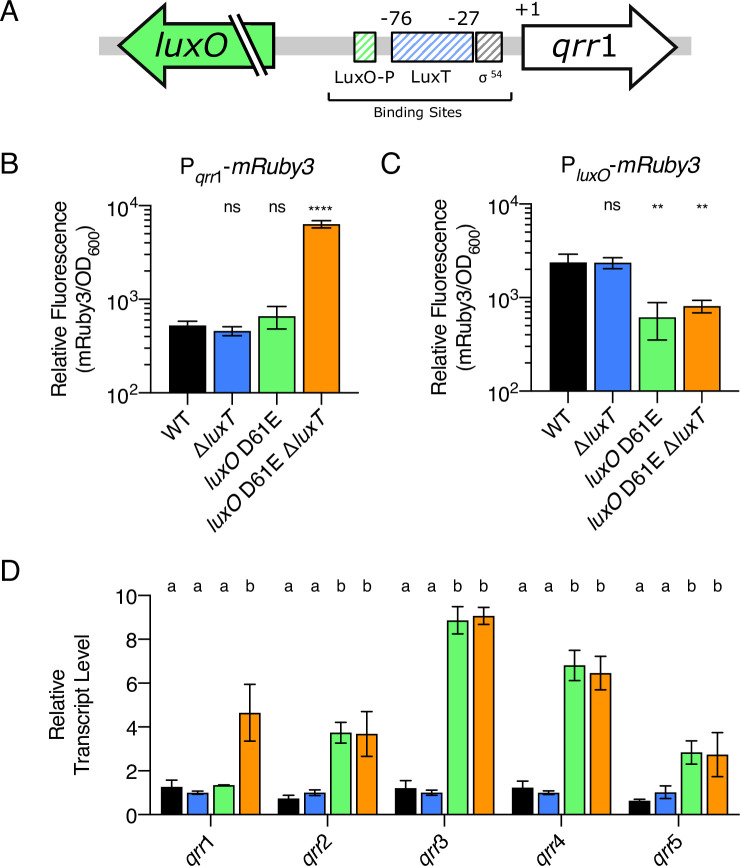
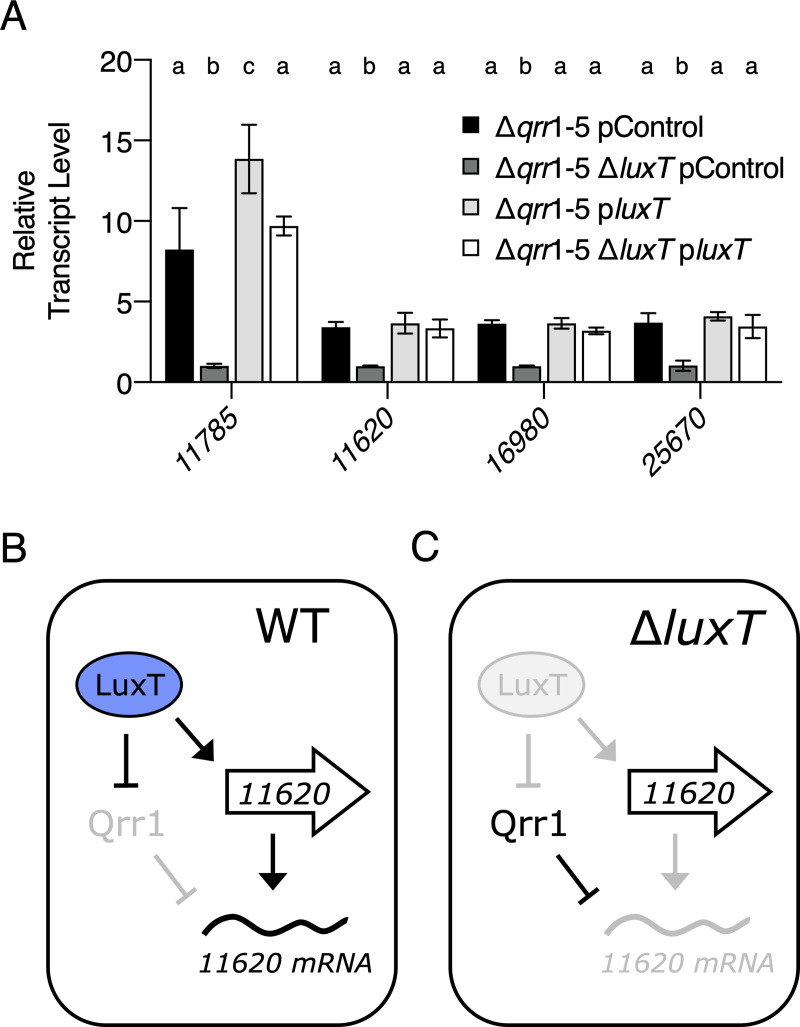
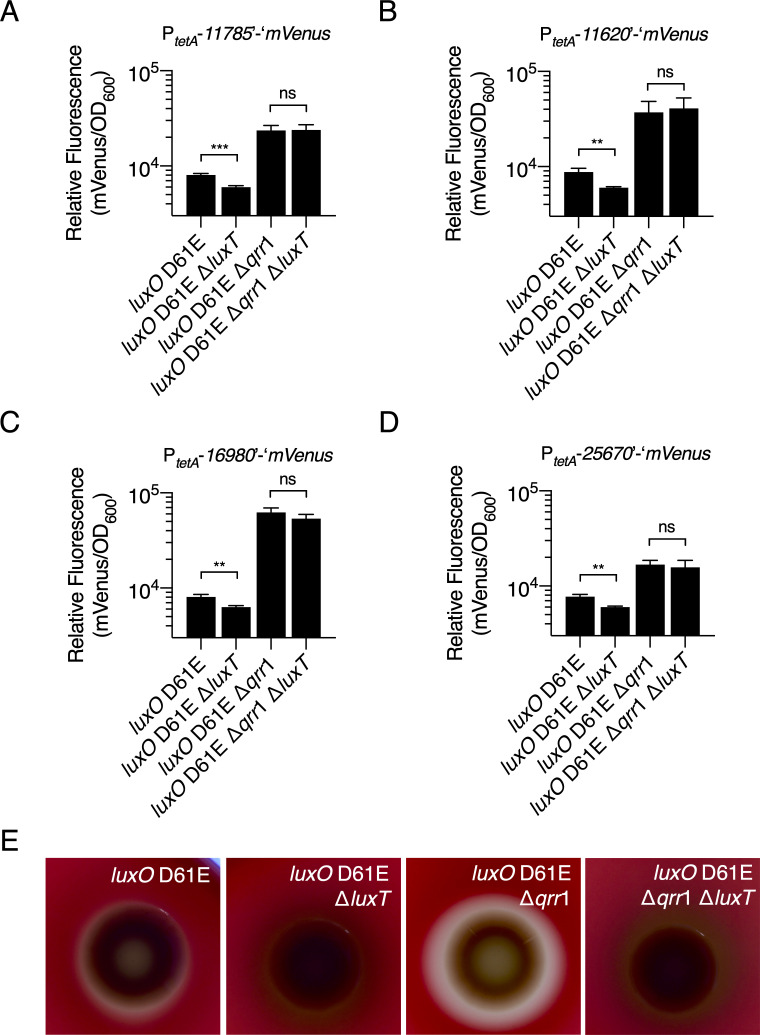
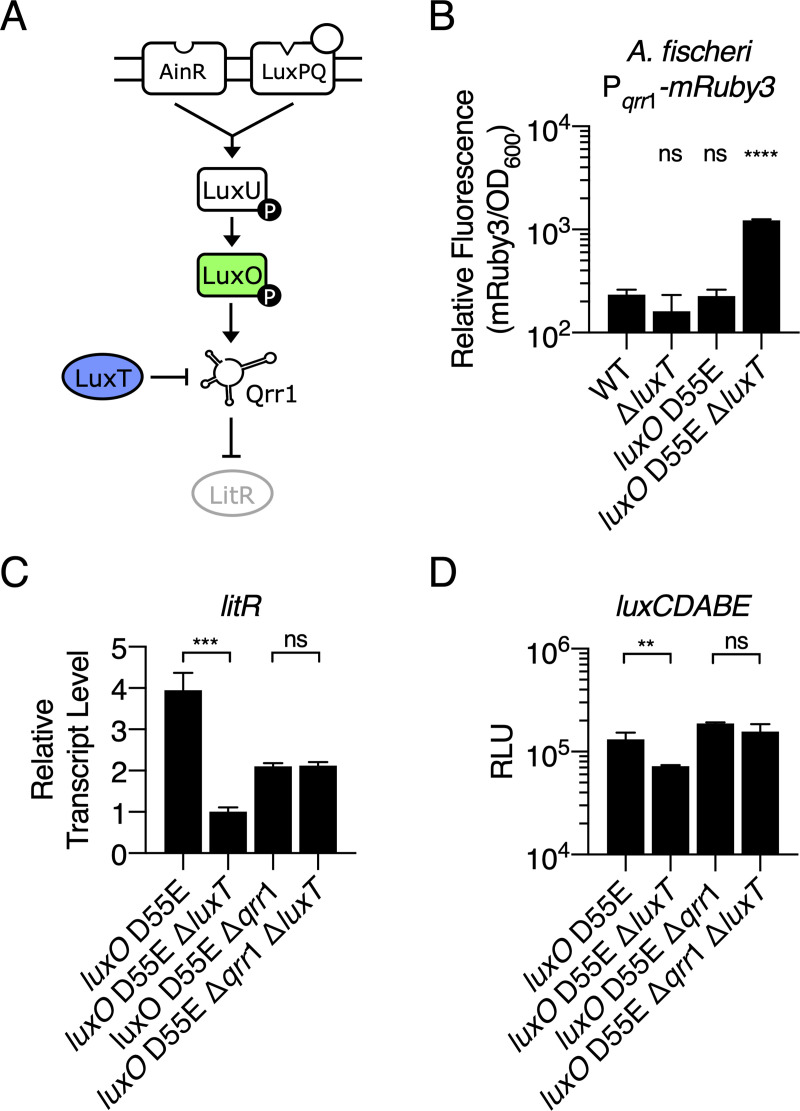
Quorum sensing (QS) is a process of chemical communication bacteria use to transition between individual and collective behaviors. QS depends on the production, release, and synchronous response to signaling molecules called autoinducers (AIs). The marine bacterium Vibrio harveyi monitors AIs using a signal transduction pathway that relies on five small regulatory RNAs (called Qrr1-5) that post-transcriptionally control target genes. Curiously, the small RNAs largely function redundantly making it difficult to understand the necessity for five of them. Here, we identify LuxT as a transcriptional repressor of qrr1. LuxT does not regulate qrr2-5, demonstrating that qrr genes can be independently controlled to drive unique downstream QS gene expression patterns. LuxT reinforces its control over the same genes it regulates indirectly via repression of qrr1, through a second transcriptional control mechanism. Genes dually regulated by LuxT specify public goods including an aerolysin-type pore-forming toxin. Phylogenetic analyses reveal that LuxT is conserved among Vibrionaceae and sequence comparisons predict that LuxT represses qrr1 in additional species. The present findings reveal that the QS regulatory RNAs can carry out both shared and unique functions to endow bacteria with plasticity in their output behaviors.
群体感应(QS)是细菌在个体和群体行为之间转换时使用的一种化学通讯过程。QS 依赖于被称为自诱导物(AIs)的信号分子的产生、释放和同步响应。海洋细菌哈维氏弧菌使用一种信号转导途径来监测 AIs,该途径依赖于五个小的调节 RNA(称为 Qrr1-5),它们通过转录后控制靶基因。奇怪的是,这些小 RNA 在很大程度上功能冗余,使得很难理解它们需要其中五个的必要性。在这里,我们确定 LuxT 是 qrr1 的转录抑制剂。LuxT 不调节 qrr2-5,表明 qrr 基因可以独立控制,以驱动独特的下游 QS 基因表达模式。LuxT 通过抑制 qrr1 对其间接调节的相同基因进行第二次转录控制,从而加强对这些基因的控制。通过 LuxT 双重调节的基因指定公共物品,包括气溶素型孔形成毒素。系统发育分析表明,LuxT 在弧菌科中是保守的,序列比较预测 LuxT 在其他物种中抑制 qrr1。目前的研究结果表明,QS 调节 RNA 可以发挥共享和独特的功能,使细菌在其输出行为中具有可塑性。