Department of Botany, University of British Columbia, Vancouver, BC, Canada.
Univ. Bordeaux, CNRS, Laboratoire de Biogenèse Membranaire, UMR 5200, F-33140 Villenave d'Ornon, France.
Plant Physiol. 2021 Apr 2;185(3):650-662. doi: 10.1093/plphys/kiaa079.
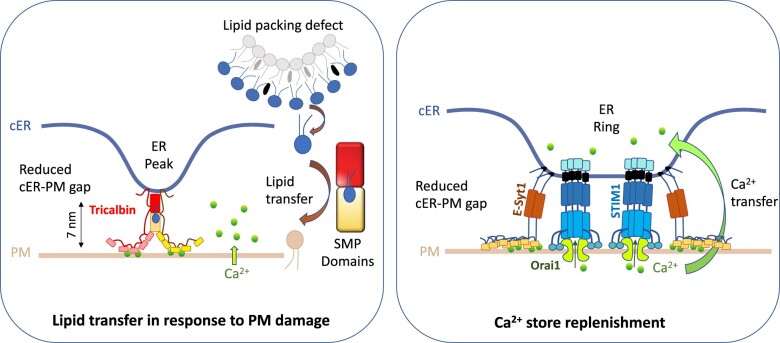
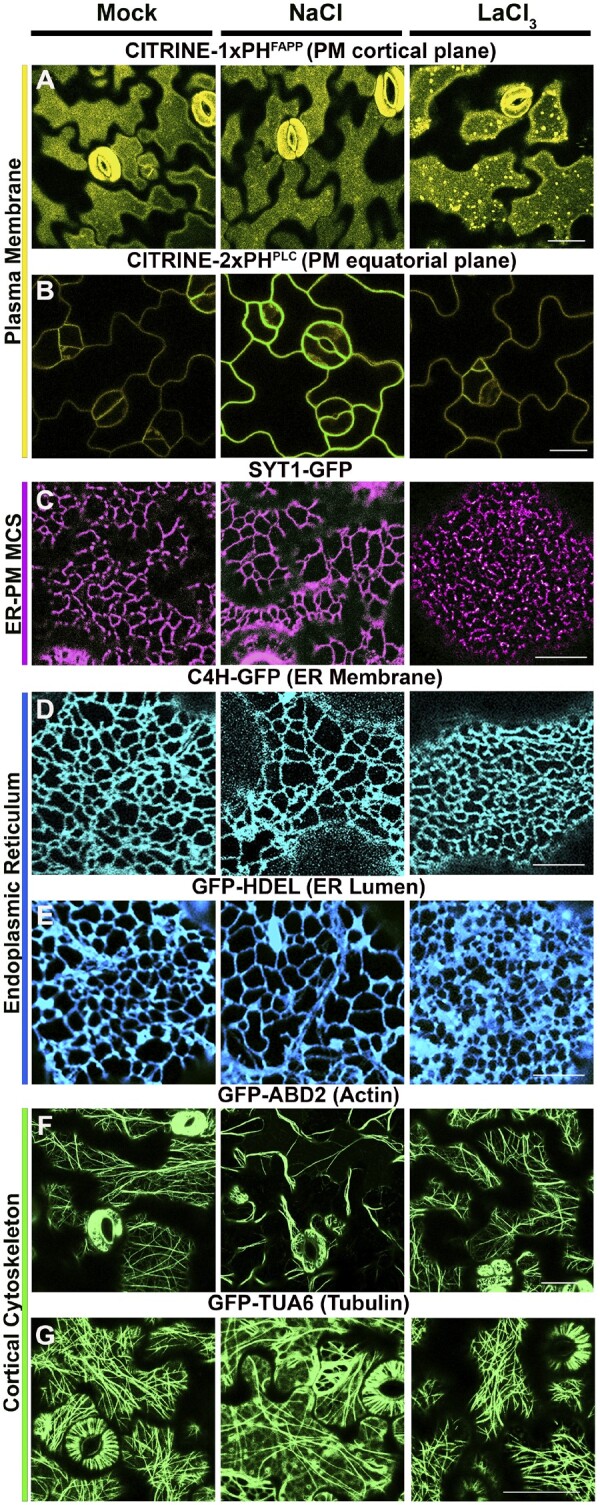
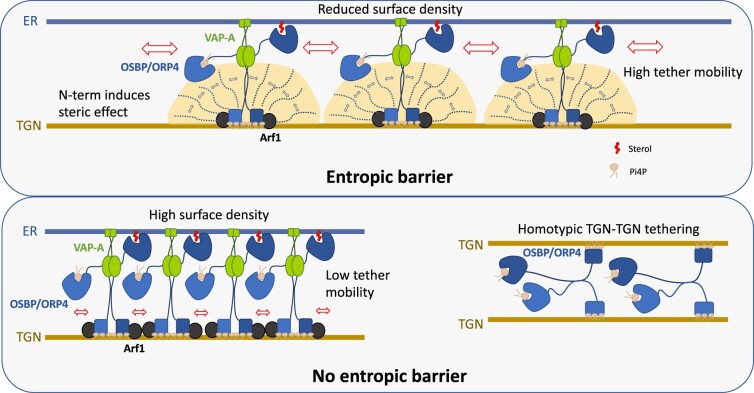
A vast majority of cellular processes take root at the surface of biological membranes. By providing a two-dimensional platform with limited diffusion, membranes are, by nature, perfect devices to concentrate signaling and metabolic components. As such, membranes often act as "key processors" of cellular information. Biological membranes are highly dynamic and deformable and can be shaped into curved, tubular, or flat conformations, resulting in differentiated biophysical properties. At membrane contact sites, membranes from adjacent organelles come together into a unique 3D configuration, forming functionally distinct microdomains, which facilitate spatially regulated functions, such as organelle communication. Here, we describe the diversity of geometries of contact site-forming membranes in different eukaryotic organisms and explore the emerging notion that their shape, 3D architecture, and remodeling jointly define their cellular activity. The review also provides selected examples highlighting changes in membrane contact site architecture acting as rapid and local responses to cellular perturbations, and summarizes our current understanding of how those structural changes confer functional specificity to those cellular territories.
绝大多数细胞过程都扎根于生物膜的表面。由于膜提供了一个具有有限扩散性的二维平台,因此从本质上讲,膜是浓缩信号和代谢成分的理想设备。因此,膜通常充当细胞信息的“关键处理器”。生物膜具有高度的动态性和可变形性,可以形成弯曲、管状或平面的构象,从而产生不同的生物物理特性。在膜接触位点,来自相邻细胞器的膜聚集在一起形成独特的 3D 结构,形成具有不同功能的微区,从而促进空间调节功能,例如细胞器间的通讯。在这里,我们描述了不同真核生物中形成接触位点的膜的几何形状的多样性,并探讨了一个新兴的观点,即它们的形状、3D 结构和重塑共同决定了它们的细胞活性。该综述还提供了一些精选的例子,突出了膜接触位点结构的变化,这些变化作为对细胞扰动的快速和局部反应,并总结了我们目前对这些结构变化如何为这些细胞区域赋予功能特异性的理解。