Institute for Social Science Research, The University of Queensland, Indooroopilly, Queensland, Australia.
ARC Centre of Excellence for Children and Families over the Life Course (The Life Course Centre), The University of Queensland, Indooroopilly, Queensland, Australia.
Glob Health Sci Pract. 2021 Mar 31;9(1):78-88. doi: 10.9745/GHSP-D-20-00533.
To ensure equitable and accessible services and improved utilization of institutional delivery it is important to identify what progress has been achieved, whether there are vulnerable and disadvantaged groups that need specific attention and what are the key factors affecting the utilization of institutional delivery services. In this study, we examined levels, trends, and inequalities in the utilization of institutional delivery services in low- and middle-income countries.
We used nationally representative cross-sectional data from Demographic and Health Surveys (DHS) conducted during 1990-2018. Bayesian linear regression analysis was performed.
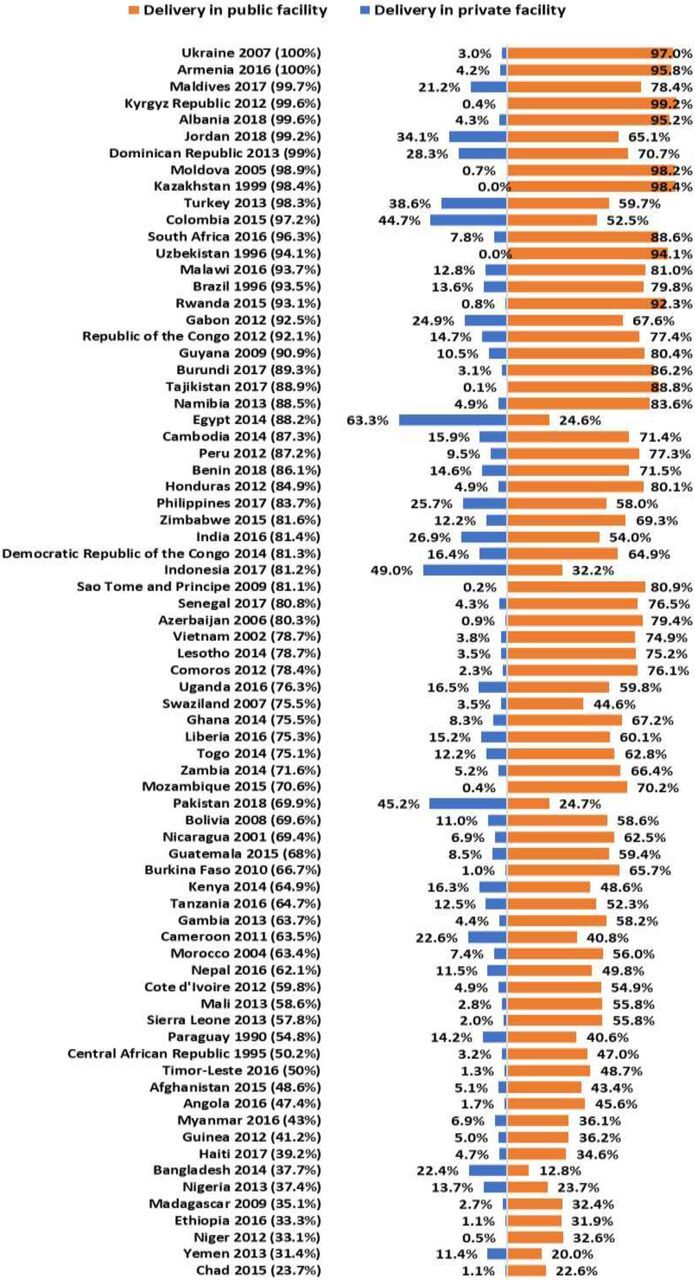
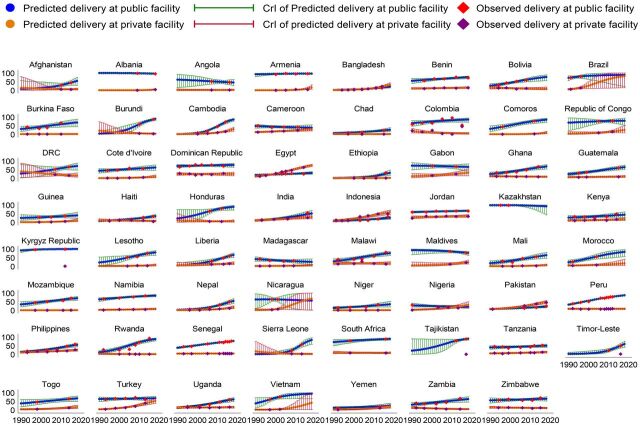
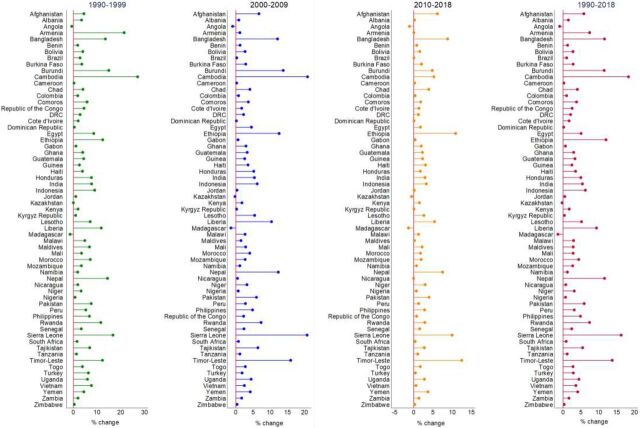
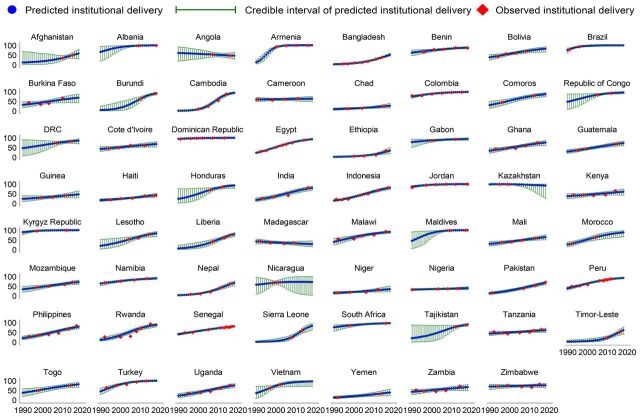
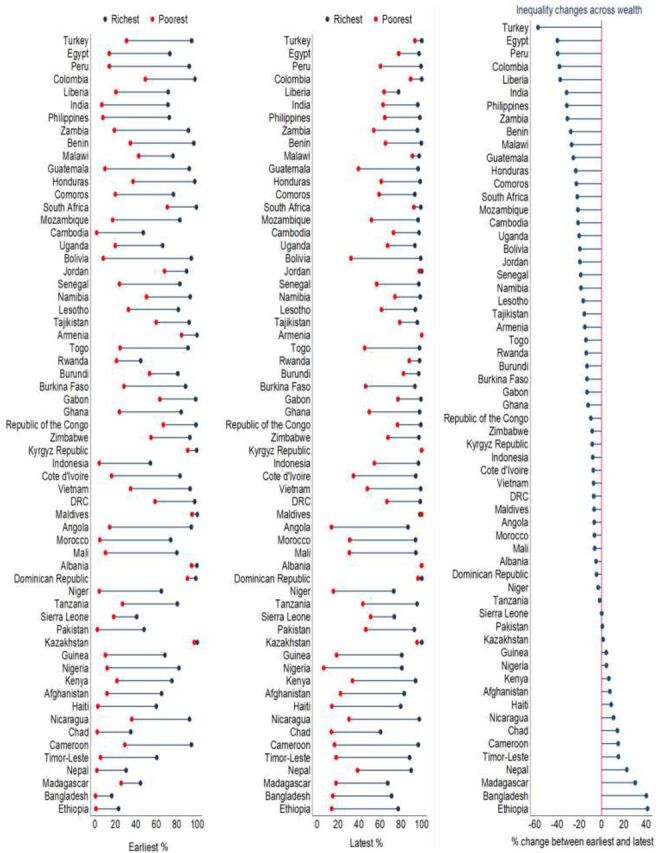
Among 74 countries, the utilization of institutional delivery services ranged from 23.7% in Chad to 100% in Ukraine and Armenia (with >90% in 19 countries and <50% in 13 countries) during the latest DHS rounds. Trend analysis in 63 countries with at least 2 surveys showed that the utilization of institutional delivery services increased in 60 countries during 1990-2018, with the highest increase being in Cambodia (18.3%). During this period, the utilization of institutional delivery services increased in 90.3% of countries among the richest, 95.2% of countries in urban, and 84.1% of countries among secondary+ educated women. The utilization of institutional delivery services was higher among wealthiest, urban, and secondary+ educated women compared to their counterparts. Greater utilization of private facilities for delivery was observed in women from the highest income group and urban communities, whereas highest utilization of public facilities was observed for women from the lowest income group and rural communities.
The utilization of institutional delivery services varied substantially between and within countries over time. Significant disparities in service utilization identified in this study highlight the need for tailored support for women from disadvantaged and vulnerable groups.
为了确保提供公平和可及的服务,并提高机构分娩的利用率,重要的是要确定已经取得了哪些进展,是否存在需要特别关注的弱势和劣势群体,以及影响机构分娩服务利用的关键因素。在这项研究中,我们研究了中低收入国家机构分娩服务利用的水平、趋势和不平等。
我们使用了 1990 年至 2018 年期间进行的人口与健康调查(DHS)的国家代表性横断面数据。进行了贝叶斯线性回归分析。
在 74 个国家中,机构分娩服务的利用率在最新的 DHS 轮次中从乍得的 23.7%到乌克兰和亚美尼亚的 100%(19 个国家中有 90%以上,13 个国家中有 50%以下)。在 63 个至少有 2 次调查的国家中进行的趋势分析表明,1990-2018 年期间,60 个国家的机构分娩服务利用率有所增加,其中柬埔寨的增幅最高(18.3%)。在此期间,在最富裕的国家中,90.3%的国家、城市地区的 95.2%的国家和中等以上教育程度妇女的 84.1%的国家,机构分娩服务的利用率有所增加。与同龄人相比,最富裕、城市和中等以上教育程度的妇女更倾向于使用机构提供的分娩服务。在收入最高的群体和城市社区的妇女中,更多地使用私人设施分娩,而在收入最低的群体和农村社区的妇女中,最高的利用率是在公共设施中分娩。
机构分娩服务的利用率在国家之间和国家内部随时间发生了很大变化。本研究确定的服务利用方面的显著差异突出表明,需要为弱势和劣势群体的妇女提供有针对性的支持。