Sharova Evgeniya, Maruzzo Marco, Del Bianco Paola, Cavallari Ilaria, Pierantoni Francesco, Basso Umberto, Ciminale Vincenzo, Zagonel Vittorina
Immunology and Molecular Oncology Unit, Veneto Institute of Oncology IOV - IRCCS, Padua, Italy.
Oncology 1 Unit, Department of Oncology, Veneto Institute of Oncology IOV - IRCCS, Padua, Italy.
Front Oncol. 2021 Mar 16;11:626104. doi: 10.3389/fonc.2021.626104. eCollection 2021.
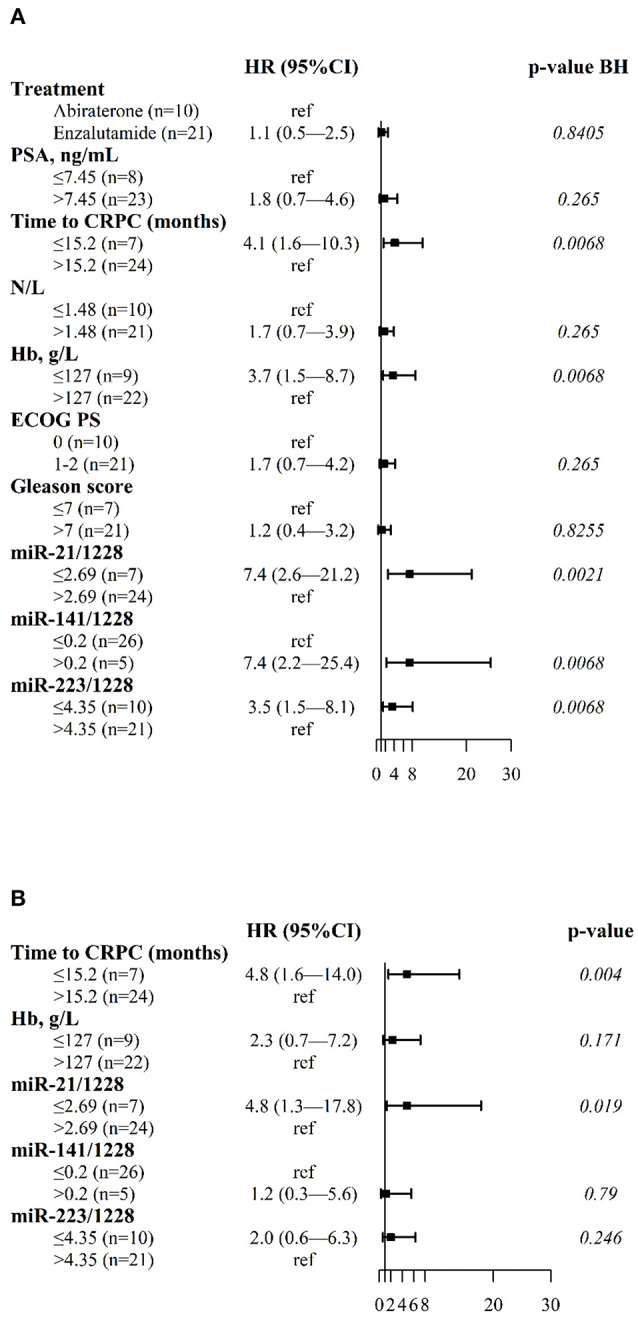
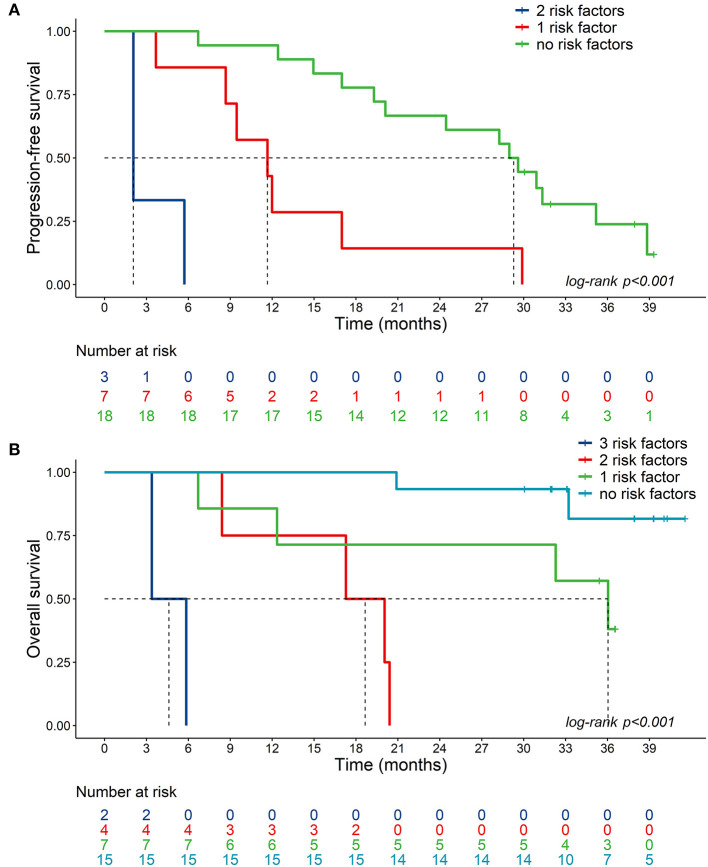
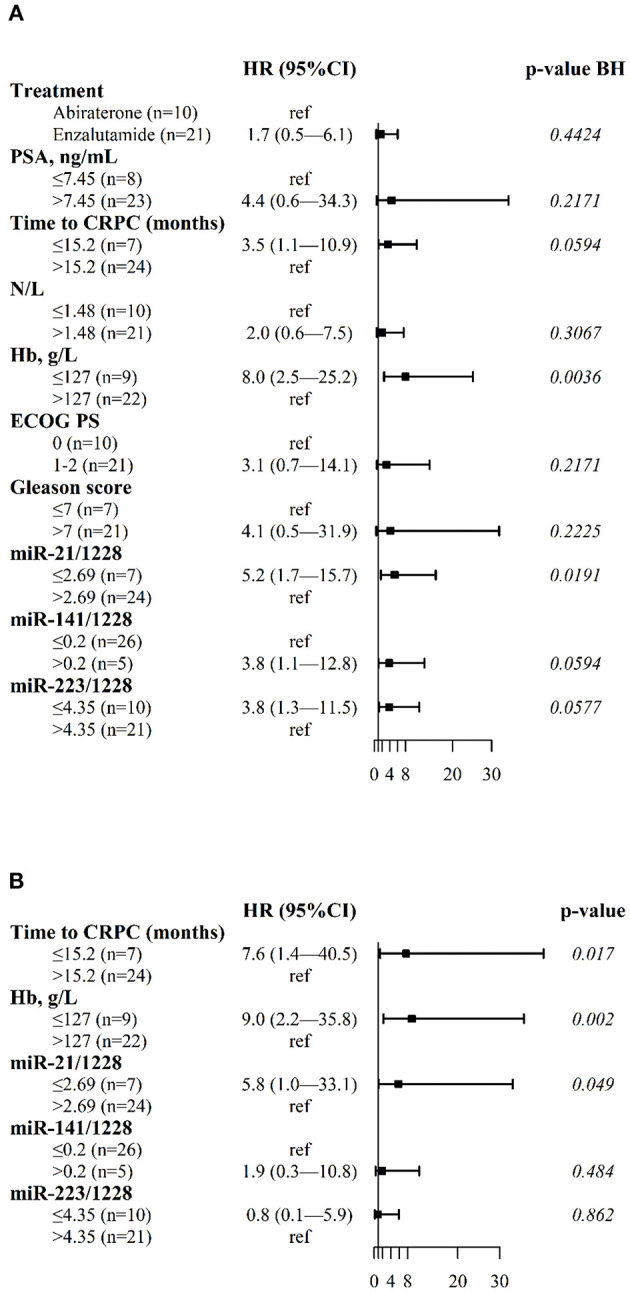
Androgen Receptor-Targeted Agents (ARTA) have dramatically changed the therapeutic landscape of metastatic Castration-Resistant Prostate Cancer (mCRPC), but 20-40% of these patients progress early after start of ARTA treatment. The present study investigated the potential utility of plasma cell-free microRNAs (cfmiRNAs) as prognostic markers by analyzing a prospective cohort of 31 mCRCP patients treated with abiraterone ( = 10) or enzalutamide ( = 21). Additional potential prognostic factors were extracted from clinical records and outcome was evaluated as overall survival (OS) and progression-free survival (PFS). cfmiRNAs were measured in plasma samples using quantitative real-time RT-PCR. Linear correlation among clinical factors and cfmiRNAs was assessed using the Spearman's rank correlation coefficient. The association with survival was studied using univariate and multivariate Cox proportional hazards models. Continuous variables were dichotomized with the cut points corresponding to the most significant relation with the outcome. Univariate analysis indicated that plasma levels of miR-21-5p, miR-141-3p and miR-223-3p, time to development of castration-resistance (tCRPC), and blood hemoglobin (Hb) levels strongly correlated with both PFS and OS. Multivariate analysis revealed that low plasma levels of miR-21, shorter tCRPC, and lower Hb values were independent factors predicting reduced PFS and OS. These findings suggest that the integrated analysis of cfmiRNAs, tCRPC, and Hb may provide a promising, non-invasive tool for the prognostic stratification of mCRPC patients treated with ARTA.
雄激素受体靶向药物(ARTA)极大地改变了转移性去势抵抗性前列腺癌(mCRPC)的治疗格局,但这些患者中有20%-40%在开始ARTA治疗后早期就出现病情进展。本研究通过分析31例接受阿比特龙(n = 10)或恩杂鲁胺(n = 21)治疗的mCRCP患者的前瞻性队列,探讨了血浆游离微小RNA(cfmiRNAs)作为预后标志物的潜在效用。从临床记录中提取其他潜在的预后因素,并将结局评估为总生存期(OS)和无进展生存期(PFS)。使用定量实时RT-PCR测量血浆样本中的cfmiRNAs。使用Spearman等级相关系数评估临床因素与cfmiRNAs之间的线性相关性。使用单变量和多变量Cox比例风险模型研究与生存期的关联。连续变量用与结局最显著相关的切点进行二分法划分。单变量分析表明,miR-21-5p、miR-141-3p和miR-223-3p的血浆水平、去势抵抗出现时间(tCRPC)和血红蛋白(Hb)水平与PFS和OS均密切相关。多变量分析显示,低血浆miR-21水平、较短的tCRPC和较低的Hb值是预测PFS和OS降低的独立因素。这些发现表明,cfmiRNAs、tCRPC和Hb的综合分析可能为接受ARTA治疗的mCRPC患者的预后分层提供一种有前景的非侵入性工具。